

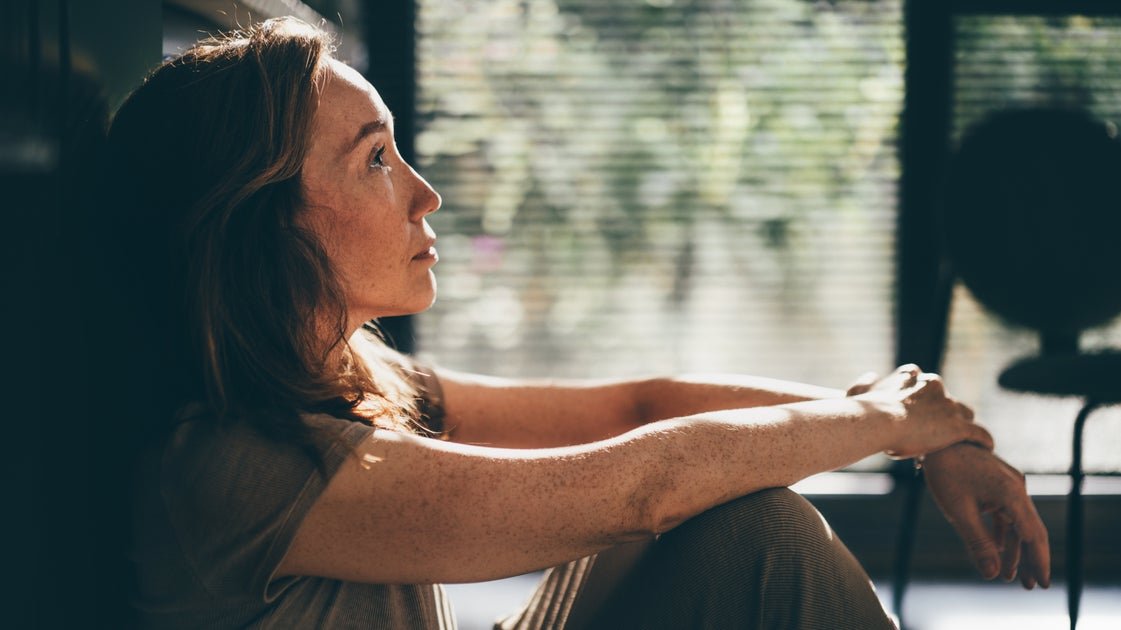
It’s estimated that 28.8 million people in the United States will be diagnosed with an eating disorder at some point in their lifetime, and women remain at the highest risk.
While we tend to associate disordered eating ― anorexia, bulimia and binge-eating disorder ― with adolescent women, it’s not uncommon for women in midlife to develop, or experience an eating disorder relapse. (Around 50% of people relapse after eating disorder treatment, according to a 2019 study out of the University of California, San Francisco.)
Online, some have dubbed the tendency for menopausal (or perimenopausal) women to develop eating disorders as “menorexia,” a play on the words menopause and anorexia.
Unfortunately, adults who develop such disorders are underrepresented in both the research and within treatment settings, leaving a critical gap in understanding the true scope of the problem, said Samantha DeCaro, a psychologist, and the director of clinical outreach and education at the Renfrew Center, a national eating disorder treatment center.
“Midlife adults meet the same diagnostic criteria as younger patients ― struggling with symptoms such as restricting, bingeing or purging,” said DeCaro, who also co-hosts the podcast “All Bodies. All Foods.”
“What sets them apart, however, are the unique life transitions that can trigger or exacerbate body dissatisfaction and disordered eating: menopause, divorce, an ‘empty nest,’ chronic illness, physical changes, and the challenges of aging in an ageist society,” she said.
Many people with eating disorders in midlife can trace their struggles back decades, DeCaro said.
“Some report issues with food or body image since adolescence, only crossing into a clinical eating disorder later in life,” she said. For others who’ve been relatively happy with their bodies up until their 40s or 50s, it’s a new, unsettling fixation.
I actually think many midlife eating disorders go undetected because they don’t look like what we typically think an eating disorder ‘should’ look like.
– Erin Parks, co-founder and chief clinical officer at Equip, a virtual eating disorder treatment platform
Erin Parks, the co-founder and chief clinical officer at Equip, a virtual eating disorder treatment platform for all ages, said that 25% percent of the site’s adult patients fall into the midlife age category (ages 40-65).
Earlier this year, the site did a survey of over 1,000 adults aged 40 and older to gain a deeper understanding of the demographic. What Parks found most striking is that 35% of women reported developing disordered eating behaviors for the first time in midlife, meaning it was an entirely new onset.
“I actually think many midlife eating disorders go undetected because they don’t look like what we typically think an eating disorder ‘should’ look like,” she told HuffPost.
“Because diet culture ― the belief system that equates thinness with health ― is so normalized, behaviors often masquerade as ‘wellness,’ like meal skipping, excessive exercise routines, or restrictive dieting [including the ‘intermittent fasting’ trend], which makes them easy to overlook.”
While women are disproportionately affected, men aren’t immune, Park said.
“Thirty-nine percent of men felt worse about their bodies as they aged, yet eating disorder symptoms in midlife men are even more likely to be overlooked or attributed to other causes,” she said.
ozgurcankaya via Getty Images
Men also experience their own challenges: Testosterone decreases by about 1% annually starting at age 25, then more rapidly in middle age, leading to increased belly fat, muscle loss and less energy.
The hormonal shifts that happen during menopause and andropause play a huge role in triggering eating disorders later in life, Parks said. For women, estrogen levels drop by about 60% during menopause, while progesterone production stops almost entirely.
“This creates a perfect storm of weight gain, mood swings, and feelings of losing control over their body,” she explained.
Men also experience their own challenges: Testosterone decreases by about 1% annually starting at age 25, then more rapidly in middle age, leading to increased belly fat, muscle loss and less energy, Parks said.
Other times, eating disorders at midlife are spurred on by offhand comments made by medical doctors who are overly focused on weight loss as a solution to other medical conditions, such as hyperlipidemia, hypertension or elevated blood sugar.
Lauren Muhlheim, a psychologist and owner at Eating Disorder Therapy LA said that many of the midlife clients she sees are trying to solve or prevent a medical problem.
“But dieting and exercise can drive an eating disorder, and there are other ways to address medical conditions other than weight loss,” she said.
And it goes without saying that we live in a culture that glorifies not only thinness, but youthfulness ― “a double bind for people in midlife,” DeCaro said.
Ultimately, eating disorders aren’t caused by one single factor.
“They develop through a ‘perfect storm’ of risks that collide during vulnerable periods of life,” she said. “For midlife adults, those stressors might include menopause, unwanted changes to appearance, chronic pain, grief and loss, or the sting of ageism.”
“Culturally, we really need to shift the conversation from ‘managing’ aging bodies through the latest fad diet to supporting them with compassion through these natural life transitions,” Parks said.
Some advice if you’re concerned you may be developing an eating disorder in midlife:
Eating disorders are not just about food or weight, DeCaro said ― they’re emotional disorders, too, and treatment goes far beyond what you consume.
“The meaningful work in recovery often guides people back to themselves, helping them uncover their deepest desires, needs and values,” she said.
While by no means a complete list, we asked DeCaro and our other experts to share some advice for people who are concerned they may be developing some form of an eating disorder.
Recognize that it’s normal for our bodies to change.
If you’re hyperfixating on changes to your body, try to focus on all the things your body has allowed you to experience rather than how your body compares to your younger self or others, Muhlheim said.
“It’s normal for our bodies to change with time, especially during hormonal transitions,” she said. “What’s not healthy is to be obsessed about your body or what you are eating or shouldn’t be eating. That takes up too much brain energy and keeps you from living your life.”
Seek out specialized care.
Eating disorders are serious, potentially fatal disorders that often require specialized care, DeCaro said. If you’re struggling, seek an assessment so your provider can recommend a level of care that meets both your medical and emotional needs, she said. You might get help from a weight-inclusive eating disorder therapist or dietitian.
Virtual treatment is particularly effective for midlife adults who require flexible care that accommodates work and family responsibilities.
Fiordaliso via Getty Images
Eating disorders thrive in isolation, but connection with others going through it is a powerful tool in recovery, said Samantha DeCaro, a psychologist, and the director of clinical outreach and education at the Renfrew Center, a national eating disorder treatment center.
Don’t deal with it alone.
Eating disorders thrive in isolation, but connection with others going through it is a powerful tool in recovery, DeCaro said.
Joining a virtual or in-person support group, listening to recovery stories on a podcast, or reading memoirs by people who have navigated midlife eating disorders can remind you that you’re not alone,” she said.
Don’t listen to predatory diet culture messaging.
Be cautious of diet culture messaging that targets midlife adults with promises of “reversing aging” or “getting your body back,” Parks said.
“Unfortunately, in our society, it’s become relatively standard these days,” she said. “These messages can be particularly triggering during vulnerable life transitions. Culturally, we really need to shift the conversation from ‘managing’ aging bodies through the latest fad diet to supporting them with compassion through these natural life transitions.”
The original version of this story was published on HuffPost at an earlier date.
