

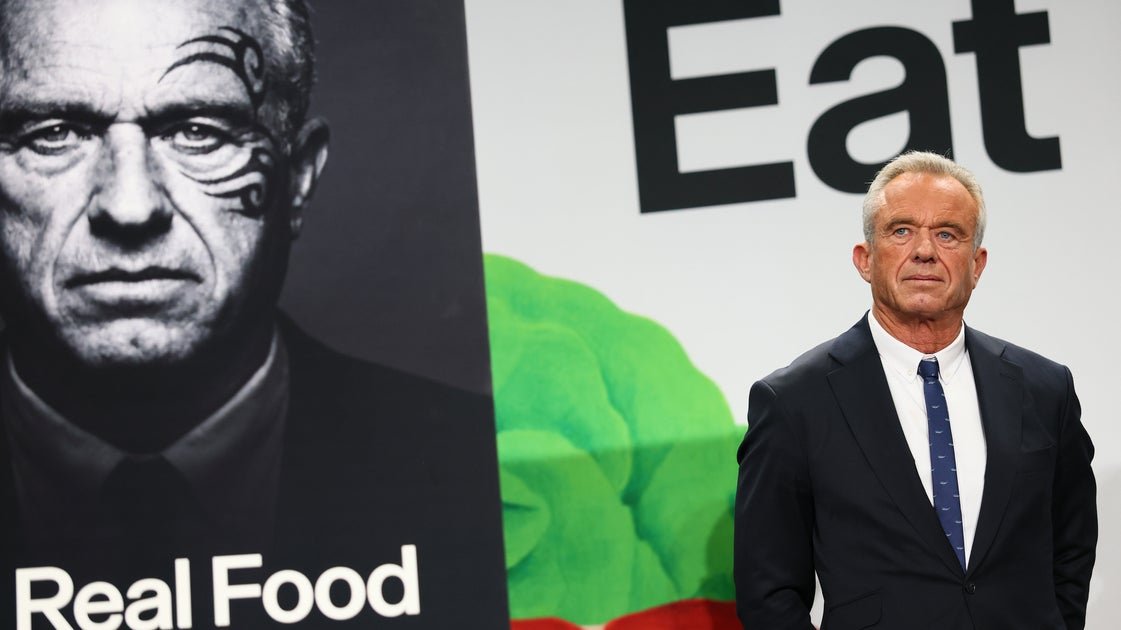
About 4 in 10 (41%) American adults are on board with Health and Human Services Secretary Robert F. Kennedy Jr.’s mission to Make America Healthy Again.
That’s according to a new survey by the health care research nonprofit KFF. Though the majority of those MAHA supporters are Republicans and supporters of the MAGA movement, KFF notes that the concerns highlighted by the MAHA movement about food safety and corporate influence resonate with a larger share of the public beyond those who identify as Trump supporters.
They’re warranted concerns: The majority of those polled said there is not enough regulation of chemical additives in food (75%) or of pesticides used in agriculture (64%) in the United States, and most adults express distrust in agricultural, food and pharmaceutical companies to act in the public’s best interest.
When 41% of Americans say they identify with MAHA messaging, registered dietician Sam Previte, believes it reflects a broader erosion of trust in institutions, deep frustration with the healthcare system, and a growing desire among people to feel more informed and in control of their own health.
“Some parts of that conversation, like wanting transparency in food systems or better public health outcomes, are understandable,” Previte told HuffPost.
The problem is there’s a darker side to MAHA and the broader worldview that Kennedy promotes. Public health experts have repeatedly raised alarms about his embrace of unsubstantiated medical claims, anti-vaccine rhetoric, and efforts that undermine trust in mainstream scientific and public health institutions.
“The movement can also become problematic when it promotes fear-based messaging, moralizes food, dismisses evidence-based medicine, or frames health as something that can be perfectly controlled if you just ‘work hard enough’ or avoid the ‘right’ ingredients,” Previte said.
Michael M. Santiago via Getty Images
Public health experts have repeatedly raised alarms about Robert F. Kennedy Jr.’s embrace of unsubstantiated medical claims, anti-vaccine rhetoric, and efforts that critics say undermine trust in mainstream scientific and public health institutions.
The ascent of MAHA comes just as Americans say they’re putting more trust in wellness influencers over medical professionals when it comes to their health.
According to a new study from the Pew Research Center, 40% of Americans — and half of adults under the age of 50 — get health and wellness information from social media influencers or podcasts. About 4 in 10 of these influencers describe themselves as healthcare professionals, with almost just as many describing themselves as coaches and entrepreneurs.
That stat doesn’t surprise Katrine Wallace, an epidemiologist and adjunct assistant professor at the University of Illinois Chicago, who makes content herself.
“On social media, the algorithms reward engagement and not accuracy, so relatability and storytelling can carry more weight than formal expertise,” Wallace told HuffPost. “People are often drawn to creators who make complex health topics feel simple, intuitive and emotionally validating.”
The problem is that the alternative being offered isn’t actually better care, said Jennifer Lincoln, an OB/GYN and author of “The Birth Book: An OB/GYN’s Guide to Demystifying Labor and Delivery.”
“Dangerous misinformation, often dressed up in the language of empowerment, frequently delays real care and can lead to worse outcomes for patients, but those MAHA influencers aren’t held accountable for any of that, unfortunately,” she said.
It’s not just “crunchy moms” types who are promoting some of the more problematic MAHA beliefs. Below, medical professionals share the phrases that usually signal a content creator is closely tied to the movement.
Bloomberg via Getty Images
Attendees eat burgers next to hats reading “100% Grass-Fed Grass-Finished Steakburgers” during an “Eat Real Food” rally in Austin, Texas, on Feb. 26, 2026. The Trump administration released updated nutrition guidelines that bring back a revamped version of the food pyramid, while urging people to eat less sugar and more animal-based protein.
‘Natural immunity’
This phrase shows up constantly in anti-vaccine and vaccine-hesitant content, Lincoln said.
“It implies that anything synthetic or pharmaceutical is inherently inferior to whatever your body does on its own, which sounds intuitive but falls apart immediately when you think about cancer or Type 1 diabetes, for example,” the OB/GYN said.
‘Toxins’
This is arguably the most common buzzword in MAHA spaces. The term is often intentionally vague and emotionally loaded, said Zachary Rubin, a pediatrician and allergist, and author of “All About Allergies Everything You Need to Know About Asthma, Food Allergies, Hay Fever, and More.”
Scientifically, almost anything can be toxic at the wrong dose, including water or oxygen, but in MAHA-style influencer culture, “toxins” usually functions as a catch-all explanation for modern illness, Rubin told HuffPost.
“What they’re often really implying is that hidden environmental exposures, vaccines, processed foods, seed oils, medications or chemicals are broadly responsible for chronic disease, and that mainstream medicine is ignoring or concealing it,” he said. “The word creates fear while avoiding specificity, because specificity would require evidence and context.”
Luis Alvarez via Getty Images
According to a new study from the Pew Research Center, 40% of Americans — and half of adults under the age of 50 — get health and wellness information from social media influencers or podcasts.
‘Do your own research’
This phrase sounds empowering on the surface, but in many wellness and MAHA spaces it’s used to encourage skepticism of scientific consensus and institutional expertise, Wallace said.
“It often implies that doctors, scientists, government agencies and mainstream media are hiding information or cannot be trusted,” she said. “In practice, it can encourage people to rely more heavily on anecdotal stories, influencers, podcasts or online communities rather than evidence-based sources.”
‘Seed oils are poisoning you’
MAHA types are big on seed oil avoidance, Previte said. Seed oils include canola, soybean and sunflower oil.
“The belief behind it is that seed oils are the root cause of inflammation, obesity, or chronic disease,” she said.
But the research on seed oils is far more nuanced than social media discourse often suggests. Like all oils, seed oils are a source of dietary fat, which is essential for vitamin absorption, and the creation and functioning of the body’s cells. According to the Mayo Clinic, saturated fats — commonly found in foods like red meat, dairy products and coconut oil — can raise both “good” and “bad” cholesterol levels and have long been associated with a higher risk of heart disease.
“Often, this messaging oversimplifies nutrition science and turns a single ingredient into a villain,” Previte said. “It also tends to ignore bigger-picture health factors like stress, access to healthcare, movement, sleep, socioeconomic status and overall dietary patterns.”
The key to seed oil, as well as many other foods, is moderation, the Mayo Clinic states.
“Often, this messaging [about seed oil] oversimplifies nutrition science and turns a single ingredient into a villain,” said Sam Previte, a registered dietitian.
‘Don’t trust Big Pharma’ or ‘The healthcare system doesn’t want you to know this’
This rhetoric taps into real frustration people have with the healthcare system, but it can quickly slide into conspiracy-based thinking, Previte said.
“The underlying message here is that mainstream medicine is intentionally hiding ‘natural cures’ or misleading the public for profit,” she said.
While criticism of healthcare systems, pharmaceutical pricing or corporate influence can absolutely be valid, Previte said these phrases are often used to position influencers as the “real truth tellers” without requiring the same level of evidence, accountability or expertise expected in healthcare or scientific communities.
‘Inflammation’
The specific villain rotates ― gluten, dairy, “processed food,” and now just general “inflammation” ― but Lincoln said the through line is that chronic disease isn’t caused by complex systemic factors, it’s caused by a specific ingredient or process that they put in your food, and “they” don’t want you to know about.
“‘Inflammation’ is particularly slippery because it’s a real biological process, which gives it just enough scientific credibility to sound legitimate,” Lincoln said. “But in influencer-speak, it becomes a catch-all explanation for everything from fatigue to cancer, conveniently solved by whatever they’re selling.”
Keeproll via Getty Images
“‘Inflammation’ is particularly slippery because it’s a real biological process, which gives it just enough scientific credibility to sound legitimate,” Lincoln said.
‘Root cause’
Wallace said that this phrase reflects the belief that conventional medicine only “treats symptoms,” while alternative wellness approaches supposedly address the “real” underlying cause of disease.
“Sometimes this can overlap with legitimate lifestyle medicine or preventive care, but in MAHA-adjacent spaces, it is often paired with anti-pharmaceutical or anti-vaccine messaging. The implication is that the body can heal itself if ‘toxins’ or ‘unnatural’ interventions are removed.”
‘Longevity’ or ‘Biohacking’
This one has exploded recently, and it sounds aspirational and science-forward, Lincoln said. Who doesn’t want to live longer and healthier? But in MAHA-adjacent spaces, “longevity” content is often a gateway to extreme protocols, unproven supplements and distrust of conventional preventive care.
“The implicit message is that your doctor is only keeping you alive, not helping you thrive and never getting to the ‘root cause,’ and that the real path to a long life runs through biohacking, cold plunges and a $200/month supplement stack, not your annual physical.”
What Lincoln wants people to understand is that MAHA-aligned messaging is often carefully crafted to resemble the kind of thoughtful, evidence-based health guidance many patients say they’ve long wanted from medical institutions.
“It uses the aesthetics of transparency, asks questions, and positions itself as the brave truth-teller,” she said, adding that that makes it much harder to identify than the old-school quackery we’re used to.
“When I see an influencer who never cites sources, always has a product to sell, and frames every post as ‘what they don’t want you to know,’” those are red flags,” she said. “Real health literacy means being just as skeptical of the influencer as you are of the institution.”
