

Stiff hamstrings making bending and stairs harder after 60? Start with these five.
Hamstring strength has a sneaky way of affecting almost everything you do on your feet. You feel it when you bend down to pick something up, climb stairs, walk uphill, or try to stand tall without your lower back feeling cranky. After 60, the hamstrings can lose strength, and stiffness can creep in, especially when sitting takes up more of the day and lower-body training becomes less consistent.
Lunges can build strong legs, but they don’t always give the hamstrings the direct attention they need. The back of the legs responds well to hinging, controlled lowering, and movements that teach the hips to drive the body forward. Those patterns train the hamstrings in a way that carries over to bending, lifting, walking, and keeping the hips strong.
I’ve used these hinge-based exercises with clients who needed to rebuild the backside of the body without making every lower-body workout feel like a balance test. The goal is simple: keep your feet planted, load the hips, and make the hamstrings work through a range you can control. These five standing exercises use dumbbells, kettlebells, and bands to strengthen the hamstrings while also training the glutes, core, and lower back.
Dumbbell RDL
Dumbbell RDLs train your hamstrings and glutes while your core keeps your spine in a strong position. As you push your hips back, your hamstrings have to lengthen under control, which makes the movement valuable for rebuilding strength through the back of your legs. Lunges can challenge balance and coordination first, but RDLs let you focus directly on the hinge pattern and the muscles doing the work. Stronger hamstrings help with bending, lifting, walking uphill, and protecting your lower back during daily movement.
Muscles Trained: Hamstrings, glutes, lower back, core
How to Do It:
- Stand with your feet hip-width apart and hold dumbbells in front of your thighs.
- Brace your core and soften your knees.
- Push your hips back as the dumbbells travel down your legs.
- Lower until you feel a stretch through your hamstrings.
- Drive your hips forward to return to standing.
Recommended Sets and Reps: Perform 3 sets of 8 to 12 reps. Rest for 60 seconds between each set.
Best Variations: Single-leg RDL, staggered-stance RDL, tempo RDL
Form Tip: Keep the dumbbells close to your body and move through your hips.
Banded Good Morning
Banded good mornings train your hamstrings, glutes, and lower back while teaching your hips to move cleanly. The band adds tension as you stand tall, so the back of your legs has to work through the whole rep. This makes the exercise especially useful if you want hamstring work without needing heavy weights. The movement also reinforces the same pattern you use when picking something up, leaning forward, or standing back up from a hinged position.
Muscles Trained: Hamstrings, glutes, lower back, core
How to Do It:
- Stand on the middle of a resistance band with your feet hip-width apart.
- Loop the band around your upper back or hold the ends near your shoulders.
- Brace your core and keep your knees slightly bent.
- Push your hips back as your torso leans forward.
- Drive your hips forward to return to standing.
Recommended Sets and Reps: Perform 3 sets of 10 to 15 reps. Rest for 45 seconds between each set.
Best Variations: Bodyweight good mornings, slower tempo good mornings, staggered-stance good mornings
Form Tip: Keep your back flat and finish each rep by squeezing your glutes.
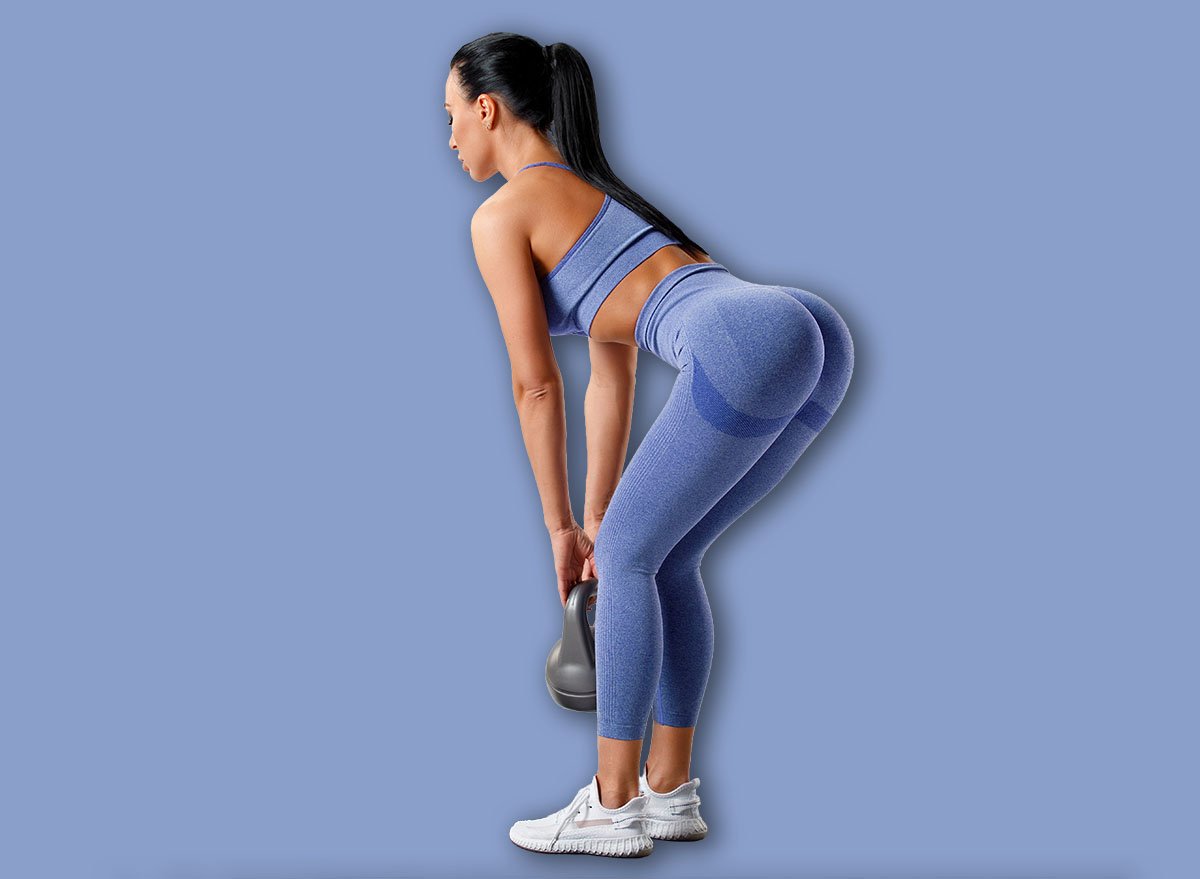
Kettlebell Deadlift
Kettlebell deadlifts train your hamstrings and glutes with a simple setup that feels more approachable than pulling a barbell from the floor. The kettlebell sits between your feet, which helps you keep the weight close and focus on driving through your hips. Your hamstrings help control the lowering phase while your glutes finish the stand. This builds the strength you need to lift bags, move objects around the house, and stand up from low positions with more confidence.
Muscles Trained: Hamstrings, glutes, quads, lower back, core
How to Do It:
- Stand with your feet about shoulder-width apart and place a kettlebell between your feet.
- Hinge at your hips and grip the kettlebell handle with both hands.
- Brace your core and keep your back flat.
- Drive through your feet and stand tall with the kettlebell.
- Lower the kettlebell back to the floor with control.
Recommended Sets and Reps: Perform 3 sets of 8 to 10 reps. Rest for 60 seconds between each set.
Best Variations: Elevated kettlebell deadlift, suitcase kettlebell deadlift, tempo kettlebell deadlift
Form Tip: Keep the kettlebell close and stand by driving your hips forward.
Band Staggered-Stance RDL
Band staggered-stance RDLs train one hamstring more directly while still giving you the balance support of both feet on the ground. Your front leg handles most of the work as you push your hips back, while the back foot gives you just enough stability to stay controlled. This is a strong bridge between regular RDLs and single-leg work because it builds hamstring strength without turning the exercise into a balance challenge. You’ll feel the carryover when stepping, climbing, and bending on one side.
Muscles Trained: Hamstrings, glutes, core, hip stabilizers
How to Do It:
- Stand on a resistance band with your front foot.
- Step your opposite foot slightly behind you with your toes on the floor.
- Hold the ends of the band in both hands.
- Push your hips back and lower your torso with control.
- Drive through your front foot to return to standing.
- Complete all reps, then switch sides.
Recommended Sets and Reps: Perform 3 sets of 8 to 12 reps per leg. Rest for 45 seconds between each set.
Best Variations: Dumbbell staggered-stance RDL, slower tempo reps, shorter range of motion
Form Tip: Keep most of your weight on the front leg and use the back foot for balance.
Band Pull-Through
Band pull-throughs train your hamstrings and glutes while reinforcing a clean hip hinge. The band pulls your hips backward, so your hamstrings have to control the hinge, and your glutes have to drive the finish. This exercise works well for rebuilding hamstring strength because it trains the hips to do the work rather than letting the lower back take over. The pattern carries over to lifting, standing, and moving with more power through the backside of your body.
Muscles Trained: Hamstrings, glutes, lower back, core
How to Do It:
- Anchor a resistance band low behind you.
- Stand facing away from the anchor with the band between your legs.
- Hold the band with both hands and step forward to create tension.
- Push your hips back while keeping your back flat.
- Drive your hips forward and squeeze your glutes to stand tall.
Recommended Sets and Reps: Perform 3 sets of 12 to 15 reps. Rest for 45 seconds between each set.
Best Variations: Cable pull-through, slower tempo pull-through, paused pull-through
Form Tip: Let your hips move back and forward while your spine stays steady.
How to Rebuild Hamstring Strength After 60
Shutterstock
Hamstrings usually respond best when you train the hinge pattern often enough to build confidence and strength. These exercises give you a clear way to load the back of your legs without relying on lunges for everything. Keep the range comfortable, move slowly, and pay attention to where you feel the work. Your hamstrings should feel challenged, but your lower back shouldn’t feel like it’s taking over the entire set.
- Prioritize the hinge pattern: RDLs, good mornings, deadlifts, and pull-throughs teach your hips to move while your hamstrings control the motion. That pattern matters every time you bend, lift, or stand back up.
- Move slowly on the way down: The lowering phase does much of the hamstring work. Take your time and keep tension in the back of your legs.
- Keep your knees slightly bent: Locked knees can shift the movement into an uncomfortable stretch. A soft knee position helps the hamstrings load more naturally.
- Use a range you can control: Lower only as far as your hamstrings allow while keeping your back flat. Clean reps beat deeper reps with poor position.
- Progress with small changes: Add a little weight, use a stronger band, increase reps, or pause at the bottom. Small progressions help build strength without irritating your hips or back.
Stick with these standing exercises a few days per week and give the backside of your legs regular attention. Stronger hamstrings can make walking, lifting, stairs, and daily movement feel more stable and powerful.
