

A strength coach reveals the bridge hold time that separates strong cores from the rest
Most people don’t think about their core when they think about strength. They think arms, maybe legs. But if you’ve ever dealt with a cranky lower back or felt your hips get tired halfway through a walk, you’ve already felt what happens when the core isn’t pulling its weight. I see it all the time. Someone stays active, does a lot right, but their hips and midsection just don’t have the same staying power.
And here’s where it gets interesting. A lot of that doesn’t show up in big lifts or flashy movements. It shows up in how well you can hold a position. Can your hips stay level? Can your glutes stay engaged? Can your core keep everything in place without you constantly adjusting? That’s the stuff that carries over into real life.
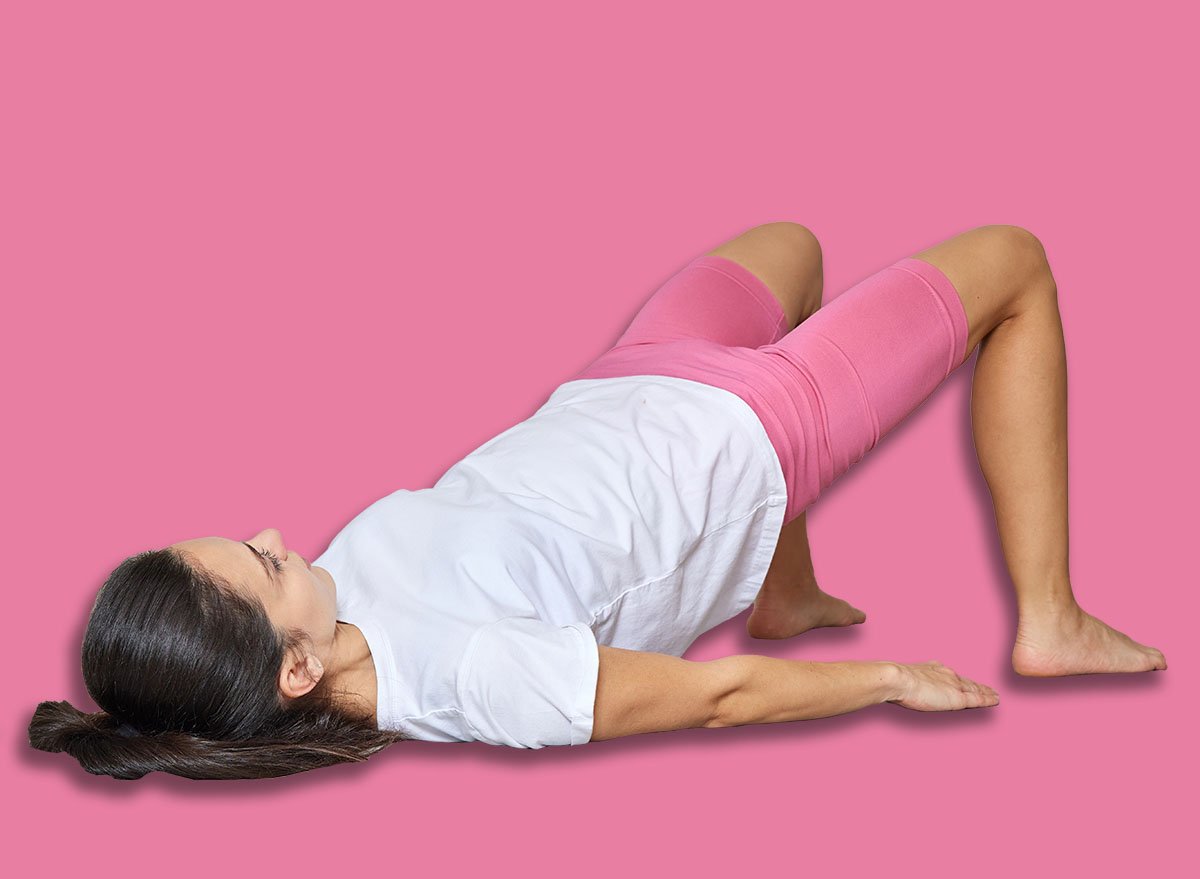
That’s why I like using the bridge hold. It’s simple, and it tells the truth pretty quickly. You lie down, lift your hips, and hold. No distractions. No rushing through reps. Just you maintaining tension. The amount of time you can stay there without your position changing gives you a really clear look at your core strength.
Why the Bridge Hold Matters More Than People Think
Shutterstock
The bridge hits your glutes, your hamstrings, and your core simultaneously. That combination matters because these muscles work together to support your spine and control your hips. When they’re doing their job, your movement feels more connected and a lot more stable.
A bridge hold is also an isometric hold, so your muscles stay under tension the whole time. That builds a different level of strength. Instead of passively lifting and lowering, you’re holding, stabilizing, and keeping everything where it should be. That carries over to walking, standing, and anything that asks your body to stay in position for more than a few seconds.
You’ll also feel right away when something starts to fade. Your hips might drop a bit. Your lower back might try to take over. Or you just feel the tension shift out of your glutes. Being able to hold a clean bridge without those changes tells you your core and hips are working the way they should.
How to Set Up a sturdy Bridge Position
A lot of people rush this or turn it into a lower-back exercise without realizing it. The setup makes all the difference here.
How to Do It:
- Lie on your back with your knees bent and your feet flat on the floor about hip-width apart.
- Place your arms at your sides with your palms down.
- Brace your core by tightening your midsection before you move.
- Press through your heels and lift your hips until your shoulders, hips, and knees are in line.
- Squeeze your glutes and keep your ribs down to keep your lower back neutral.
- Hold the position while breathing steadily and keeping your hips level.
Best Variations: Single-Leg Bridge, Marching Bridge, Elevated Feet Bridge, Banded Bridge Hold, Hip Thrust Hold.
Where You Stack Up
Shutterstock
This only works if you hold a clean position the entire time. Once your hips start to drop or your back takes over, you’re done.
- Under 30 seconds: Starting Point
You’re building awareness and learning how to hold a position.
- 30 to 60 seconds: Solid Base
Your core and hips work together to support everyday movement.
- 60 to 90 seconds: Stronger Than Most
You’ve got good control and can maintain tension as things start to get challenging.
- 90+ seconds: Stronger Than 90% of Peers
This level is where you separate yourself. Your hips stay level, your glutes stay on, and your core holds everything in place without shifting.
How to Build a Bridge That Holds Up
Shutterstock
Building a stronger bridge comes down to developing tension you can maintain, not just pushing for longer hold times. The goal is to keep the hips stable, the glutes engaged, and the core supporting the position from start to finish. When that holds, the strength built here carries over into how the body moves throughout the day.
- Practice bridges consistently: Two to three sets a few times per week help build both strength and endurance without overdoing it.
- Set your position before lifting: A strong brace and proper foot placement create better tension and make the hold more effective.
- Keep the work in the right muscles: The glutes and hamstrings should drive the movement while the lower back stays neutral.
- Maintain alignment throughout the hold: Keeping the ribs down and hips level helps reinforce proper positioning as fatigue builds.
- Use shorter, controlled sets: Multiple holds with strong form build better endurance than a single extended effort.
- Progress to single-leg variations: These improve control and help address side-to-side differences over time.
- Support it with other hip-focused work: Step-ups, split squats, and hip thrusts all contribute to stronger, more stable bridge holds.
- Stay consistent over time: Regular practice leads to better coordination, stronger muscle engagement, and longer, more controlled holds.
If you can hold a strong bridge past that 90-second mark with your hips steady and your glutes fully engaged, you’re doing really well. That shows that your core and hips can stay connected and support you without breaking down when things get a little tougher.
References
- Oranchuk, Dustin J et al. “Isometric training and long-term adaptations: Effects of muscle length, intensity, and intent: A systematic review.” Scandinavian journal of medicine & science in sports vol. 29,4 (2019): 484-503. doi:10.1111/sms.13375
- Lehecka, B J et al. “Building A Better Gluteal Bridge: Electromyographic Analysis Of Hip Muscle Activity During Modified Single-Leg Bridges.” International journal of sports physical therapy vol. 12,4 (2017): 543-549.
Jarrod Nobbe, MA, CSCS
Jarrod Nobbe is a USAW National Coach, Sports Performance Coach, Personal Trainer, and writer, and has been involved in health and fitness for the past 12 years. Read more about Jarrod
