

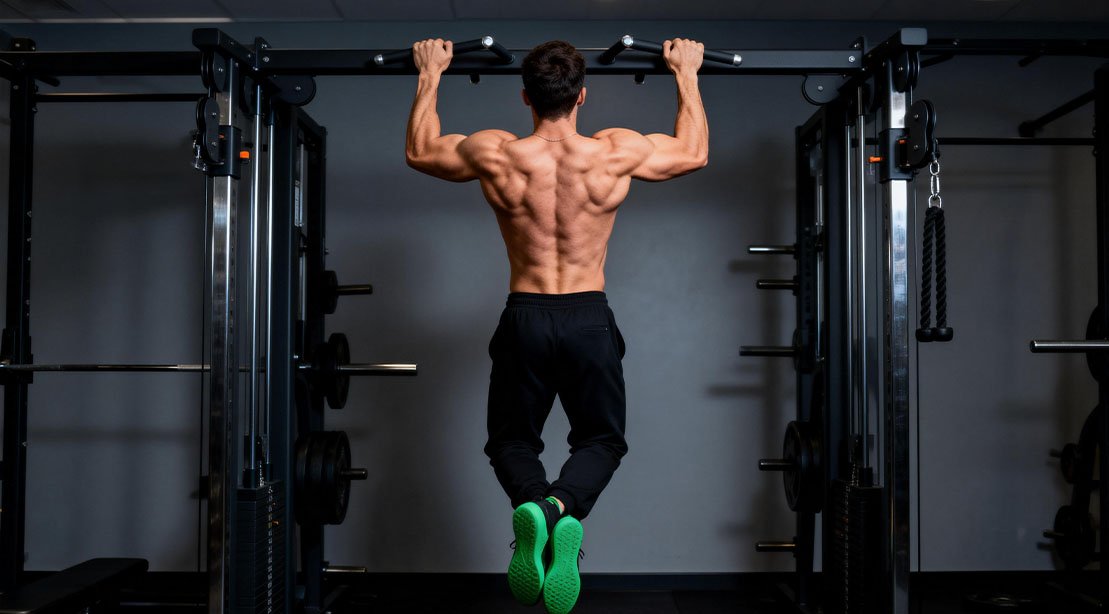
Pull-ups remain the upper-body gold standard. They improve strength, give you wings, and help build bulging biceps to go along with increasing pulling power. But for many lifters, pull-ups have continued being a no-go in their programs. Maybe they find it difficult to get a single rep, or their shoulders or elbows start barking after a few reps.
Sound familiar?
Pull-ups are great, but if they’re a struggle, let’s take a step back before moving forward. Instead of grinding out half reps and hoping for the best, let’s build the strength, control, and technique that pull-ups demand.
That’s where these five moves come in.
Don’t think of these five exercises as just alternatives—think of them targeted solutions to a weak point in your training. Each one fixes a specific issue that’s limiting your pull-up potential, so you can build a stronger back now and earn more powerful reps later.
Why Pull-Ups Are So Hard (And What’s Holding You Back)
Pull-ups require a combination of strength, control, and coordination that some lifters don’t have. If you’re struggling, it’s usually due to one or more of these issues.
Not Strong Enough (Yet)
Pull-ups are the best test of relative strength because it’s you versus your body weight. If your relative strength isn’t there, it’s not happening. Lifters who struggle often try to brute-force reps but end up swinging or shortening the range of motion. The solution isn’t more failed reps—it’s building strength in a way that transfers.
Shoulder or Elbow Discomfort
Pull-ups can be hard on the joints if you have any existing issues or your technique is off. Hanging at the bottom, using only your arms, or letting your elbows flare out can all increase stress in areas you want to protect. Shoulder or elbow pain can mean you haven’t dialed in your mobility, control, or setup.
Grip Strength
Your back is ready to keep going, but your grip calls it quits. Without enough grip endurance, your lats and upper back will never get going. You’re stopping sets early, not because your back is fatigued, but because your grip gave out first.
Poor Scapular Control
Poor scapular control, whether due to a form issue or a movement hitch, is a common obstacle. If you don’t start the movement by pulling your shoulder blades down and back, you end up pulling with your arms instead. This form flaw shifts the load away from your lats and onto your forearms and biceps, which tire quickly. Good pull-ups begin with the shoulders—not the elbows.
Sjale
Choosing The Best Pull-Up Alternatives for Lifters Who Struggle
If pull-ups aren’t clicking yet, your goal is to build toward them. That means choosing exercises that target the same muscles, train similar movement patterns, and address your weak links.
Here’s how to make it happen:
Vertical or Diagonal Pulling Pattern: Pull-ups are a vertical pull. Your options should either match that or come close enough to transfer effectively. Matching muscles and movement patterns means building pull-up strength, not just improving at something unrelated.
Lat & Upper Back Emphasis: If you’re not targeting your lats, you’re missing the point. A good exercise should work the lats, rhomboids, and mid-back.
Scapular Control: Pull-ups begin with the shoulder blades, not the elbows. Alternatives should teach you to depress and control your scapula, laying the foundation for stronger reps.
Progression: Whether you’re working toward your first rep or aiming to do more, the movement needs to progress. Progression could involve changing angles, resistance, tempo, or assistance.
5 Proven Pull-Up Alternatives to Improve Pull-Ups Fast
If your pull-ups are non-existent or you’re looking to spice up your back game, these five exercises are for you. https://www.youtube.com/watch?v=tCxmmLMv7Do
Mixed Grip Pull-Up
Solves: Not strong enough yet, grip limitations.
If pull-ups aren’t happening, mixed grip pull-ups give you a built-in advantage. One hand in a pull-up grip and the other in a chin-up grip creates a stronger pulling position, improves leverage, and enhances your ability to perform pull-ups in the future. The mixed grip allows you to get reps in sooner, eases grip demands, and begins building pull-up strength.
Why it works:
- Improves leverage to make pull-ups doable
- Reduces grip fatigue compared to the double overhand
- Bridges the gap between zero reps and full pull-ups
Inverted Row
Solves: Lack of pulling strength and poor scapular movement
Inverted rows target the same muscles, lats, upper back, and biceps—but with a lower percentage of your bodyweight. This makes it easier to build strength while reinforcing proper pulling mechanics. You’re not just getting stronger; you’re also learning how to pull more effectively. That improves your ability to perform stronger pull-ups.
Why it works:
- Progress by adjusting your body angle more upright = easier, more horizontal = harder
- Builds lats, upper back, and grip strength
- Reinforces scapular control and full-body tension
TRX Pull-Up
Solves: Strength and grip limitations
With your feet on the ground and directly under the strap, the TRX Pull-Up strengthens the pull-up movement without pulling your entire body weight. The shifting straps require you to lock in your core and control your movement, two things that carry over to stronger pull-ups.
Why it works:
- Reinforces full-body tension
- Builds strength through the pull-up motion
- Grip strength isn’t a limitation
Negative Pull-Ups
Solves: Strength limitations, elbow, and shoulder discomfort
If pulling from a dead hang is difficult or bothers your elbows, negative pull-ups are the answer. Negative pull-ups build strength in the correct muscles and positions needed for full pull-ups, while removing the pull from a dead hang, which your elbows may dislike, and creating tension where you need it.
Why it works:
- Builds strength in weak ranges of motion
- Direct carryover to full reps
- Reinforces control and positioning
Half-Kneeling Unilateral Lat Pulldown
Solves: Poor lat engagement, poor scapular control
If you have trouble feeling your lats, the half-kneeling unilateral lat pulldown fixes that. The half-kneeling stance locks in your lower body, engages your core, and reduces momentum, allowing you to better feel your lats. Going single-arm also exposes side-to-side differences and improves coordination between your upper body and core, which carries over to better pull-ups.
Why it works:
- Improves mind-muscle connection with the lats
- Reinforces proper scapular depression
- Enhances unilateral strength and reduces imbalances
STOP GRINDING, START BUILDING
Grinding your way through half reps and elbow pain is not the way to improve your pull-ups. So, stop grinding and start building. If you’re stuck, it’s not only about trying harder. It’s about fixing what’s holding you back. Strength, control, grip, and technique all play a role. Dial these in, stay consistent, and focus on quality reps over ego.
Then you won’t just do pull-ups, you’ll own them.
