

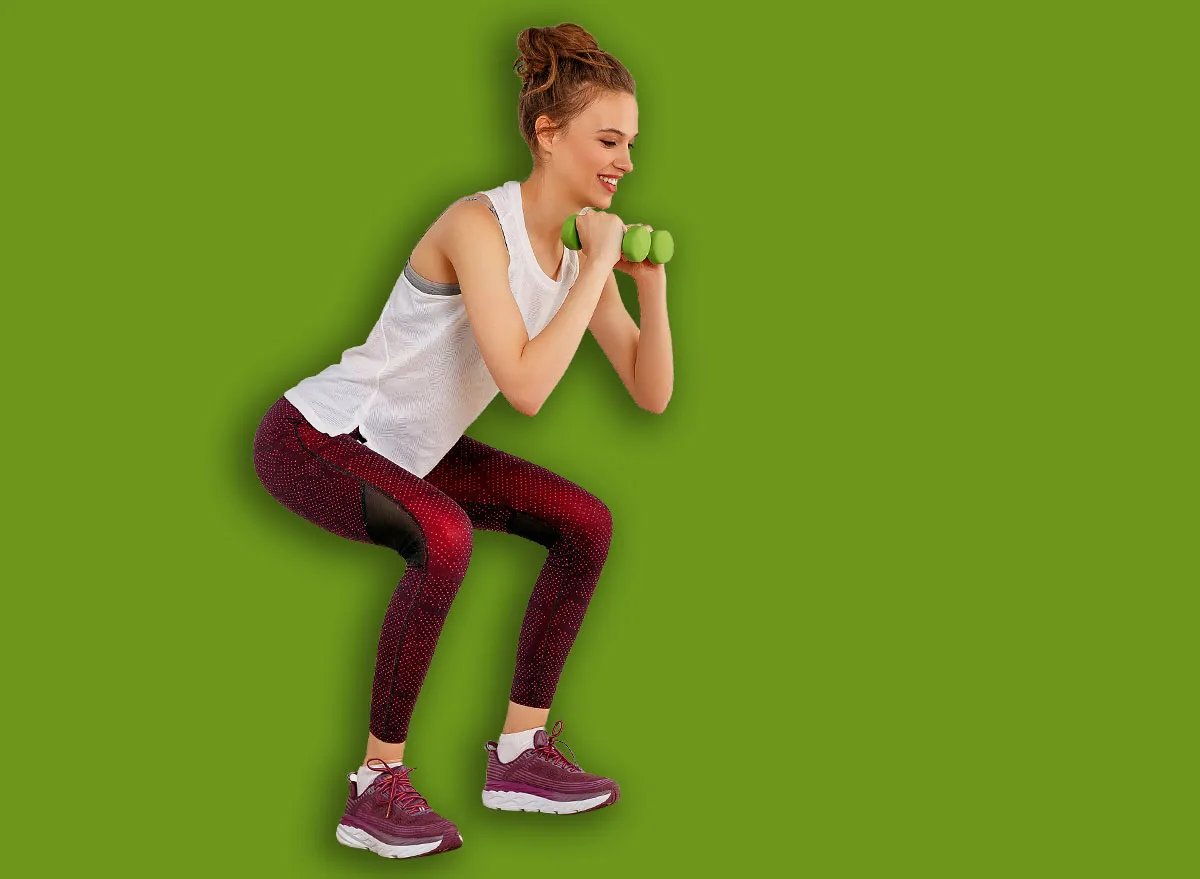
A strength coach says these single-leg dumbbell moves outperform squats for building muscle.
Walk into almost any gym, and you’ll see squats front and center for leg training. They’ve earned that reputation. But after 55, your body often responds better to variety, smarter loading, and movements that challenge stability just as much as strength. That’s where dumbbells quietly become one of the most effective tools you can use. They’re approachable, easy to adjust, and incredibly versatile, which makes them perfect for building muscle without beating up your joints.
From years of coaching athletes and everyday clients, I’ve seen how quickly progress picks up when we shift toward unilateral work. Training one leg at a time forces your body to recruit more muscle, clean up imbalances, and stabilize through your hips and core. That combination drives muscle growth in a way traditional bilateral squats sometimes miss. Add in different holding positions like goblet, suitcase, or even offset loading, and you instantly unlock new ways to challenge your legs without needing heavier and heavier weights.
If your goal is to build lean muscle, improve strength, and keep your legs feeling capable and resilient, aim for about 10 to 15 total working sets per muscle group per week, with most sets in the 8 to 15-rep range. The five dumbbell exercises below check every box. They target your legs from multiple angles, improve balance and coordination, and keep your training fresh, so you stay consistent. Let’s get into the moves that deliver real results.
Goblet Split Squats
This move turns a traditional squat into a single-leg strength builder that lights up your quads and glutes while demanding balance and control. Holding the dumbbell in a goblet position keeps your torso upright, shifting more tension to your legs rather than your lower back. You’ll also notice how much your stabilizers kick in, especially through your hips. Over time, this helps clean up side-to-side imbalances that can limit strength and lead to nagging aches. It’s one of the most efficient ways to build muscle while improving your body’s movement.
Muscles Trained: Quads, glutes, hamstrings, and core
How to Do It:
- Hold a dumbbell at chest height in a goblet position.
- Step your back foot behind you into a split stance.
- Lower your hips straight down until your front thigh is parallel to the floor.
- Keep your chest tall and your front knee tracking over your toes.
- Drive through your front foot to return to standing.
- Complete all reps, then switch sides.
Recommended Sets and Reps: Perform 3 to 4 sets of 8 to 12 reps per leg. Rest for 60 to 90 seconds between each set.
Best Variations: Front-foot elevated split squat, tempo split squat, offset goblet split squat
Form Tip: Keep most of your weight in your front leg and stay tall through your torso.
Dumbbell Walking Lunges
Walking lunges build strength, coordination, and endurance all at once. Each step challenges your balance and forces your legs to repeatedly absorb and produce force. This combination creates a powerful muscle-building stimulus while also improving your movement through space. You’ll feel your glutes and quads working hard to control every rep. Over time, this translates to stronger, more capable legs for daily life and training.
Muscles Trained: Quads, glutes, hamstrings, and calves
How to Do It:
- Hold a dumbbell in each hand at your sides.
- Step forward into a lunge position.
- Lower your back knee toward the ground under control.
- Push through your front foot to step forward into the next rep.
- Continue alternating legs with each step.
- Maintain an upright posture throughout the movement.
Recommended Sets and Reps:
Perform 3 sets of 10 to 14 steps per leg. Rest for 60 to 90 seconds between each set.
Best Variations: Reverse walking lunges, suitcase lunges, paused lunges
Form Tip: Take controlled steps and avoid rushing through each rep.
Dumbbell Romanian Deadlift
Strong hamstrings and glutes are essential for building balanced leg muscle, and this exercise targets both directly. The Romanian deadlift (RDL) teaches you how to hinge at your hips while keeping tension where it belongs. That hamstring stretch creates a potent growth stimulus when paired with controlled reps. It also strengthens your posterior chain, which supports better movement and reduces strain on your knees. A strong posterior chain is a staple for building complete leg strength.
Muscles Trained: Hamstrings, glutes, and lower back
How to Do It:
- Hold a dumbbell in each hand in front of your thighs.
- Stand tall with a slight bend in your knees.
- Push your hips back as you lower the weights down your legs.
- Keep your back flat and your chest slightly forward.
- Lower until you feel a stretch in your hamstrings.
- Drive your hips forward to return to standing.
Recommended Sets and Reps: Perform 3 to 4 sets of 8 to 12 reps. Rest for 60 to 90 seconds between each set.
Best Variations: Single-leg Romanian deadlift, staggered stance RDL, tempo RDL
Form Tip: Focus on pushing your hips back rather than bending your knees.
Goblet Step-Ups
Step-ups build real-world strength that carries over to everything from climbing stairs to hiking trails. Holding a dumbbell in the goblet position keeps your posture strong and your core engaged. Each rep forces your working leg to generate power while maintaining control at the top. You’ll also improve balance and coordination as you stabilize on one leg. It’s a simple move that delivers serious results.
Muscles Trained: Quads, glutes, and calves
How to Do It:
- Hold a dumbbell at chest height in a goblet position.
- Place one foot on a sturdy box or bench.
- Drive through your lead foot to step up onto the surface.
- Bring your trailing foot up to meet the lead foot.
- Step back down under control.
- Complete all reps, then switch sides.
Recommended Sets and Reps: Perform 3 sets of 8 to 12 reps per leg. Rest for 60 to 90 seconds between each set.
Best Variations: Lateral step-ups, high box step-ups, offset goblet step-ups
Form Tip: Drive through your entire foot, not just your toes.
Dumbbell Reverse Lunge
Reverse lunges are easier on your knees while still delivering a strong muscle-building stimulus. Stepping backward allows you to control the descent and keep better alignment through your hips. Improved alignment reduces unnecessary stress while still challenging your quads and glutes. It’s a great option if forward lunges feel uncomfortable or if you want to build strength with more control. Over time, this helps improve stability and confidence in your lower body.
Muscles Trained: Quads, glutes, hamstrings, and core
How to Do It:
- Hold a dumbbell in each hand at your sides.
- Step one foot back into a lunge position.
- Lower your back knee toward the ground.
- Keep your front knee stacked over your ankle.
- Push through your front foot to return to standing.
- Alternate legs with each rep.
Recommended Sets and Reps: Perform 3 sets of 10 to 12 reps per leg. Rest for 60 to 90 seconds between each set.
Best Variations: Deficit reverse lunge, offset reverse lunge, paused reverse lunge
Form Tip: Step back far enough to keep your front shin vertical.
The Best Tips for Building Leg Muscle With Dumbbells After 55
Shutterstock
Building strong, capable legs after 55 comes down to consistency, smart exercise selection, and understanding how your body responds to training. You don’t need to chase heavy barbells or grind through workouts that leave your joints feeling beat up. Instead, focus on movements that challenge your muscles while allowing you to move well and recover properly. Dumbbells give you that flexibility, which is why they’re such a valuable tool for long-term progress. When you combine thoughtful programming with quality movement, your legs respond quickly.
Here’s how to get the most out of your training:
- Train each leg individually: Single-leg work improves muscle balance and increases overall muscle recruitment.
- Progress your reps before weight: Build control and endurance first, then gradually increase load.
- Stay consistent with weekly volume: Aim for 10 to 15 total working sets per muscle group.
- Control every rep: Slower eccentrics increase time under tension and drive muscle growth.
- Rotate holding positions: Switch between goblet, suitcase, and offset loading to challenge your body in new ways.
- Respect recovery: Give your legs at least 48 hours between hard sessions to rebuild and grow stronger.
