

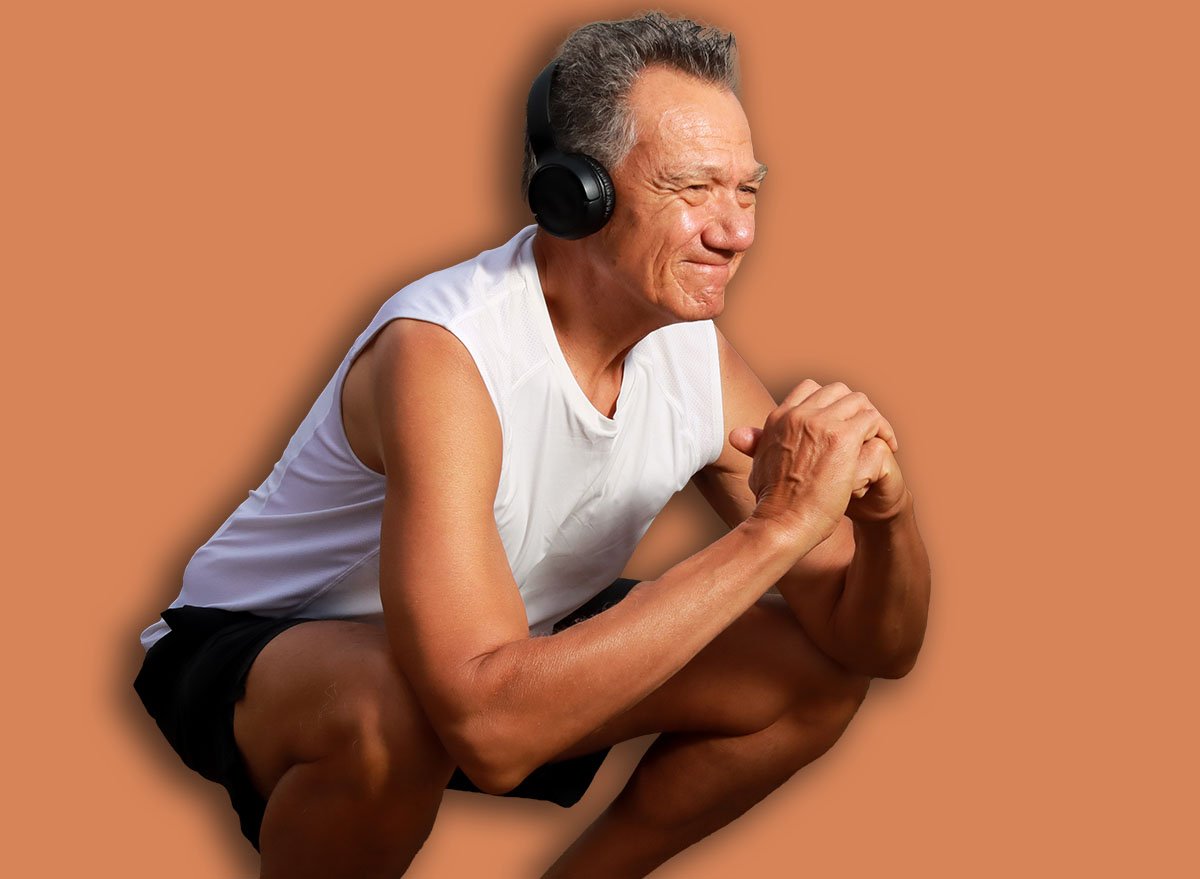
Can you hold these 4 positions? Your hips may be elite
Hip mobility plays a huge role in how freely and confidently you move each day. Strong, mobile hips support smoother walking, easier bending, and better balance during everything from workouts to yard work. After 55, maintaining that freedom of motion becomes one of the biggest drivers of staying active and independent. When your hips move well, your whole body tends to follow.
In my coaching work, hip mobility is one of the first things I look at when someone wants to feel better moving around. Over time, I’ve seen how quickly tight hips can limit stride length, posture, and even lower back comfort. The flip side is just as powerful. When people consistently train these positions, their movement often improves faster than they expect. It does not require extreme stretching sessions, just smart, focused holds done with intent.
The four positions below give you a clear snapshot of your hip mobility. If you can hold these with control and good alignment, your hips are in excellent shape for your age. Let’s break down what to aim for and how to do each one correctly.
Half-Kneeling Hip Flexor Stretch Hold
This position opens the front of the hips, an area that often tightens with prolonged sitting and reduced activity. Improving hip flexor length can help restore stride mechanics and reduce stress on the lower back. I like this hold because it teaches you to control pelvic position while the hip extends. When performed correctly, it creates a deep but comfortable stretch through the front of the trailing leg. It also reinforces posture awareness.
Muscles Trained: Hip flexors, glutes, deep core stabilizers, and quadriceps
How to Do It:
- Kneel on your right knee with your left foot planted in front of you.
- Brace your core and gently tuck your hips under.
- Shift your body forward until you feel a stretch in the front of your right hip.
- Keep your chest tall and your ribs stacked over your hips.
- Hold the position while breathing slowly.
- Switch sides after the hold time.
Recommended Sets and Reps: Perform 2 to 3 sets of 20 to 40 second holds per side. Rest for 30 to 45 seconds between each set.
Best Variations: Supported hip flexor stretch, overhead reach stretch, couch stretch
Form Tip: Keep your hips tucked slightly to avoid arching your lower back.
Deep Squat Hold
The deep squat hold challenges hip flexion, ankle mobility, and core control simultaneously. This position reflects real-world mobility that carries over to daily movement patterns. I often use it as a quick check because it exposes restrictions quickly. When someone can sit comfortably in a deep squat, their hips usually move very well. It also builds strength at the bottom range while you hold.
Muscles Trained: Glutes, hip adductors, quadriceps, and core stabilizers
How to Do It:
- Stand with your feet slightly wider than shoulder width.
- Brace your core and sit your hips down and back.
- Lower into the deepest squat position you can control.
- Keep your heels grounded on the floor.
- Hold your chest tall and your knees tracking over your toes.
- Breathe steadily during the hold.
Recommended Sets and Reps: Perform 2 to 3 sets of 20 to 45 second holds. Rest for 45 to 60 seconds between each set.
Best Variations: Supported squat hold, goblet squat hold, heels elevated squat hold
Form Tip: Think about spreading the floor apart with your feet to stay stable.
Figure Four Stretch Hold
The figure four targets the outer hips and glutes, which often tighten with age and reduced rotational movement. Improving this area supports smoother hip rotation and can ease tension through the lower back. I like this position because it gives clear feedback on side-to-side differences. Many clients feel one hip opens faster than the other. Consistent practice helps even things out and improves overall hip comfort.
Muscles Trained: Glutes, deep hip rotators, hip stabilizers, and lower back support muscles
How to Do It:
- Lie on your back with your knees bent and feet flat on the floor.
- Cross your right ankle over your left knee.
- Reach through and gently pull your left thigh toward your chest.
- Keep your shoulders relaxed against the floor.
- Hold the stretch while breathing steadily.
- Switch sides after the hold time.
Recommended Sets and Reps: Perform 2 to 3 sets of 20 to 40 second holds per side. Rest for 30 to 45 seconds between each set.
Best Variations: Seated figure four, supported figure four, band-assisted figure four
Form Tip: Slightly flex the crossed ankle to protect your knee.
Split Squat Hold
The split squat hold builds hip mobility while reinforcing single-leg strength and control. This position challenges both hip flexion and extension simultaneously, making it highly functional for walking and climbing stairs. I like using this hold because it exposes side-to-side differences quickly and helps restore balance between the hips. When clients stay consistent with it, they often notice smoother strides and better lower-body stability. It also builds confidence in deeper single-leg positions.
Muscles Trained: Glutes, quadriceps, hip flexors, and core stabilizers
How to Do It:
- Step your right foot forward and your left foot back into a split stance.
- Brace your core and lower straight down into a controlled split squat.
- Stop when your back knee hovers just above the floor.
- Keep your torso tall and your front heel grounded.
- Hold the bottom position while breathing steadily.
- Switch sides after the hold time.
Recommended Sets and Reps: Perform 2 to 3 sets of 20 to 30 second holds per side. Rest for 45 to 60 seconds between each set.
Best Variations: Supported split squat hold, front foot elevated hold, rear foot elevated hold
Form Tip: Lower straight down rather than drifting forward into your front knee.
The Best Tips for Improving Hip Mobility After 55
Shutterstock
Improving hip mobility after 55 comes down to consistency, patience, and quality positioning. The hips respond very well to regular movement when the exercises stay controlled and repeatable. I’ve seen many adults regain noticeable freedom of motion within a few weeks once they commit to short daily sessions. You do not need marathon stretching routines to see progress. Focus on frequent, well-executed holds and let the improvements build over time.
- Practice mobility work most days of the week: Frequent exposure helps the hips stay loose and responsive.
- Breathe slowly during each hold: Calm breathing helps the muscles relax into deeper positions.
- Stay just below discomfort: Gentle tension works better than forcing extreme ranges.
- Balance both sides evenly: Spend extra time on the tighter hip when needed.
- Pair mobility with strength work: Strong hips help maintain the range you build.
- Be patient and consistent: Small daily improvements add up quickly.
Stick with these positions, and your hip mobility can stay sharp and capable for many years to come.
