

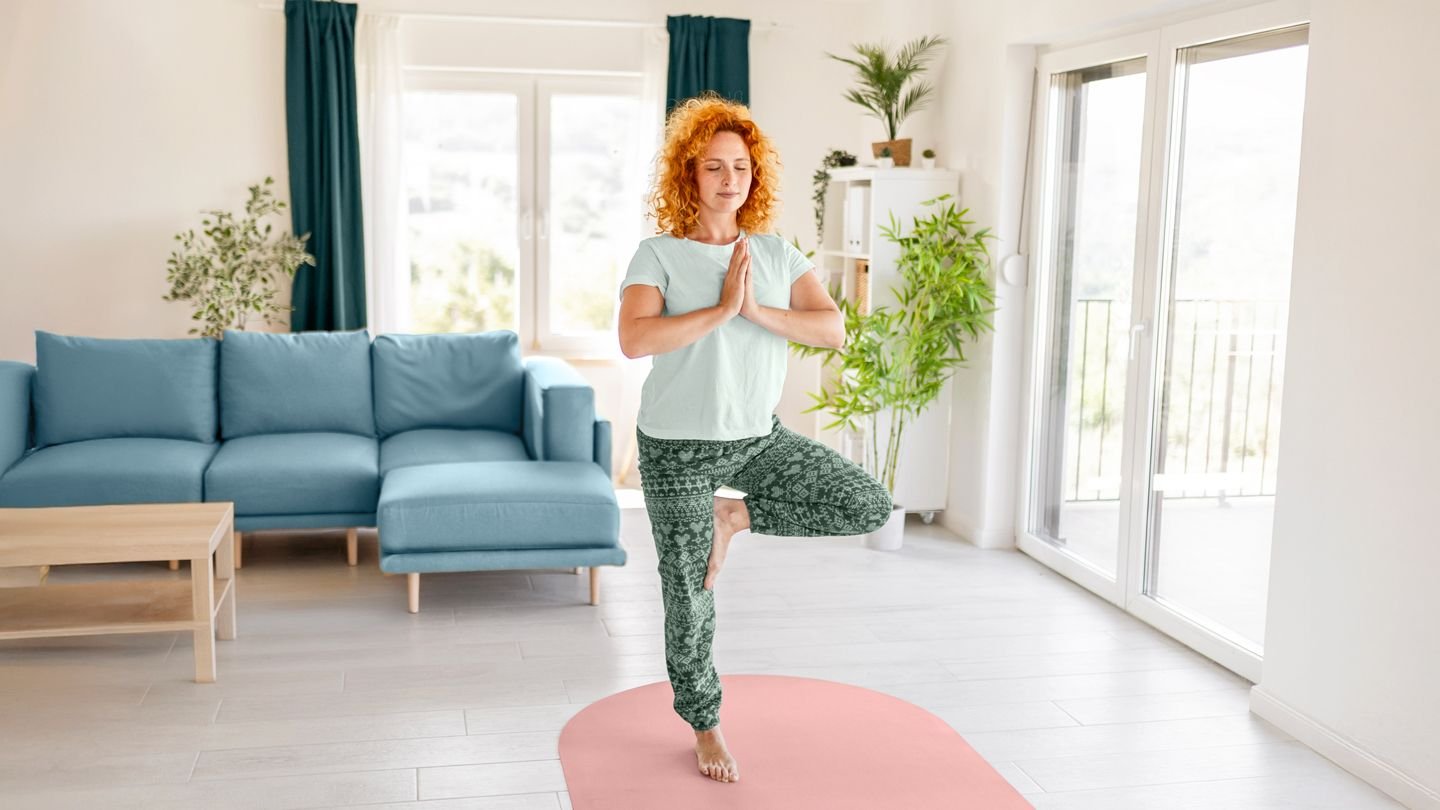
Balance is just as important as building muscle strength and fitness, especially as you grow older. Balance is your ability to distribute your weight in order to stand or move without falling (or catch yourself if you trip).
[1]
Balance exercises specifically challenge your coordination and sense of gravity.
[2]
The reason balance becomes more critical with age? Your body’s balance systems naturally decline over time. “As we age, our brain slows down in its processing of key sensory inputs that includes our inner ear, eyes, and even how we feel our feet on the ground — called proprioception,” says Colleen M. Casey, PhD, a board-certified adult nurse practitioner and the medical director of the senior health program at Providence Senior Health in Portland, Oregon.
Check with your doctor before beginning a balance exercise program for older adults, especially if you have weak balance or are at risk of falling.
[3]
Your doctor can help uncover whether your balance issues are related to medication or underlying conditions, says Robyn Culbertson, DPT, a board-certified clinical specialist in geriatric physical therapy based in Columbia, South Carolina, and a spokesperson for the American Physical Therapy Association.
Once your doctor gives you the all-clear, do these exercises recommended by Dr. Culbertson daily. All you need is a sturdy countertop and a chair for support. As your balance improves, consider adding a light dumbbell to increase the challenge.
It’s generally best to do balance exercises barefoot, which engages the muscles in your feet and ankles and improves stability.
[4]
But people with type 2 diabetes or peripheral neuropathy (nerve damage that often affects the feet) should wear shoes to protect their feet.
