

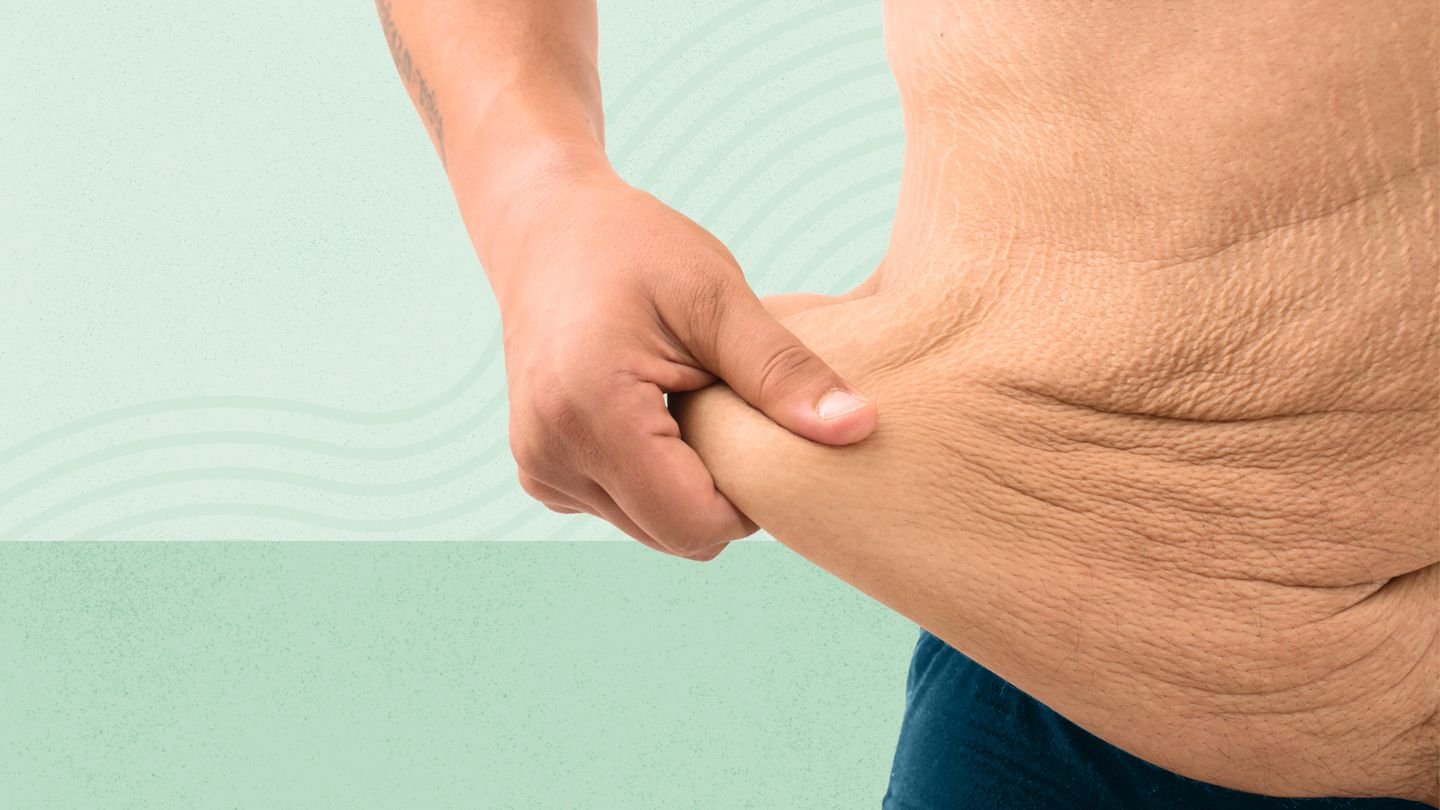
Achieving healthy weight loss is an accomplishment worth celebrating — but it may also come with new challenges, like loose, sagging skin.
[1]
“Excess skin is a common concern after significant weight loss, whether that weight loss is medication-induced, related to pregnancy, or achieved through diet and exercise,” says Sabrina Fabi, MD, a dermatologist at Cosmetic Laser Dermatology in San Diego, California.
Here’s what experts say about this rarely discussed physical aftermath of shedding significant weight, along with tips for addressing it.
1. Excess Skin After Weight Loss Looks Different on Everyone
Gaining and carrying extra weight for an extended period can stretch your skin, weakening it and reducing its elasticity. In turn, the skin may not be able to return to its original shape, and you may have excess skin after weight loss.
[2]
The amount of extra skin that remains after weight loss varies from person to person, depending on several factors, including the amount of weight lost, how quickly it was lost, and body composition factors such as muscle mass.
[3]
[4]
Even your skin’s elasticity is unique, depending on factors such as genetics, age, skin quality, and lifestyle habits, including smoking, diet, and sun exposure, says Bob Basu, MD, MPH, president of the American Society of Plastic Surgeons and founder and owner of Basu Aesthetics and Plastic Surgery in Houston. These elements all play a role in how well your skin bounces back after losing weight.
[3]
“Skin is elastic, but it has its limits. When the body carries extra weight for a long period of time, the skin stretches, and the underlying support structures weaken. If weight loss happens faster than the skin can adapt, the skin may not fully retract,” Dr. Basu says. “Long-term stretching alters the deeper collagen and connective tissue layers, which is why two patients with the same amount of weight loss can have very different outcomes.”
2. Your Skin Might Take Longer to Tighten Than for Weight to Drop
Your skin will naturally tighten a bit as it adjusts to your new weight. So you might continue to see changes in skin appearance after you see changes on the scale.
The extent of tightening you’ll see depends on the body’s ability to produce key proteins that support connective tissue, providing structure for the skin.
[5]
These are known as elastin fibers and collagen, which are responsible for creating thicker, healthier skin, Dr. Fabi says.
[6]
Given this, anyone who experiences quick weight loss — commonly defined among some researchers as shedding around five percent of total body weight in a week — has the potential to experience loose skin in the process before any re-tightening occurs.
[7]
“Even in individuals who were not obese, rapid weight loss can overwhelm the skin’s capacity to regenerate enough elastin fibers to allow it to contract as it once did,” Fabi says.
[8]
And, at some point, skin will stop tightening. Some older research suggests that skin may reach its maximum natural tightness within a year of massive weight loss, based on skin biopsy results from 30 patients who were, on average, in their late thirties and had lost about one-third of their body weight.
[9]
3. Where You’ll Have Excess Skin Is Somewhat Predictable
Post–weight loss, it’s common to have noticeable excess skin in specific areas — such as the upper face, arms, abdomen, breasts, and buttocks — but the exact location and extent of loose skin can vary by individual.
[1]
Some areas may be more troublesome than others, whether visually or physically.
“The abdomen is often the most bothersome because it can hang or fold — affecting a person’s clothing choices and confidence. Arms and inner thighs are also frequent concerns, especially in warmer climates, or when a patient wants to wear sleeveless clothing,” Basu says.
4. Exercise Helps, But Won’t Eliminate Excess Skin
Exercise — including strength training and cardio — can help support skin tightening.
[10]
Experts recommend prioritizing exercises that build muscle and promote circulation, which may improve skin elasticity and give the skin a firmer appearance.
[11]
“Weight training and resistance exercises, in particular, have been shown to support healthier skin by promoting muscle tone and improving skin structure,” Fabi says. In other words, muscle growth can “inflate” the skin from beneath, similar to blowing up a balloon — and that extra structural support is what can result in skin that looks smoother, fuller, and tighter.
[11]
Still, it’s important to have realistic expectations, Basu says. There are definite limitations to how much exercise can improve your skin’s structure and appearance.
“Exercise cannot eliminate excess skin, but it can make a noticeable difference in how the body looks and feels,” he says.
5. Excess Skin Can Cause Practical Problems Beyond Appearance
In some cases, excess skin becomes more than a cosmetic issue, when it leads to irritation or interferes with daily activities, Basu says.
[12]
This might manifest as hygiene challenges, such as rashes, chafing, and a risk of skin infections — along with limited movement, says Adrienne Youdim, MD, a physician who specializes in clinical weight loss and nutrition in Beverly Hills, California.
[1]
“Loose skin can become a functional impediment, particularly in the abdomen, between the legs, and under the arms,” Dr. Youdim notes. “Excess skin between the legs, for example, can also impair gait and result in joint and back pain over time.”
What’s more, discomfort experienced during exercise could interfere with sustained weight loss results, Basu says.
“Continued physical activity is important to maintain weight loss and for our overall health and wellness,” Basu says. “When movement becomes uncomfortable, patients may reduce activity, which can make it harder to maintain the progress they have worked to achieve.”
6. There Are Surgical and Nonsurgical Treatment Options
There are several options available to help tighten excess skin, whether for aesthetics, comfort, functionality, or all of the above.
Nonsurgical skin-tightening procedures — such as ultrasound, radiofrequency, and laser treatments — stimulate collagen production to firm excess skin. The results are more subtle, but involve less downtime and cost less than surgery.
[13]
Surgical treatment options include body-contouring procedures to address specific areas — such as the torso, legs, arms, and buttocks — and are most effective for removing excess skin, Basu notes.
[12]
“Procedures are tailored to each patient’s anatomy and concerns,” he says. “It can significantly improve comfort and confidence. The downsides include scarring, recovery time, cost, and the general risks of surgery.”Keep in mind that the cost of surgical options can vary based on factors like your location and the surgeon’s experience, and many health insurance plans do not cover elective plastic surgery post–weight loss.
[1]
In addition, to protect your health and safety, it’s important to select a licensed physician whom you trust and are comfortable with for aesthetic (or any) surgical procedures. You can verify a plastic surgeon’s board certification through the American Board of Medical Specialties, which designates clinicians who have met the specific training, experience, and expertise criteria required to obtain board certification and meet patient care standards.
7. Embracing Gratitude for Your Body and Accomplishments Can Help
Your weight-loss transformation — and the excess skin that may come along with it — can be an adjustment. Instead of beating yourself up about the physical remnants of your achievement, experts recommend focusing on celebrating the accomplishment.
“I remind patients that excess skin is evidence of their success,” says Basu, who suggests the following tips to help ease discomfort along the way:
- Wearing supportive clothing
- Staying active in ways that feel comfortable
- Talking openly with a trusted source about what you’re going through
Youdim agrees that mindset is key. “Gratitude can play an important role here, reminding ourselves of the good fortune of a strong and healthy body — regardless of its imperfections. Self-compassion practices can also be very effective,” she says, which some studies show may offer body image and self-esteem benefits.
[14]
This could include daily activities like journaling, guided meditation, and checking in with yourself to ask what you truly need in the moment.
[15]
“Most importantly, I encourage patients to be kind to themselves and commend them for the progress they’ve made in their journey to their healthiest self,” Basu says.
The Takeaway
- Experiencing quick or significant weight loss can lead to loose or excess skin in certain parts of the body.
- The rate at which your skin may shrink back depends on its elasticity, which involves factors like genetics, age, and lifestyle habits.
- Nonsurgical skin-tightening options, such as laser resurfacing and radiofrequency, are available for more subtle results. A healthcare provider may recommend surgical skin removal procedures for more significant change, or when excess skin becomes painful or interferes with daily activities.
