

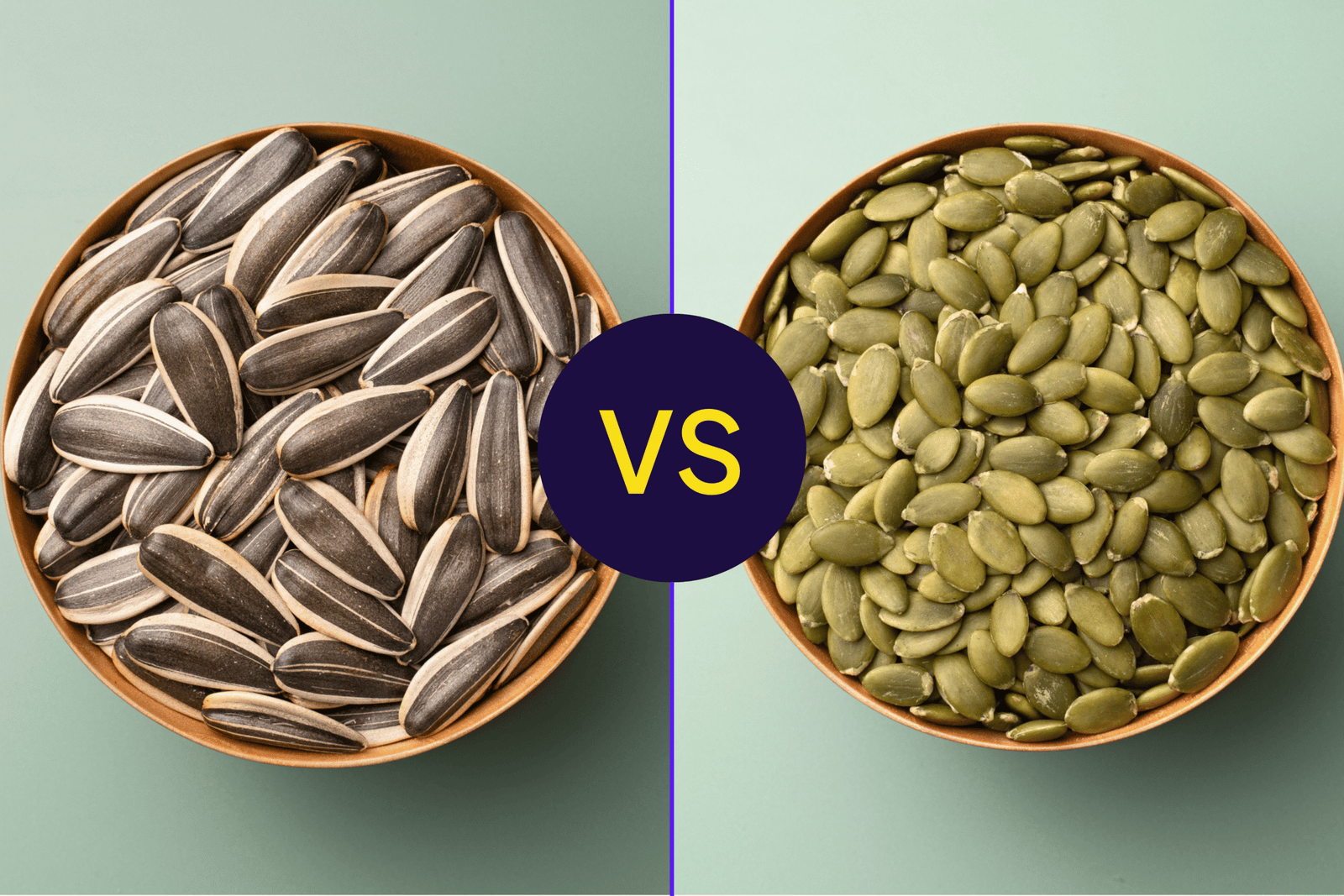
Pumpkin seeds and sunflower seeds are popular seeds often eaten as snacks or used as toppings for dishes such as salads, yogurt, and oatmeal. Both of these seeds are nutritious, but there are differences in their levels of minerals, like zinc, and healthy fats.
Pumpkin seeds are packed with zinc, providing 2.17 milligrams, 20% of the Daily Value (DV), per ounce. An ounce of sunflower seeds only contain 14% of the DV. This makes pumpkin seeds a better choice for those who want to boost their zinc intake.
Meeting your daily zinc needs is critical, as this mineral plays important roles in skin health, immune function, DNA synthesis, growth and development, and reproductive health.
Buying sprouted pumpkin seeds or soaking and roasting raw pumpkin seeds at home can improve the absorption of zinc and other minerals, such as magnesium and iron.
Both pumpkin and sunflower seeds are rich in healthy fats, but sunflower seeds contain slightly more. An ounce of sunflower seeds packs 14.1 grams of fiber, while the same serving of pumpkin seeds contains 13.9 grams.
However, the difference is minimal, and both seeds are excellent sources of unsaturated fats, which support heart health, especially when they replace saturated fats in the diet.
Around 70% of the fat in sunflower seeds is polyunsaturated, which studies show can support heart health. Swapping saturated fats for polyunsaturated fats, such as those found in sunflower seeds, can help lower LDL (“bad”) cholesterol and may reduce the risk of cardiovascular disease.
Pumpkin seeds also provide healthy fats and make an excellent addition to a heart-healthy diet.
Both pumpkin seeds and sunflower seeds are nutrient-dense and can fit into a well-rounded diet.
If boosting zinc intake is a priority, pumpkin seeds are likely the better option. On the other hand, if your main focus is on increasing healthy fats, sunflower seeds provide slightly more.
Pumpkin seeds and sunflower seeds are also high in other nutrients, like magnesium and vitamin E.
For example, an ounce of pumpkin seeds contains 37% of your daily needs for magnesium, a mineral needed for blood pressure and blood sugar regulation, while the same serving of sunflower seeds covers nearly 50% of your daily needs for vitamin E, which has powerful cellular-protective properties.
Both seeds also provide fiber and plant-based protein, which support blood sugar regulation and help you feel fuller after eating.
Here’s how a 1-ounce serving of sunflower seeds and pumpkin seeds compares:
Pumpkin Seeds
Sunflower Seeds
Calories
163
155
Protein
8.45 grams (g)
5.47 g
Fat
13.9 g
14.1 g
Carbs
4.17 g
4.34 g
Fiber
1.84 g
2.55 g
Vitamin E
0.15 milligrams (mg) or 1% of the DV
7.4 mg or 49% of the DV
Magnesium
156 mg or 37% of the DV
36.6 mg or 8.7% of the DV
Zinc
2.17 mg or 20% of the DV
1.5 mg or 14% of the DV
Pumpkin seeds provide more zinc, protein, and magnesium per serving, while sunflower seeds contain more fat and fiber, and significantly more vitamin E.
Both can be enjoyed on their own or paired with fresh fruit as a snack, or sprinkled over salads, oatmeal, or yogurt for a crunchy texture and additional nutrients.
Health.com uses only high-quality sources, including peer-reviewed studies, to support the facts within our articles. Read our editorial process to learn more about how we fact-check and keep our content accurate, reliable, and trustworthy.
U.S. Department of Agriculture. FoodData Central. Seeds, pumpkin, and squash seed kernels, roasted, without salt.
U.S. Department of Agriculture. FoodData Central. Seeds, sunflower seed kernels from shell, dry roasted, with salt added.
National Institutes of Health: Office of Dietary Supplements. Zinc.
Elliott H, Woods P, Green BD, Nugent AP. Can sprouting reduce phytate and improve the nutritional composition and nutrient bioaccessibility in cereals and legumes?. Nutr Bull. 2022;47(2):138-156. doi:10.1111/nbu.12549
Hooper L, Martin N, Jimoh OF, Kirk C, Foster E, Abdelhamid AS. Reduction in saturated fat intake for cardiovascular disease. Cochrane Database Syst Rev. 2020;5(5):CD011737. doi:10.1002/14651858.CD011737.pub2
National Institutes of Health: Office of Dietary Supplements. Vitamin E.
National Institutes of Health: Office of Dietary Supplements. Magnesium – health professional fact sheet.
Akbar A, Shreenath AP. High fiber diet. In: StatPearls. StatPearls Publishing; 2025.
