

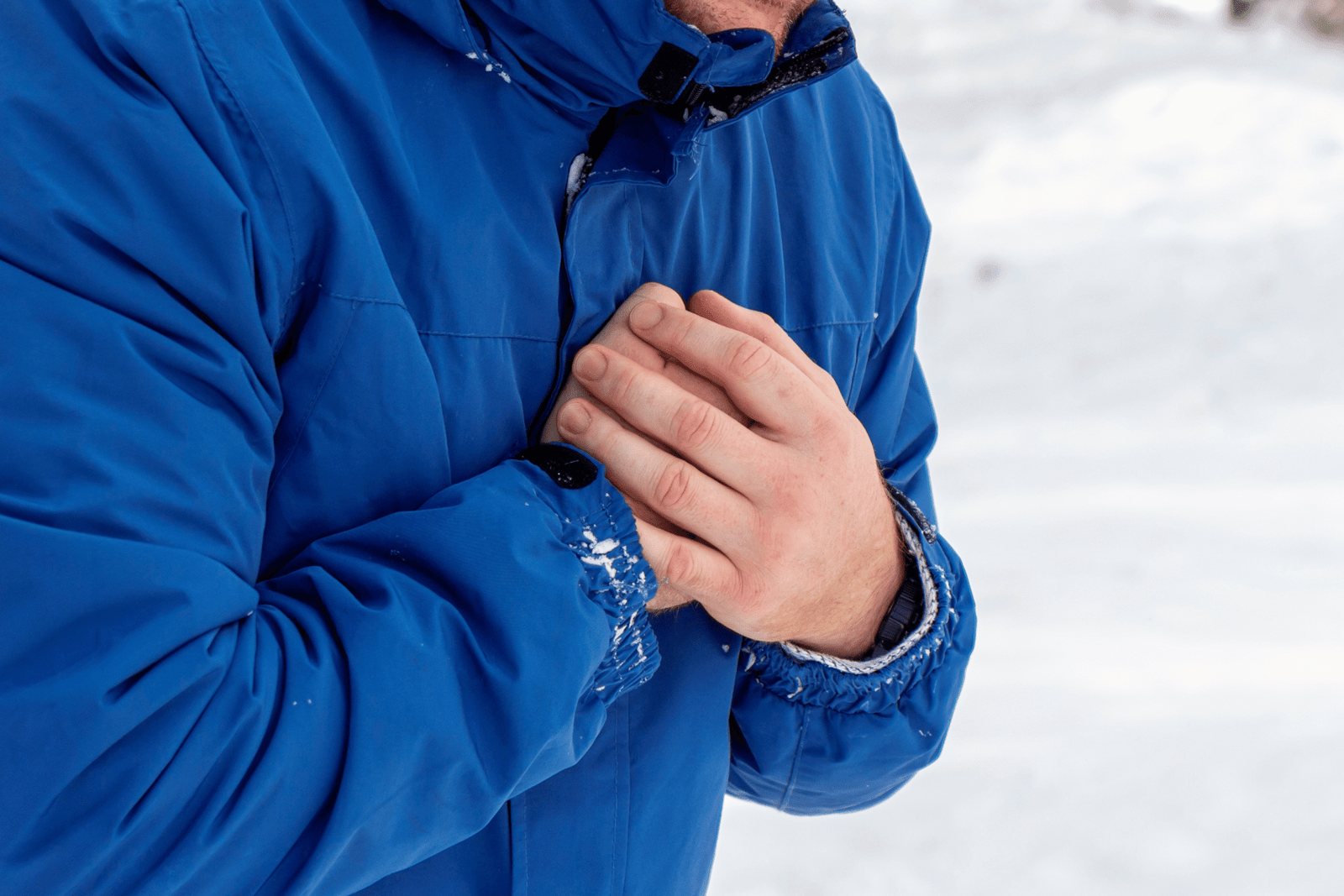
Cold weather can put a strain on your body, especially your heart. That’s one of the key reasons why rates of cardiovascular disease—including heart attacks—spike in the winter months. Here’s what’s going on in your body in cold weather, and how to protect your heart.
When you’re exposed to the cold, your body naturally tries to preserve its internal temperature, explained James Udelson, MD, interim chief physician executive of the CardioVascular Center and chief of cardiology at Tufts Medical Center.
One way it does this is by tightening your blood vessels (the tubes that carry blood throughout your body), like the “narrowing of a pipe,” Udelson told Health. That means your heart has to work harder to pump blood, and your blood pressure goes up—increasing the risk of a heart attack.
Besides cold temperatures, several other factors contribute to the winter spike in heart attack rates. The biggest one: shoveling snow.
“Shoveling snow can be quite difficult, with repetitive short bursts of heavy exertion, almost like lifting weights or running short sprints,” Michael Blaha, MD, MPH, a cardiologist at Johns Hopkins Medicine, told Health. “This places additional stress on an already hard-working heart.”
People also tend to exercise less in the winter, “so they are relatively deconditioned compared to the more typical exercise of summer,” Blaha added.
John Osborne, MD, PhD, FACC, FNLA, chief medical officer at ClearCardio and volunteer expert at the American Heart Association, also noted that blood is more prone to clotting in the winter, as the body naturally thickens blood to stay warm. A blood clot in the heart can lead to a heart attack.
Mood disorders, like seasonal affective disorder, and respiratory infections, such as the flu, tend to peak in the winter, too, and can cause additional stress and inflammation that harm the heart, Blaha said.
Experts said the group most at risk of heart attacks in the cold is people with pre-existing heart conditions or risk factors—whether they’re aware they have them or not.
“This is why it is important to be aware of your heart health,” Blaha said. “Commonly, heart attacks that occur in the winter occur in people with multiple untreated or unrecognized risk factors—like uncontrolled high blood pressure or new diagnoses of diabetes.”
Osborne said men over age 65 are especially at risk—they’re more prone to heart attacks than women, and they tend to do more snow shoveling.
Experts provided several tips for keeping your heart safe in the winter:
- Dress appropriately. If you need to go outside in the winter, wear additional layers of clothing to retain body heat, and bundle up with a hat, gloves, and a heavy coat.
- Exercise indoors. It’s important to maintain your physical activity during the winter, but it’s best to work out inside, where there are comfortable temperatures and controlled conditions.
- Go slow when shoveling snow. If you have to shovel snow, take plenty of breaks. Listen to your body and pause when you feel short-of-breath.
- Use the buddy system. Go outside with family, friends, or neighbors in the winter in case of an emergency. “Don’t go out there alone,” Osborne added. “No one wants to find you keeled over, unresponsive in the snow bank.”
It’s important to be aware of the signs of a heart attack, including chest pain, sweating, and fatigue. However, symptoms vary from person to person.
“The ‘Hollywood heart attack,’ the classical presentation discussed in textbooks or seen in the media, really occurs a minority of the time,” Osborne said, also noting that this presentation is more common in men. Women’s symptoms tend to be more subtle, and they’re more likely to experience symptoms like shortness of breath, nausea, and lightheadedness.
“It is usually not a sharp pain, like an ice pick or a knife. It tends to be more diffuse,” Osborne added. “If it’s more focal—that is, ‘I can point to a specific spot with my finger’—that’s probably not heart-associated.”
If you notice any signs of a heart attack, seek help right away. Depending on your individual risk, that may mean contacting your doctor, or calling 911. “People often ignore the initial warning signs, or they think it’s heartburn or reflux,” Udelson said. “But anything—especially when you’re exerting yourself in the cold—is something to be checked out.”
It’s also a good time to learn hands-only CPR, Osborne emphasized, given the higher heart attack rates in the winter. The American Heart Association has online tutorials, but simply put: “All you have to do is put your hands in the middle of the chest and just push hard and fast,” Osborne said. “That literally can be life-saving.”
