

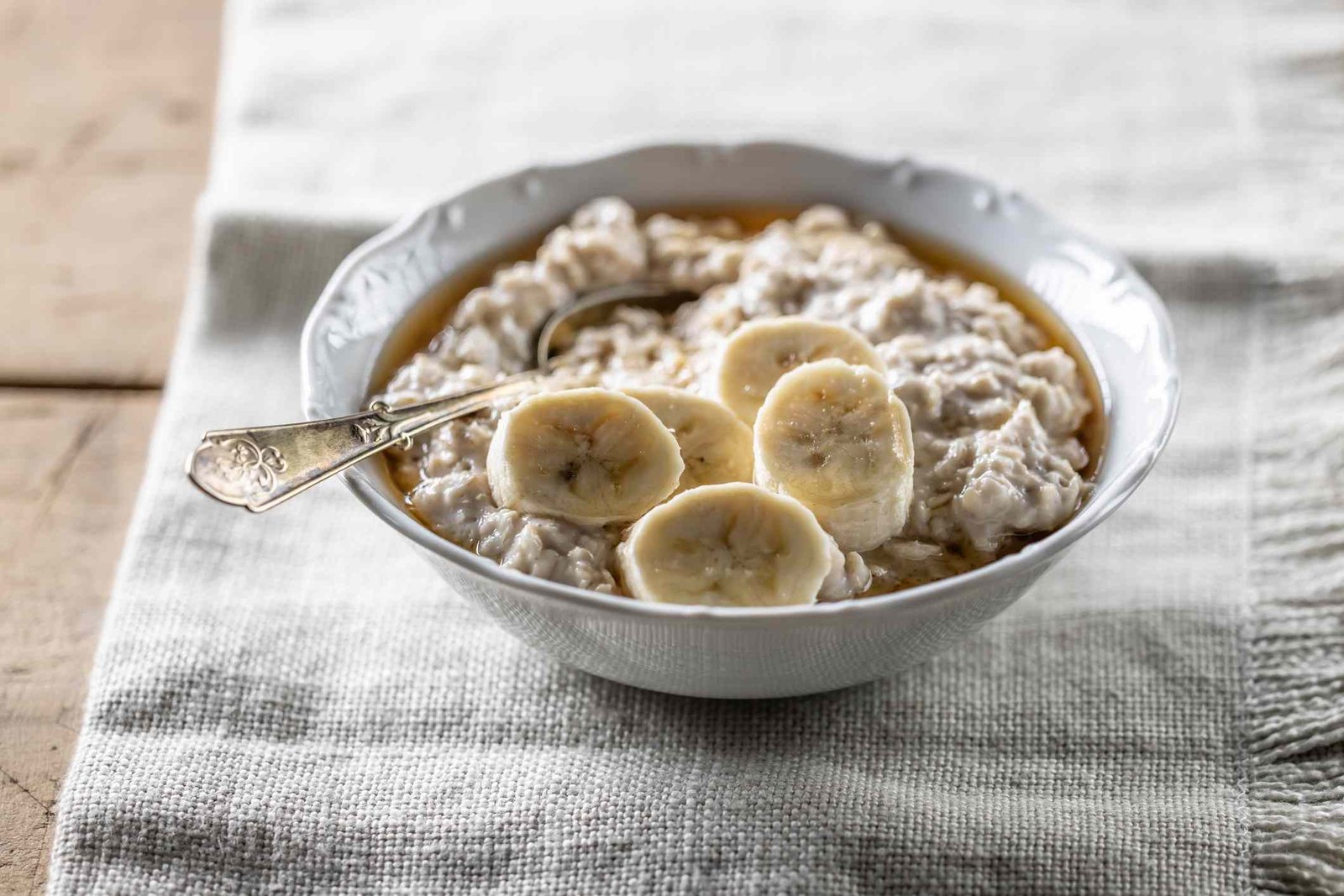
Comforting, affordable, and versatile, oatmeal and Cream of Wheat are staple breakfast foods in many households. Here’s how oatmeal and cream of wheat compare, including their nutritional differences and health impacts, as well as who might benefit from each.
While oatmeal and Cream of Wheat are often enjoyed in the same way, they’re made from completely different ingredients.
Oats are the edible seed of the Avena sativa or oat plant, which is a type of grass. Oats are naturally gluten free and their nutrition varies depending on the level of processing they undergo.
The most common forms include:
- Steel-cut oats: Steel-cut oats are made by chopping whole oats, also known as oat groats, into smaller pieces. Steel-cut oats have a chewy texture and contain more protein and fiber than rolled or instant oats.
- Rolled oats: Rolled oats are made by steaming and flattening oat groats. They cook much quicker than steel-cut oats (typically in about 5 minutes), but are lower in protein and fiber.
- Instant oats: Instant oats are rolled very thin and often pre-cooked. These are the types of oats used in instant oat packets, such as flavored products that can contain upwards of 3 teaspoons of added sugar per serving.
Though they do undergo some processing, all oat products contain the entire oat grain and are therefore considered 100% whole grain.
Cream of Wheat is made from wheat, specifically a refined wheat called farina. Farina is a finely ground wheat product made from the endosperm of the wheat kernel, which is primarily composed of starch. Cream of Wheat has a smooth, creamy texture that some people prefer to oats.
Unlike oatmeal, Cream of Wheat is not considered a whole grain as it’s not made with the entire wheat kernel. Cream of Wheat also contains gluten, making it unsuitable for people with Celiac disease and non-celiac gluten sensitivity.
When it comes to gut health and satiety, oatmeal is the clear winner. One of the most significant differences between oatmeal and Cream of Wheat is their fiber content, which is critical for gut health and helping you feel full after eating.
A ½ cup (40 gram) serving of rolled oats packs 4 grams of fiber, while the same serving of Cream of Wheat contains just 1.3 grams. Oats are rich in a type of soluble fiber called beta-glucan, which is fermented by gut bacteria in your large intestine. This process leads to the production of short-chain fatty acids (SCFAs), which support overall gut health.
Research also suggests that eating oats can promote the growth of beneficial bacteria, including Bifidobacterium and Lactobacillus species, in both healthy individuals and people with certain digestive conditions, such as celiac disease.
Because oats are significantly higher in fiber than Cream of Wheat, they’re generally a better option for supporting healthy blood sugar levels. That said, some varieties of oats are more beneficial than others due to their higher fiber content.
Fiber slows digestion, leading to a more gradual rise in blood sugar. Steel-cut oats are one of the best choices, as they’re higher in both fiber and protein than rolled or quick-cooking oats. Like fiber, protein helps slow the absorption of sugar into the bloodstream, promoting better blood sugar control.
Steel-cut oats also have a low glycemic index (GI), which measures how quickly a food raises blood sugar. Steel-cut oats have a GI of 53, which is considered low, while Cream of Wheat can have a GI of up to 74, which is considered high. Like Cream of Wheat, instant oats have a high GI of 75, meaning they’ll have a greater impact on blood sugar than steel-cut oats.
Research suggests that choosing minimally processed oats, such as steel-cut oats, results in a more gradual rise in blood sugar and insulin levels after eating compared with more processed, ready-to-eat oat products.
As mentioned above, oatmeal is a better overall choice for satiety, gut health, and blood sugar.
Here are some groups who may benefit from choosing oats:
- People who want to increase their daily fiber intake
- People who are aiming to support cholesterol management
- Those with diabetes or prediabetes
- People who want to increase their whole-grain intake
- Individuals who have celiac disease and those who are gluten intolerant
Although oats are generally considered the more nutrient-dense choice, Cream of Wheat can still be part of a balanced diet. Unlike rolled or steel-cut oats, Cream of Wheat is typically enriched with iron and B vitamins, including folic acid, which can be helpful for people who need to boost their intake of these nutrients.
Cream of Wheat may be beneficial for individuals who:
- Prefer a smooth, creamy texture
- Those who need additional dietary iron or B vitamins
- Those who require low-fiber foods, such as those recovering from diverticulitis
Here’s how a 40-gram serving of common oat types compare nutritionally:
Steel-cut oats
Rolled oats
Maple and brown sugar instant oats
Cream of Wheat
Calories
150
150
166
157
Carbs
27 grams
27 grams
33 grams
30.4 grams
Fiber
4 grams
4 grams
3.1 grams
1.3 grams
Protein
5 grams
5 grams
3.98 grams
4.27 grams
Fat
2.5 grams
2.5 grams
3 grams
0.56 grams
Iron
1.75 milligrams, or 10% of the Daily Value (DV)
0.8 milligrams, or 4% of the DV
4.47 milligrams or 25% of the DV
63.94 milligrams or 64% of the DV
Oatmeal provides significantly more fiber than Cream of Wheat, but contains a similar amount of protein. Processed oat products, such as packaged and sweetened instant oats, are high in added sugar, and should be limited.
However, enriched Cream of Wheat often contains substantially more iron than instant oat products, making it a good choice for those who want to boost their iron intake, especially those who follow plant-based diets.
Health.com uses only high-quality sources, including peer-reviewed studies, to support the facts within our articles. Read our editorial process to learn more about how we fact-check and keep our content accurate, reliable, and trustworthy.
U.S. Department of Agriculture. FoodData Central. Steel-cut organic quick cook oats, steel-cut.
Quaker. Maple brown sugar instant oats.
Oldways Whole Grain Council. Notes on oats.
Akbar A, Shreenath AP. High fiber diet. In: StatPearls. StatPearls Publishing; 2024.
Paudel D, Dhungana B, Caffe M, Krishnan P. A Review of Health-Beneficial Properties of Oats. Foods. 2021 Oct 26;10(11):2591. doi: 10.3390/foods10112591. PMID: 34828872; PMCID: PMC8625765.
Valido E, Stoyanov J, Bertolo A, Hertig-Godeschalk A, Zeh RM, Flueck JL, Minder B, Stojic S, Metzger B, Bussler W, Muka T, Kern H, Glisic M. Systematic Review of the Effects of Oat Intake on Gastrointestinal Health. J Nutr. 2021 Oct 1;151(10):3075-3090. doi: 10.1093/jn/nxab245. PMID: 34486656.
Low Zhang K, Dong R, Hu X, Ren C, Li Y. Oat-based foods: Chemical constituents, glycemic index, and the effect of processing. Foods. 2021;10(6):1304. doi:10.3390/foods10061304
High Tosh SM, Chu Y. Systematic review of the effect of processing of whole-grain oat cereals on glycaemic response. Br J Nutr. 2015;114(8):1256-1262. doi:10.1017/S0007114515002895
Wolever TMS, Johnson J, Jenkins AL, Campbell JC, Ezatagha A, Chu Y. Impact of oat processing on glycaemic and insulinaemic responses in healthy humans: a randomised clinical trial. Br J Nutr. 2019;121(11):1264-1270. doi:10.1017/S0007114519000370
U.S. Department of Agriculture: FoodData Central. Cream of Wheat.
U.S. Department of Agriculture: FoodData Central. Cereals, oats, instant, fortified, maple and brown sugar, dry.
U.S. Department of Agriculture: FoodData Central. Old fashioned oats.
