

Hives are very common in kids, as they are in adults. “Many, if not most, children will experience hives at least once in their life,” says Ashanti Woods, MD , an attending pediatrician at Mercy Medical Center in Baltimore. Here’s what parents and others should know about managing hives in children.
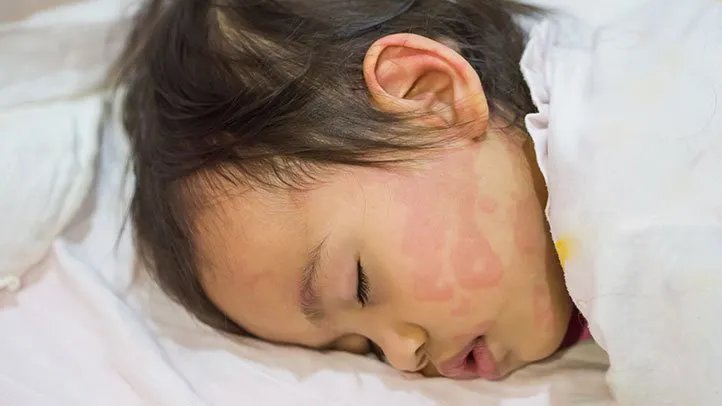
Hives Tend to Look the Same on Kids as They Do on Adults What They Look Like Hives in children look no different from those in adults. They’re simply red, raised blotches or welts that appear on the skin singly, connected over an area of the skin, or in a group. Fortunately, they’re not contagious, and they can disappear as quickly as they appear, usually within 24 hours for a single hive, says Adam Friedman, MD , a professor and chair of dermatology at the George Washington University School of Medicine and Health Sciences in Washington, DC. e60dc2a1-f33c-4a05-9b50-8e3e8e597629d1843c06-17f5-4793-9497-e26f9be65326 As with adults, hives in kids occur in response to some trigger or allergen, often appearing within two hours of exposure. ( 1 ) Common allergens include foods, spices, fragrances, topical products like soaps and lotions, pet dander, medications (commonly antibiotics), and insect bites, Dr. Woods says. Other causes include infections (like strep throat or many childhood viruses like the common cold ), illnesses, stress , physical pressure, extreme temperature changes, exercise , and scratching. Note, though, that while these are similar to the causes for adults, food stands out for kids. “It’s more common that kids’ hives are related to food than adult hives, making it more likely that kids will require allergy testing,” says Sarina Elmariah, MD, PhD , a board-certified dermatologist at Mass General Brigham Hospital in Boston. Milk, egg, peanut, wheat, and soy tend to be some of the most common food allergens, Friedman adds. Because kids often outgrow food allergies, they’ll probably also outgrow the accompanying hives. RELATED: All About Allergy Symptoms
Sometimes Hives in Kids Do Require Immediate Care When Hives Are an Emergency It’s natural to worry if you see hives on your child. “They can be really big welts, which can scare parents,” says Anthony M. Rossi, MD , an assistant attending dermatologist at Memorial Sloan Kettering Cancer Center in New York City. In some cases, there’s merit to that worry. After all, hives in some kids require emergency care. A food allergy can trigger a severe allergic reaction called anaphylaxis , which can be deadly. Symptoms include difficulty breathing, dizziness and fainting, nausea and vomiting, abdominal pain, diarrhea , rapid heartbeat, throat tightness, and hoarse voice. A condition called angioedema, in which the eyes, lips, hands, feet, and genitals can swell, could also cause breathing issues. “If your child is wheezing or having trouble breathing, you need to seek immediate medical care,” Rossi says. Once at the hospital, an epinephrine injection is usually administered and a pediatric allergist might be consulted, Woods says. RELATED: FDA Approves Generic Version of EpiPen
Sometimes Hives in Kids Can Be Treated at Home When to Treat at Home If that first hive isn’t accompanied by the above symptoms, it’s okay to treat the child at home. The main goal will be to help your child feel less miserable because hives can be extremely itchy and uncomfortable. The hives themselves will usually go away on their own and won’t pose further risk to the child in the absence of those other symptoms. OTC Antihistamines To help quell the itch and provide some relief, the best defense is an over-the-counter antihistamine like diphenhydramine (Benadryl) or cetirizine and pseudoephedrine (Zyrtec-D) . That should block or prevent the release of a chemical called histamine that’s largely responsible for the hive itself and the itching that accompanies it. Dosage is based on weight and age, so follow label instructions, Dr. Rossi says. What to Know About Scratching You can also try to help your child stop scratching their hives with medications or alternative treatments. Scratching is a natural response, Dr. Elmariah says, but it can cause hives to break, putting your child at risk of infection. You can dress your child in clothes that cover the hives to prevent scratching. And one of the best itch-busters is cold therapy: Place a cool washcloth or cold pack on the hives (unless their hives are triggered by cold temperatures). Oatmeal Baths To further relieve itching, the American Academy of Dermatology recommends bathing your child in lukewarm water and colloidal oatmeal, limiting the bath to the recommended time on the package. ( 2 ) Do, however, avoid bubble baths and scented lotion. After bathing, moisturize your child’s skin with a gentle cream or lotion. You might also want to dress your child in loose-fitting clothes and adjust the temperature in your house, as heat and cold in some cases can aggravate hives. As you’re doing this, take notes, which will come in handy if your child develops hives again. Write down what time you noticed the hive, what activities your child was doing, and what your child was eating over the previous day, which may help you identify a trigger, Rossi says. You should also note how you treated the hive, how your child responded to that treatment, and how long the hive lasted. If you think you’ve pinpointed a potential trigger, make sure your child isn’t exposed to that trigger again. Pediatricians Can Help Identify Hives Triggers if They Keep Coming Back If your child continues to get hives, make an appointment with your pediatrician. He or she will want to know the specifics about what’s been happening with your child, including what medications you’ve tried and how they’ve worked; whether you’ve been able to identify a trigger for the hives; and how often your child is getting hives. (1) You should also call your doctor if any single hive or welt lasts longer than 24 hours without changing. Depending on what that information reveals, your pediatrician may send you to an allergist to test for a food allergy. Treatment may then include antihistamines, a doctor’s first line of defense. For more involved cases of hives, the doctor may prescribe oral steroids like prednisone (Deltasone) or simply treat an underlying illness, Woods says. Hives can be an alarming condition to see on your child. But rest assured: “Most hives aren’t dangerous and will resolve on their own,” Woods says.
Subscribe to Updates
Get the latest creative news from FooBar about art, design and business.
Previous ArticleWhat Does It Mean To Be Anti-racist?

Related Posts
Add A Comment