

Key Takeaways
- Ghosting is when someone suddenly stops all communication without giving a reason.
- It can leave the person who was ghosted feeling sad, confused, and angry because they don’t know why it happened.
- Sending a message ending the relationship can help you feel more in control and provide closure.
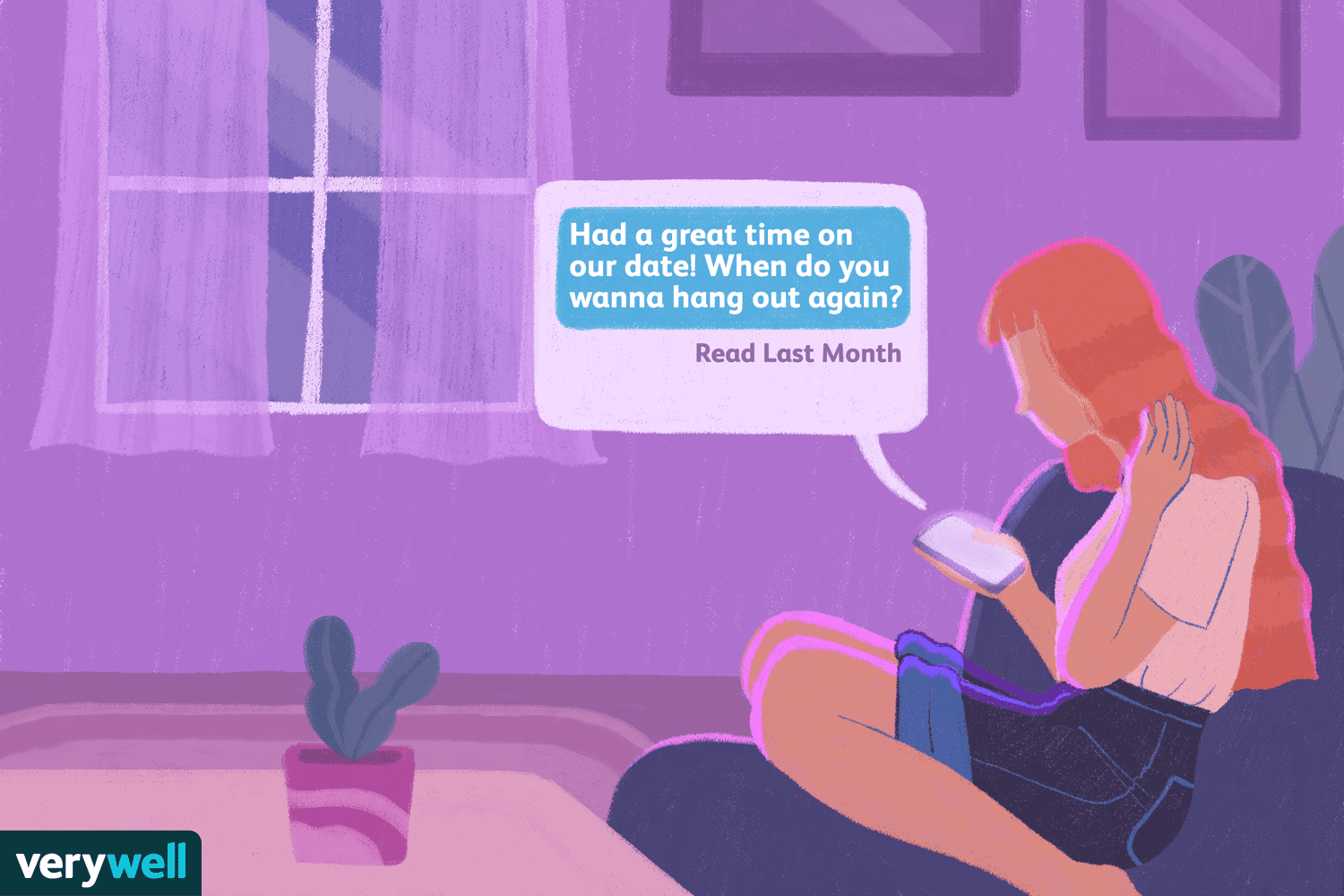
Ghosting is a relatively new colloquial dating term that refers to abruptly cutting off contact with someone without giving that person any warning or explanation. Even when the person being ghosted reaches out to re-initiate contact or gain closure, they’re met with silence. As you can see, it’s called ghosting because it involves someone essentially “vanishing” into thin air as if they were a ghost.
The term is generally used in reference to a romantic relationship, but it can technically refer to any scenario where contact unexpectedly ceases, including friendships and family relationships.
Verywell / Catherine Song
What Ghosting Looks Like
Ghosting is often obvious, but it can also be a gradual process. The other person might start by “soft ghosting,” where they progressively minimize contact over a period of time. Some early signs that someone might be ghosting you include:
- They regularly bail out on plans to get together.
- They struggle to make commitments.
- They don’t like to share personal information.
- They don’t want you to meet their friends or family.
- They disappear from social media.
- They rarely respond to your texts or calls.
- Your conversations with them lack depth, and they seem disinterested.
If you have made repeated efforts to contact someone and they won’t respond, it is a strong indicator that you’ve been ghosted.
Ghosting can also occur on social media. It involves cutting off all social media contact with another person without explanation. The other person may unfriend, unfollow, or even block you on all social media platforms. They may even go so far as to deactivate or delete their social accounts to prevent all contact.
Why Do People Do It?
Ghosting is often seen as an immature or passive-aggressive way to end a relationship. In other instances, it may even be a form of emotional abuse.
There are a number of reasons why it happens, and often it’s a combination of factors.
- Avoiding awkwardness: The first is that some find it easier (in the short-term, anyway) to ghost someone than to have an uncomfortable heart-to-heart about why you’re not interested in maintaining contact.
- Minimizing confrontation: The person doing the ghosting often wants to avoid confrontation or dealing with someone else’s hurt feelings, so they simply cease all communication and hope the hint is delivered.
- Reducing overwhelm and fatigue: “With internet dating comes what may seem like infinite choices as opposed to walking into a bar and having limited options,” explains Margaret Seide, MD, a board-certified psychiatrist based in New York City.
- Fear of missing out on better options: There is also the tendency to think that the grass might be greener elsewhere. “Because there are so many choices, online daters are quick to have the ‘OK, next’ or the ‘Yeah, but what else?’ mindset,” says Seide. “Sometimes the person is nice enough, but you’re juggling a few other people, and that person just didn’t make the cut.”
- Fear of a bad reaction: There are other reasons people ghost, including fear of the other person’s reaction to rejection.
How to Handle Being Ghosted
- Accept what happened: If you’ve reached out once and they haven’t responded, accept that no response is a response.
- Don’t keep pursuing them: Reaching out repeatedly will only lead to more rejection and disappointment.
- Allow yourself to move on: Focus on caring for yourself, and remember that their behavior reflects their character and maturity, not your value or worth as a person.
To gain closure in a situation where you feel you’ve been ghosted, Meide says it can help to send a message saying something like, “Hey, I haven’t heard from you in a while. I’m not sure what happened, but I don’t want to continue pursuing this. My time is valuable and I don’t want to leave this door open. Best of luck with things.” While the ghoster may not respond, it can help provide closure.
The History of Ghosting
The term “ghosting” became mainstream alongside the surge in online dating; it became an official entry in the Merriam-Webster dictionary in 2017. Interestingly, though, the term was actually used as far back as the 1990s. Some pop culture writers and scholars have even used the term to describe ghostwriting in hip-hop music.
Bree Jenkins, LMFT
The word ‘ghosting’ gained popularity long before [2017] via ‘90s hip-hop, often in the sense of escaping.
— Bree Jenkins, LMFT
Though a new term, the act of ghosting existed well before the digital age. “I think references of ‘going for a loaf of bread and never coming back’ are examples of ghosting,” says Bree Jenkins, LMFT, a dating coach in Los Angeles, Calif. “Ghosting used to be leaving a person and moving away or not leaving [them with] your contact information—its earlier origins are even the simple act of leaving a party or social gathering without notice and goodbyes.”
How the Term Became Popular
So why did the term “ghosting” become mainstream just within the last decade? The argument is that online dating has simply made it way easier to ghost people.
With the higher frequency of ghosting instances, and with more people who could relate/understand being ghosted or doing the ghosting, the term was widely adopted.
Why Being Ghosted Hurts
As you can imagine (or know from personal experience), ghosting can have a real psychological impact on the person who’s being ghosted. Research suggests that people who have been ghosted feel that their fundamental needs have been threatened, including those for:
- Control
- Self-esteem
- Belongingness
- Meaningful existent
Bree Jenkins, LMFT
It’s almost like sudden loss [or] grief, especially the first time you’ve ever been ghosted. You are shocked, and you’re in denial, thinking things such as ‘maybe they didn’t see my text.’ Then you feel anger.
— Bree Jenkins, LMFT
Jenkins adds, “Next, the feelings of depression kick in along with feelings of poor self-esteem as you mentally reexamine your relationship and last conversation for possible warning signs.”
- It feels ambiguous and confusing: Ghosting is inherently ambiguous because there is a lack of explanation for why the relationship ended. For the person who has been ghosted, it can lead to significant feelings of rejection, guilt, grief, and shame.
- It’s not a reflection of your value: A person who has been ghosted may be left wondering what this type of behavior says about them, but it is important to remember that ghosting says more about the person who cuts off contact than the person who is ghosted.
- It triggers strong emotions: The grief cycle may not run that exact course, but being ghosted often triggers a flood of emotions. Thoughts of ‘Not only did the person not want to date me, but I wasn’t even deserving of an explanation’ can make someone feel dehumanized and devalued.
It’s often more painful when it’s a relationship that’s marinated a bit, but the ghosted person can also feel this way if it was a new connection. It can take some time to work through the pain, but with acceptance the person being ghosted can move on.
Why Ghosting Others Might Hurt You
Ghosting doesn’t just impact the ghosted; it also is a detriment to the ghoster. The bottom line here is that ghosting is either a passive aggressive way to end a relationship, or it is the “easy way out.” Either way, it’s not doing the ghoster any favors in their ability to communicate with others.
“Ghosting doesn’t take into account how you affect other people, and it makes it easier for the person to dip out or disengage when things get uncomfortable. There’s no way to have a healthy, long-term relationship without being able to work through problems and use your communication skills,” says Jenkins.
Jenkins adds that ghosters create unhealthy problem-solving patterns for themselves, and that they also contribute to a larger pattern of societal flakiness that increases their chances of being ghosted as well.
Alternatives to Ghosting Someone
Avoiding the easy route of ghosting someone will benefit both parties.
- Remember the golden rule: Meide says that the best thing you can do when ending a relationship, however long or short, is to treat the other person as you’d like to be treated.
- Show respect: “I usually suggest two spoons of sugar with the medicine in the middle for delivery,” Meide says. “It can sound something like ‘Hey, you seem like a really great catch, but I don’t feel it’s working between us. I respect your time and just wanted to be honest. Warm regards and take care.’
- Keep it simple: You can also try keeping it short but honest. Meide suggests something like, “‘Hi—it’s been cool getting to know you, but I’ve decided to take a break from dating and don’t want to waste your time or be dishonest. Best of luck with everything.’”
These messages are short, sweet, honest, and end with an outro to signal that you don’t want to have a long and drawn-out conversation. It’s possible that you may get a negative or hurt reaction from the other person, but it’s far better to exit the relationship after giving an explanation than to ghost completely.
Is Ghosting Ever OK?
In many cases, ghosting is considered a rude way to end a relationship, especially when it’s a more serious or established one. However, there are most definitely exceptions—when further communication can be harmful or even unsafe.
Situations in which ghosting can make sense are if you find out the person:
In such cases, you do not owe that person an explanation for abruptly ending the relationship.
If you are uncomfortable or feel threatened by someone in any way, remember it’s best to follow your gut instinct. You may simply have a bad feeling. In cases like this, you don’t need to prove that this person “deserved” to be ghosted—ghosting might be a useful mode of self-protection and peace of mind.
If you feel your best interest would be to completely cut off contact with the person in question, don’t let your feelings of guilt keep you from doing what’s right for you and what will ultimately keep you safe.
Verywell Mind uses only high-quality sources, including peer-reviewed studies, to support the facts within our articles. Read our editorial process to learn more about how we fact-check and keep our content accurate, reliable, and trustworthy.
Navarro R, Larrañaga E, Yubero S, Víllora B. Psychological correlates of ghosting and breadcrumbing experiences: A preliminary study among adults. Int J Environ Res Public Health. 2020;17(3):1116. doi:10.3390/ijerph17031116
Park Y, Klein N. Ghosting: Social rejection without explanation, but not without care. J Exp Psychol Gen. 2024;153(7):1765-1789. doi:10.1037/xge0001590
Anderson HE. No Bitin’ Allowed: A Hip-Hop Copying Paradigm for All of Us. 2011.
Freedman G, Powell DN, Le B, Williams KD. Emotional experiences of ghosting. J Soc Psychol. 2024;164(3):367-386. doi:10.1080/00224545.2022.2081528
Vilhauer J. When Is It OK to Ghost Someone? Psychology Today. 2019.
Thanks for your feedback!
What is your feedback?
Helpful
Report an Error
Other
