

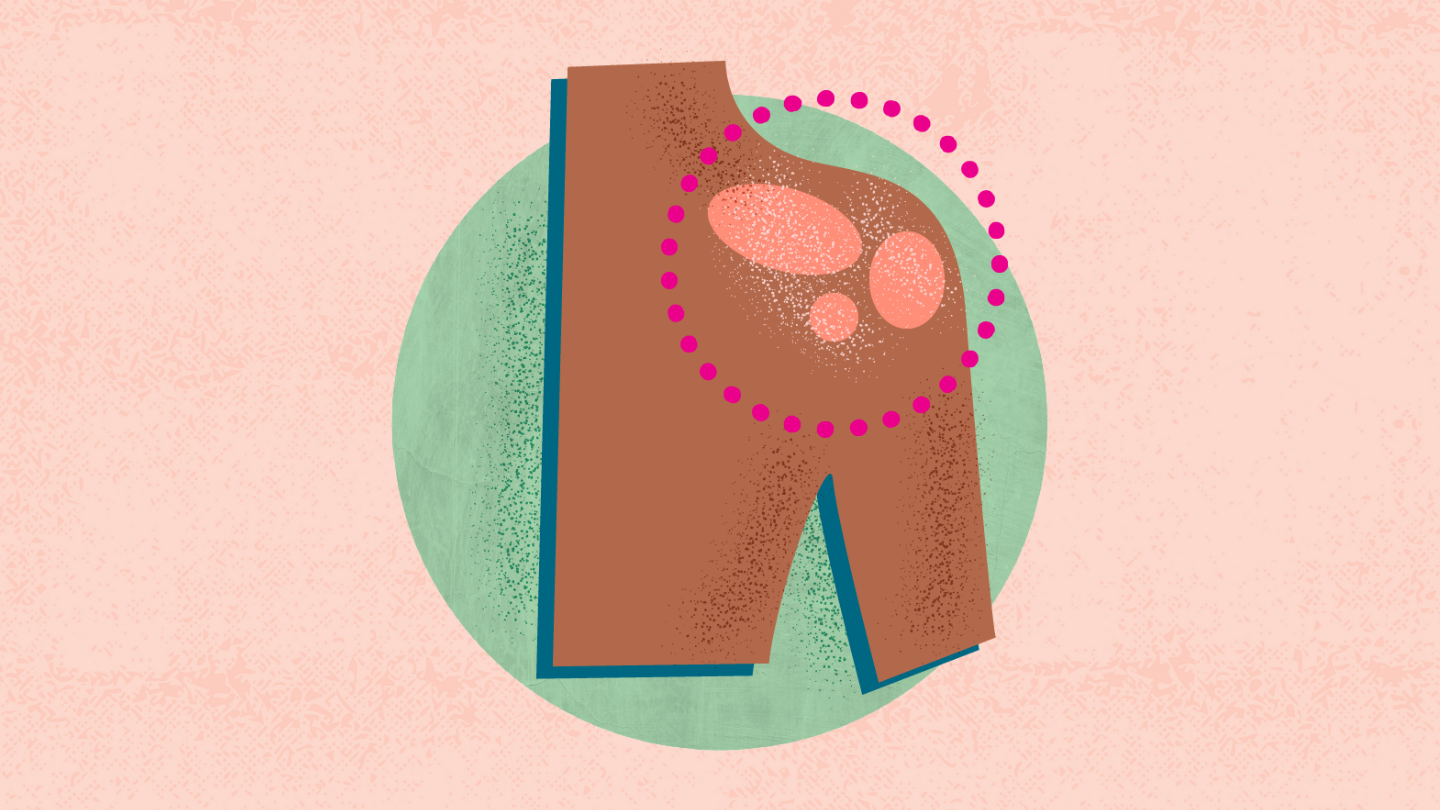
Psoriasis is an autoimmune disease that causes plaques, which are itchy or sore patches of thick, dry, discolored skin. While any part of your body can be affected, psoriasis plaques most often develop on the elbows, knees, scalp , back, palms, and feet. Like other autoinflammatory diseases, psoriasis occurs when your immune system — which normally attacks infectious germs — begins to attack healthy cells instead.
Signs and Symptoms of Psoriasis Symptoms Psoriasis plaques can range from a few spots of dandruff-like scaling to major eruptions that cover large areas. The disease’s symptoms and appearance vary according to the type and severity of psoriasis. Some common signs and symptoms include:e60dc2a1-f33c-4a05-9b50-8e3e8e597629e4471fba-a5fa-4cbb-ac92-79cec042d61f Discolored patches — classically, they’re red with silver scale on fairer skin tones and purple with gray scale on darker skin tones — or raised plaques of skin that are covered with scales Cyclic rashes that flare up for several weeks or months and then subside Dry or cracked skin that bleeds Burning, itching, or soreness near the affected areas Pitted or thickened fingernails or toenails
Causes and Risk Factors of Psoriasis Causes Psoriasis is largely genetic and is passed down through families. It affects about 2 percent of people in the United States. Scientists have identified certain genes that make a person more likely to develop psoriasis, though not everyone with these genes is affected. Furthermore, some people who do develop psoriasis don’t have those genes.e60dc2a1-f33c-4a05-9b50-8e3e8e5976296c5f594d-c277-402e-a22e-7deec9f87b5a “It’s likely that multiple genes need to be affected to allow psoriasis to occur and that it’s frequently triggered by an external event, such as an infection,” says James W. Swan, MD , a dermatologist in Maywood, Illinois, who specializes in psoriasis. Along with family history, certain risk factors may increase your odds of developing psoriasis. They include:e60dc2a1-f33c-4a05-9b50-8e3e8e5976298918e40d-1edc-46ba-8cbb-2c9f67680b27 Being overweight or obese Having celiac disease Smoking Alcohol use or abuse A psoriasis outbreak may be provoked by factors including:
Stress Stress is a common trigger for some people with psoriasis, either causing psoriasis to flare up for the first time or making it worse after you’ve been diagnosed.e60dc2a1-f33c-4a05-9b50-8e3e8e59762917f6cac6-9312-4a55-9ebd-1938ddbe0407 “Psoriasis is very stress-dependent. It flares very easily when patients are under stress, and it tends to improve when they’re relaxed,” says Vesna Petronic-Rosic, MD, a visiting professor at the University of Illinois Chicago and the director of dermatopathology at John H. Stroger, Jr. Hospital of Cook County in Chicago. Stress management techniques, such as exercise, yoga, and meditation, may help manage psoriasis symptoms. Cold Weather Cold, dry weather can exacerbate psoriasis symptoms by sapping even more moisture from the skin. Heated indoor air doesn’t help because it’s also drying.e60dc2a1-f33c-4a05-9b50-8e3e8e59762917f6cac6-9312-4a55-9ebd-1938ddbe0407 But staying inside all winter long may not be the best move either as some people may find their psoriasis improves with exposure to sunlight. The UVB rays in sunlight have anti-inflammatory effects, and UVB phototherapy is used to treat psoriasis. Prescription phototherapy is more effective than sunlight, though, and UV rays can have harmful health effects, so talk with your doctor about the best approach for you.e60dc2a1-f33c-4a05-9b50-8e3e8e597629cb710b9e-932c-439d-8a07-0b76a64b4129 Dry Skin Anything that injures the skin, including excessively dry skin, can cause a psoriasis flare. The solution: Keep your skin moisturized . If you’re allergic to the fragrances in moisturizers, use a product that’s fragrance-free to avoid a rash. Vaccinations Puncturing the skin during a vaccination may cause a psoriasis flare, but it’s important that you don’t skip a needed shot.e60dc2a1-f33c-4a05-9b50-8e3e8e5976296034fc68-68f7-407e-9d8b-5490219f3217 One thing to keep in mind: If you’re on a potent psoriasis medication that suppresses your immune system (such as a biologic treatment), you shouldn’t take a live vaccine. Your body may not be able to fight off a live virus because of the medication you’re taking. In that case, ask your doctor for a vaccine that contains a deactivated virus.e60dc2a1-f33c-4a05-9b50-8e3e8e597629f47f5266-16e7-4dbd-aebe-178aa51a7ad6 Beta-Blockers and Lithium Beta-blockers to treat high blood pressure and lithium for a mental disorder can trigger psoriasis or make it worse.e60dc2a1-f33c-4a05-9b50-8e3e8e5976290f9a6fe5-8da8-4b23-b486-8f404708f92c If you’re taking beta-blockers or lithium, be sure to mention this to your dermatologist when discussing your psoriasis treatment plan . Upper Respiratory Infections Colds and other infections, especially strep throat, activate the immune system and can cause psoriasis to flare.e60dc2a1-f33c-4a05-9b50-8e3e8e5976295f64b12f-9fc2-4067-a177-7e3556be44ed Smoking There’s some evidence that smoking can make psoriasis worse. According to a prior study, smokers have almost double the risk of developing psoriasis compared with people who’ve never smoked.e60dc2a1-f33c-4a05-9b50-8e3e8e5976299cf316ad-fad6-4ee9-9e6a-1efa1351c823 In a smaller prior study that looked at twins, heavy smokers were more than twice as likely to have psoriasis.e60dc2a1-f33c-4a05-9b50-8e3e8e5976290dedf017-0338-48a2-9765-8d485b46f91f Diet Studies haven’t shown any beneficial effects of taking nutritional supplements for psoriasis, but avoiding certain foods may reduce inflammation and help with psoriasis. Additionally, people with psoriasis have an increased risk for celiac disease, and some have found that eating a gluten-free diet can help reduce their psoriasis symptoms. However, there’s no conclusive evidence to show whether it’s helpful for all people with psoriasis.e60dc2a1-f33c-4a05-9b50-8e3e8e5976298de7c7e3-638f-4d6f-ae90-642500d3b949 There’s also evidence that reducing your intake of nightshade vegetables — eggplant, tomato, white potato, and peppers — may help.e60dc2a1-f33c-4a05-9b50-8e3e8e597629c1c3f524-6762-4f04-b64b-6295e2080f96 In general, if you find that a certain food makes the psoriasis worse, try to avoid it. Alcohol There are a number of ways that alcohol intake can affect psoriasis. Alcohol consumption is generally higher on average among people with psoriasis, but for some people, drinking alcohol can trigger or worsen flare-ups.e60dc2a1-f33c-4a05-9b50-8e3e8e59762934d09315-ac68-46b9-9061-fce291a0cc11 Alcohol can cause inflammation, which is why it may be problematic for inflammatory conditions like psoriasis. It also causes dehydration, oxidative stress, and nutritional issues that can impact skin conditions.e60dc2a1-f33c-4a05-9b50-8e3e8e5976299124c30e-da19-4a36-a7ef-415d6b4cbf8b
Types of Psoriasis Types There are several types of psoriasis , yet people most often have only one type of psoriasis at a time. Each type has its own set of symptoms.e60dc2a1-f33c-4a05-9b50-8e3e8e59762997fc5f32-ab51-462e-a5b4-5883898f3150 Plaque Psoriasis Also called psoriasis vulgaris, plaque psoriasis is the most common form of the skin disease. It appears as raised, discolored plaques covered with a scaly buildup of dead skin cells, or scales. The itchy, sometimes painful plaques can crack and bleed and commonly affect the scalp, knees, elbows, back, hands, and feet. Guttate Psoriasis Often beginning in childhood or young adulthood, guttate psoriasis is the second most common type of psoriasis. Nearly 10 percent of people who get psoriasis develop guttate psoriasis. Guttate psoriasis is the type of psoriasis most closely linked to a recent strep infection. If you develop guttate psoriasis, you will also likely be tested for strep bacteria. Inverse Psoriasis Also known as intertriginous psoriasis, inverse psoriasis causes red or otherwise discolored lesions in skin folds of the body that may look smooth and shiny. Lesions can occur on the genitals or in areas near the genitals, like the upper thighs and groin. It’s common for people with inverse psoriasis to have another type of psoriasis somewhere else on their body at the same time. Pustular Psoriasis This causes white blisters of pus that surround red or otherwise discolored skin, often on the hands or feet. The pus consists of white blood cells. When pus-filled bumps cover the body, you may have bright-red skin and feel ill or exhausted and have a fever, chills, severe itching, rapid pulse, loss of appetite, or muscle weakness. Erythrodermic Psoriasis This is a dangerous and rare form of the skin disease characterized by a widespread, fiery redness or other discoloration and exfoliation of the skin that causes severe itching and pain. Nail Psoriasis People with nail psoriasis may experience symptoms like pitting, abnormal nail growth, and discoloration in their nails and toenails. It could cause onycholysis, which is when nails separate from the nail bed, causing more of the nail to look white than usual. People with severe nail psoriasis may experience crumbling of the nails.
How Is Psoriasis Diagnosed? Diagnosis There aren’t any special tests to help doctors diagnose psoriasis. Typically, a dermatologist will examine your skin and ask about your family history. You’ll likely be given a diagnosis based on this physical exam. In some situations, doctors will remove a small sample of the skin and examine it under a microscope. This might allow them to get a better look at the affected area and make a more accurate diagnosis.e60dc2a1-f33c-4a05-9b50-8e3e8e597629e7542a45-327a-487e-a131-795b61f1cf70
Duration of Psoriasis Duration Psoriasis is considered a chronic, lifelong condition. There currently isn’t a cure, but there are treatments that can keep your skin clear or nearly clear. For some, psoriasis can clear up for months or even years at a time. This is known as remission. Others experience psoriasis flares in cyclical patterns. For instance, the disease may get better in the summer and worsen in the winter.e60dc2a1-f33c-4a05-9b50-8e3e8e59762928dbf998-4e4b-4a2d-b8d0-57fb98208f7d
Treatment and Medication Options for Psoriasis Treatment While psoriasis cannot be cured, there are effective options for treating it. Talk to your doctor about the benefits, risks, and side effects of any therapies you use. Medication Some medications to treat psoriasis include:e60dc2a1-f33c-4a05-9b50-8e3e8e5976294eae524e-58e4-458e-98c4-94657437445ae60dc2a1-f33c-4a05-9b50-8e3e8e5976297481c020-1359-47b1-850b-03ba8921a1f7 Topicals Prescription treatments, such as topical steroids, and over-the-counter (OTC) treatments that are applied directly to the skin can minimize symptoms of psoriasis . Each topical medication contains different active ingredients, such as salicylic acid, and can come as a lotion, cream, shampoo, gel, spray, or ointment. Topical corticosteroids are often prescribed for mild psoriasis or moderate psoriasis, but the FDA recently approved two nonsteroidal creams for psoriasis: roflumilast (Zoryve) and tapinarof (Vtama) .e60dc2a1-f33c-4a05-9b50-8e3e8e59762999b90f16-2e16-4b32-b3a1-6d910fe3ac75 Biologics Biologic drugs are a type of systemic medication that impacts the entire body and alters the immune system. They are usually given as an injection, but some are available as a tablet. Biologics include etanercept (Enbrel), infliximab (Remicade), adalimumab (Humira), ustekinumab (Stelara), secukinumab (Cosentyx), ixekizumab (Taltz), brodalumab (Siliq), tildrakizumab (Ilumya), risankizumab (Skyrizi), guselkumab (Tremfya), deucravactinib (Sotyktu), and bimekizumab (Bimzelx). Apremilast (Otezla) This medicine comes as a pill and works by suppressing an enzyme that’s involved in inflammation. Oral Retinoids This type of systemic therapy is usually given if you have severe psoriasis that doesn’t respond to other treatments. Methotrexate (Rheumatrex) This drug helps control inflammation. Cyclosporine (Gengraf or Neoral) This systemic treatment suppresses the immune system but can be taken for only short periods of time. Light Therapy Light therapy, such as UVB phototherapy, involves exposing your skin to controlled amounts of natural or artificial ultraviolet light to help reduce symptoms of psoriasis . You may receive this treatment alone or along with other medication.e60dc2a1-f33c-4a05-9b50-8e3e8e5976297481c020-1359-47b1-850b-03ba8921a1f7
Prevention of Psoriasis Prevention There’s no way to prevent psoriasis, but there are things you can do to improve your symptoms and help lessen the number of flare-ups you experience.e60dc2a1-f33c-4a05-9b50-8e3e8e59762932437a7d-080a-41bd-8a53-9364bdeadeff Some ways to reduce your risk of a psoriasis flare include:e60dc2a1-f33c-4a05-9b50-8e3e8e5976299f7715f8-c3c9-46c5-a5a6-9e987bb71fd6 Take daily baths Keep skin moisturized Avoid triggers if you can Try not to scratch Get a small amount of sunlight each day, with guidance from your healthcare provider on how much sun exposure is safe for you Eat a nutritious diet Exercise regularly Maintain a healthy weight Limit or avoid alcohol
Complications of Psoriasis Complications Having psoriasis can increase your risk for developing a number of health conditions , including:e60dc2a1-f33c-4a05-9b50-8e3e8e597629b792001b-596e-44ff-b9cc-e717d127e16d High blood pressure Obesity High cholesterol Diabetes Heart disease Liver disease Kidney disease Cancer Uveitis (an eye disease) Crohn’s disease Depression “Over the past few years, we’ve seen that maybe psoriasis plays a more integral part in metabolic syndrome, a collection of symptoms that can lead to diabetes and heart disease,” says Erin Boh, MD , chairman and a professor of dermatology at the Tulane University School of Medicine in New Orleans. It is estimated that up to 30 percent of people with psoriasis will also develop psoriatic arthritis, an autoimmune disease that affects the joints. Psoriasis occurs before joint disease in 72 percent of psoriatic arthritis patients.e60dc2a1-f33c-4a05-9b50-8e3e8e597629677a6805-e330-41b7-b9ac-159b856bd739 The risks for psoriasis-related complications are greater the younger a patient is when diagnosed and the more severe the psoriasis.e60dc2a1-f33c-4a05-9b50-8e3e8e5976290e5788ea-f405-4a7f-8c90-596337d07869 Anyone with psoriasis should be aware that they are at risk for comorbid conditions and should monitor their overall health accordingly.
Research and Statistics: Who Has Psoriasis? Research and Statistics About 8 million people in the United States have psoriasis. Most are white, but the skin disease also affects Black, Hispanic, Asian, and multiracial people.e60dc2a1-f33c-4a05-9b50-8e3e8e5976299528e027-8736-4e2a-ac1d-a332125a4818 The disease occurs about equally among men and women. It is more common in adults than children, and you are at a greater risk of developing it if someone in your family has it.e60dc2a1-f33c-4a05-9b50-8e3e8e59762933573dc1-a0bc-45e7-bf50-5946ed96b6c4 A study concluded that “interactions between particular genes as well as genetic and environmental factors play an important role” in the disease’s development.e60dc2a1-f33c-4a05-9b50-8e3e8e5976293e419f84-1194-4d50-be57-ae612d1e556c Psoriasis can develop at any age, but most people generally see their first symptoms between ages 20 and 30, although developing the disease between 50 and 60 years of age is also common.e60dc2a1-f33c-4a05-9b50-8e3e8e597629688542dc-fca7-4809-aae1-f540d822e75c
Just as your nutritional needs and exercise habits may evolve as you grow older, so should your skincare regimen. Learn more about skin care for every age from NewYork-Presbyterian dermatologist Lindsey Bordone, MD.
Related Conditions Related Conditions Many conditions are closely related to, and sometimes mistaken for, psoriasis, including:e60dc2a1-f33c-4a05-9b50-8e3e8e597629db01b6db-301f-4e23-b79f-d3d93d5a9fda Certain types of eczema, such as atopic dermatitis or seborrheic dermatitis Dandruff Ringworm Pityriasis rosea (a rash that usually starts as an oval spot on the chest, abdomen, back, or face)
BIPOC and Psoriasis BIPOC Psoriasis is less common in BIPOC (Black, Indigenous, and People of Color) populations compared with white populations, but it may be more severe and more challenging to diagnose. According to research, psoriasis affects about 3.6 percent of Caucasians as well as 2.5 percent of Asian Americans, 1.5 percent of African Americans, and 1.9 percent of Hispanic Americans.e60dc2a1-f33c-4a05-9b50-8e3e8e5976299a228226-13f5-414f-a17c-3de3131a463a The appearance of psoriasis can differ depending on race and ethnicity. Psoriasis tends to be red or pink with silvery-white scale in white patients, while a Hispanic person is more likely to have salmon-colored psoriasis and silvery-white scale. In Black Americans, psoriasis often looks violet and the scale gray, or it can be deep brown and hard to see on people with very dark skin. Psoriasis can be more severe for people of color than white people. A study found that Asians with psoriasis had the highest percentage of body surface area affected (41 percent), while Caucasians had the lowest (28 percent).e60dc2a1-f33c-4a05-9b50-8e3e8e597629a79ecac7-2404-4ca0-bade-a5c0e87e34ac People of color who have psoriasis are less likely to get appropriate and timely treatment than their white counterparts. A study found that Black, Asian, and Native Americans are 40 percent less likely to see a dermatologist for their psoriasis than non-Hispanic white Americans, regardless of their health insurance or socioeconomic status.e60dc2a1-f33c-4a05-9b50-8e3e8e59762919f3d6ce-df9e-4fa6-9240-de879c42bcc5 One reason more people of color with psoriasis are not receiving high-quality treatment may be systemic racism in the medical field and the health disparities it causes. An analysis of dermatology textbooks showed that the number of images of skin of color ranged from 4 to 18 percent, with many textbooks showing zero images of skin of color with psoriasis.e60dc2a1-f33c-4a05-9b50-8e3e8e597629daba945c-f927-4adb-bb2c-e2959c302adc
The Takeaway Psoriasis is an autoimmune disease that causes itchy, dry, and sometimes sore patches of discolored skin. There are various types of psoriasis, and it’s caused by a combination of genetic and environmental factors — such as an inflammatory diet, stress, infections, cold weather, and certain medications. Psoriasis is linked to an increased risk of developing other health conditions, such as metabolic syndrome, diabetes, cardiovascular disease, and hypertension. Diet and lifestyle changes may reduce flare-ups, although you may require additional support from your dermatologist or primary care doctor. This may include topical creams, biologics, or pharmaceutical medications.
Resources We Trust Mayo Clinic: Managing Other Health Risks When You Have PsoriasisCleveland Clinic: PsoriasisThe Psoriasis and Psoriatic Arthritis Alliance: Psoriasis TreatmentsNational Psoriasis Foundation: Is It Psoriasis or Eczema?American College of Rheumatology: Psoriasis and the Sun — Helpful or Harmful?
Subscribe to Updates
Get the latest creative news from FooBar about art, design and business.
Previous ArticleDoes Oatmeal With Almond Butter Spike Blood Sugar?
Next Article Is Endometriosis Hereditary?

Related Posts
Add A Comment