

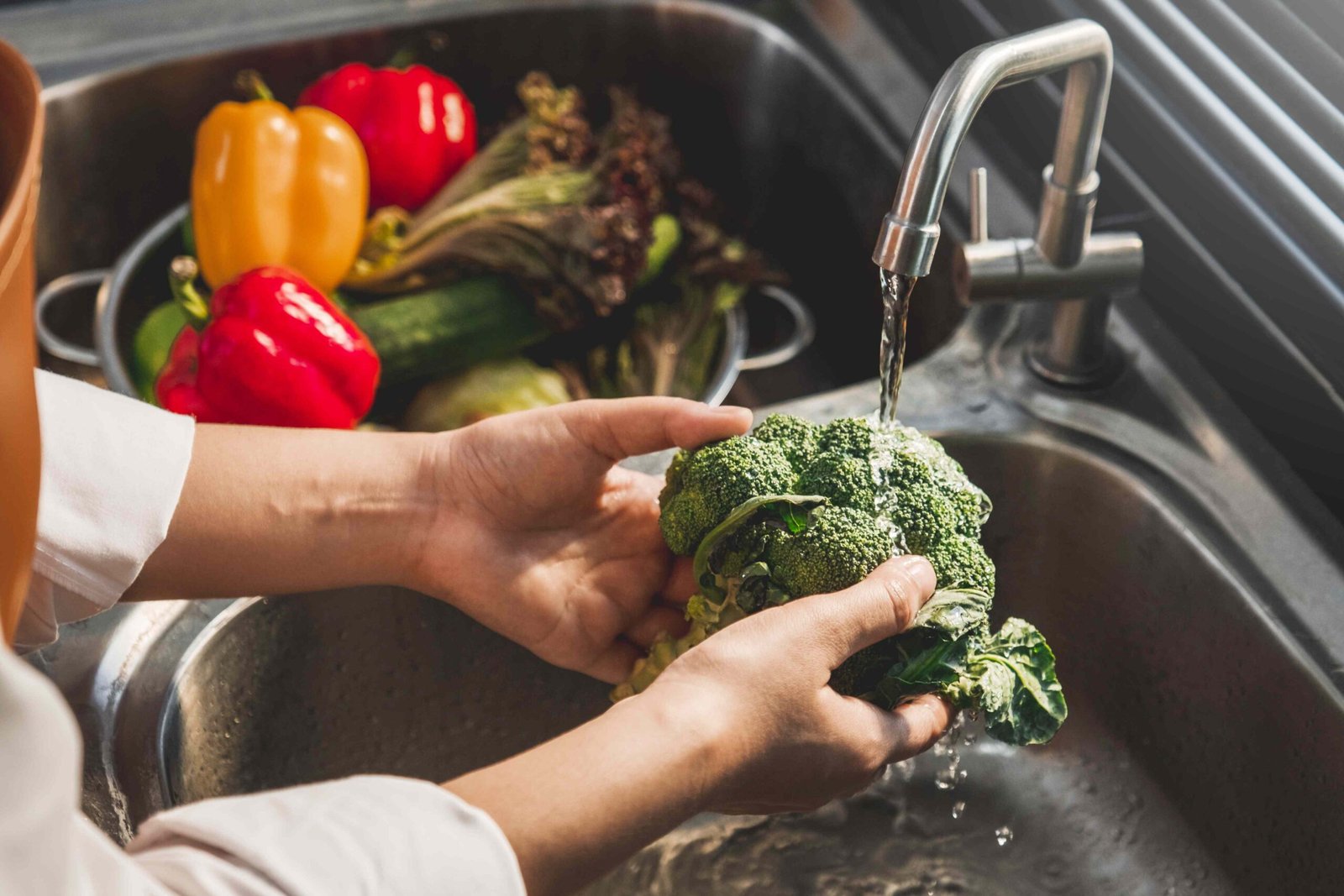
Cleaning fruit and vegetables can help remove germs and pesticides. Here are three effective ways to do wash your produce.
All you need to effectively wash produce is water . In fact, this is considered the best method. Here’s how to clean fruit and vegetables in water:
- Wash your hands with soap and water for at least 20 seconds to remove germs.
- Place produce in a colander or hold it under cold running water.
- Scrub firm fruit or vegetables with a produce brush.
- Rinse produce thoroughly.
- Pat to dry.
You can also soak or spray your fruits and vegetables with vinegar to clean them naturally. The soak method is best for small produce, such as blueberries, brussels sprouts, cherries, and cherry tomatoes.
Here’s how to soak produce in vinegar:
- Wash your hands with soap and water for at least 20 seconds to remove germs.
- Pour a small amount of vinegar into a bowl mixed with water, then add the produce.
- Allow the produce to soak for a couple of minutes.
- Strain the fruit and vegetables and rinse them entirely.
- Pat to dry.
The spray method is better for large produce, such as apples, bell peppers, broccoli, and peaches:
- Add the vinegar and water to a spray bottle.
- Place the produce in a bowl or container and spray the solution thoroughly.
- Allow the vinegar to sit for a few minutes before rinsing.
- Pat dry.
Baking soda can effectively remove germs, pesticides, and soil from produce. Here’s how to clean fruit and vegetables with baking soda:
- Wash your hands with soap and water for at least 20 seconds to remove germs.
- Place the produce into a bowl or container.
- Add 1 teaspoon of baking soda per 2 cups of cold water.
- Allow the produce to soak for at least 12 minutes.
- Move the produce around to ensure the baking soda reaches all sides.
- Use a produce brush to scrub firm produce.
- Drain and rinse the produce.
- Pat to dry.
Washing fruit and vegetables—both organic and conventional—rinses away germs, pesticides, and soil. You will sometimes see visible soil on leafy green vegetables, but you cannot see germs such as viruses and bacteria like E. coli and Salmonella. It’s essential to wash produce thoroughly to prevent foodborne illness.
Pesticides might lead to negative health effects, such as:
- Decreased sperm quality
- Disrupted menstrual cycle
- Impaired sex hormone production
- Increased risk of miscarriage and birth defects
It’s important to note that though washing and soaking produce decreases pesticides, it can’t eliminate them completely. Peeling your produce can remove pesticides more effectively than washing alone. However, the benefits of eating five servings of produce daily far outweigh the risks of pesticides.
Other tips for keeping your fruit and vegetables safe to eat include:
- Avoid certain cleaning products: Don’t wash produce with detergent, commercial produce wash, or soap. Fruit and vegetables can absorb these products and make you sick.
- Choose produce carefully: Look for fruits and vegetables that are not bruised or damaged.
- Prepare produce safely: Never place salad or fresh produce on an unwashed plate or a surface that previously held raw meat, poultry, seafood, or eggs.
- Store produce properly: Keep fruit and vegetables away from raw meat, poultry, and seafood in your grocery cart and refrigerator. Store pre-cut and highly perishable fresh fruit and vegetables in the refrigerator at 40 degrees Fahrenheit (4.4 degrees Celsius) or lower.
You can eat “pre-washed, ready-to-eat” items, such as bagged greens or baby carrots, without washing.
