

Key Takeaways
- Most children’s books feature White characters or non-human protagonists, lacking diversity.
- The diversity in people working in children’s book publishing has increased slightly, but not significantly.
- Books can help young readers see and understand diverse experiences and identities.
According to the Brookings Institution, there are more BIPOC folx than Whites under the age of 15 years old in the U.S. (The term “folx” is an alternative spelling to “folks” used to emphasize inclusion of marginalized groups.)
While the United States has a very diverse population, this diversity is not always reflected within children’s books.
“Books about White children, talking bears, trucks, monsters, potatoes, etc. represent nearly three quarters (71%) of children’s and young adult books published in 2019,” reports the Cooperative Children’s Book Center.
According to the first Diversity Baseline Survey from Lee and Low Books, 79% of those working in children’s book publishing were White in 2015. By 2019, the Diversity Baseline Survey found this number had decreased to 76%. While these data indicate that there has been an increase in employees of other ethnic backgrounds, this change is quite minimal.
Additionally, this small change is disheartening because, despite initiatives such as We Need Diverse Books and the Children’s Book Council Diversity Initiative to improve representation in children’s books, it’s clear that substantial improvement is needed.
National Literary Accolades
Far too often, folx have decided that “the classics” are the most influential literary works of a certain time period. This perspective often does not bode well for oppressed and marginalized groups.
While some may still believe that the caliber of a book is determined by national accolades, such a view fails to understand the reality of systemic barriers in the publishing industry.
Even when diverse books manage the rare triumph of getting published, they receive less recognition from mainstream channels.
A study looked at 100 National Book Award finalists and 20 winners between 1996 and 2015. The researchers found that of the 23 culturally relevant texts nominated as finalists (culturally relevant refers to “texts that are written about a culture by a cultural insider and engage students within that culture, who would not otherwise not see their culture reflected in a book”), only 5 of those books won the National Book Award.
This research shows that if the value of a book is solely determined by how many literary accolades it receives, it may lead to a lack of representation of the experiences of marginalized folx.
The Need For Intersectionality in Books
In addressing the need for more representation in children’s books, taking intersectionality into consideration is essential.
If you are unfamiliar with intersectionality, it may be a good time to learn more about the work of Kimberlé Williams Crenshaw, who coined the term in 1989 to center the unique experiences of marginalization that Black women face but acknowledges that it is an ever-evolving term that is meant to include diverse experiences of identity.
Identity Markers
Intersectionality is important because even if books depict Black characters—if they only show Black boys that play sports or fight for civil rights—they don’t represent the Black folx who are disabled, gender non-conforming, or some other identity.
In a study of three early elementary classroom library collections, the books in each of the libraries were reviewed to determine if the books were representative of diverse identities and experiences. The protagonist of each story was scanned for identity markers. Examples of these identity markers include:
- Gender
- Race
- Disability
- LGBTQ
- Language use
- Family structure (nuclear, single parent, extended family, etc.)
- Topics of social significance (i.e., homelessness, incarceration, immigrant/refugee status, etc.)
When reviewing books for the presence of these identity markers, it highlighted the importance of utilizing an intersectional lens when considering diversity in books.
By paying attention to such a wide variety of factors, books can promote diverse intersectional experiences, with the understanding that elementary school libraries often supply books that can act as mirrors, windows, and sliding glass doors for its young readers.
In a 2016 content analysis from the Journal of Children’s Literature acknowledged that children’s books tend to depict protagonists that are “predominantly upper middle class, heterosexual, nondisabled, English-speaking, and male.”
This may make it hard for young folx to engage in learning if they are too marginalized to identify with such privileged characters.
Negative Impacts of Representation Gaps
Authentic and diverse representation in books has significant impacts for readers, especially given how they influence the way in which young folx come to make sense of themselves and the world around them.
When children read books that only depict one kind of protagonist, it can skew their perceptions of themselves in a negative way. Children may see less value in themselves because of such poor representation, which can potentially minimize, erase, and ignore their identities.
Diminished Sense of Self-Worth Among Marginalized Children
In a study of children’s board books published between 2003 and 2008 for representations of BIPOC folx, it was ascertained that “racial and ethnic prejudices often make it difficult for children of color to develop positive feelings of competency and worth.”
Given that books have the potential to help or harm young BIPOC folx in terms of developing a positive sense of self, the issue of representation in books has far-reaching consequences.
Identity Erasure
Critical race theory scholars advocate that “giving voice to the marginalized, counter-stories validate their life circumstances and serve as powerful ways to challenge and subvert the versions of reality held by the privileged.”
In this way, it is crucial for all folx to see authentic representations of themselves and others, especially if oppressed, as it may help them to see new possibilities for their lives.
Publishing’s Power Dynamics
The issue of representation has a great deal to do with the power dynamics in the publishing industry.
Laura Atkins, Children’s Book Editor
Children’s publishing, in both the U.S. and the U.K., is dominated by White, middle class women at lower levels, and men at higher levels of management, which inevitably affects perceptions of audience.
— Laura Atkins, Children’s Book Editor
Laura Atkins, children’s book editor, describes how, in her line of work, books are shaped by the tastes of editors, the culture of publishers, and potentially biased perceptions about who will buy and read books about such diverse experiences. “Children’s publishing, in both the U.S. and the U.K., is dominated by White, middle class women at lower levels, and men at higher levels of management, which inevitably affects perceptions of audience.”
For this reason, Atkins recommends that “there needs to be more diversity in terms of who is employed. This reliance on stereotypes is more likely to take place when those acquiring and selling the books do not include greater diversity (in terms of race, class, or region).”
Because of this, Atkins advocates for more diverse hiring practices so that publishers may increase their ability to reach a more diverse readership.
How to Increase Diversity in Books
Given the gaps with how decisions are made regarding national literary awards, researchers recommend that publishers, writers, academics, teachers, librarians, and readers should explore the books that were recognized by The Coretta Scott King Award, the Pura Belpre Award, the Printz Award, Amelia Elizabeth Walden Award, and the Stonewall Book Award.
In this way, a focus on more targeted criteria for book accolades may increase the diversity of experiences covered, especially for marginalized folx, as national book awards have left a great deal to be desired in terms of recognizing talent across all groups in the U.S.
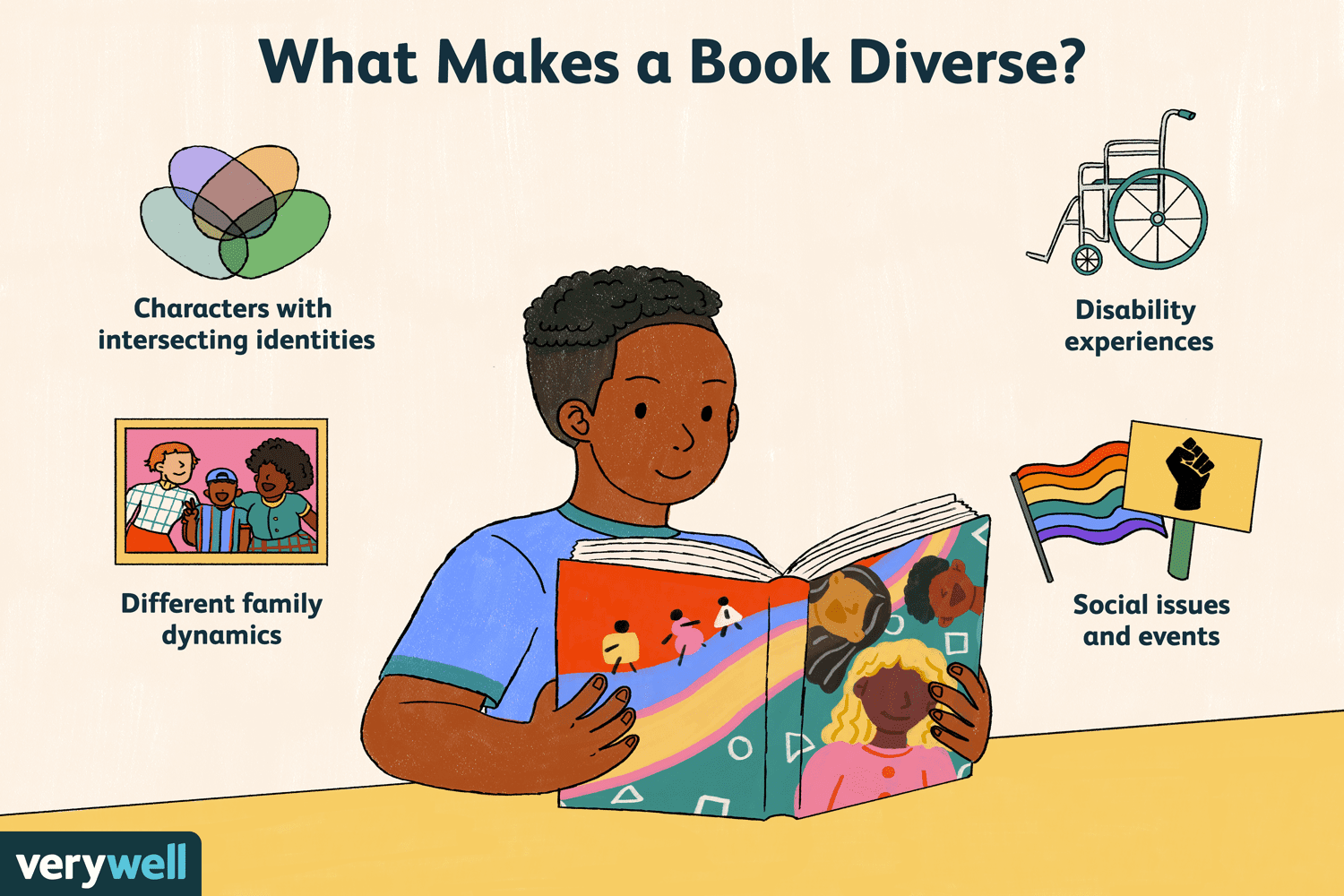
What Makes a Book Diverse?
From a study of classroom libraries, these following recommendations were made to help teachers choose books that show more diverse experiences:
- Books with characters that foreground intersecting identities
- Books that provide mirrors for students’ gender identities, family structures, and disability experiences
- Books that reflect socially significant and critical issues in the community, the nation, and the world
- Transitional chapter books with Black boy characters
Especially for those who are invested in teaching, the issue of authentic diverse representation deserves more attention to ensure that all folx feel included when learning.
It is as crucial for privileged folx to read about the experiences of those who have been historically oppressed, as such learning can help prevent atrocities of the past from being repeated in future. Research suggests reading can teach children to empathize with people from backgrounds different from their own and reduce the salience of harmful stereotypes.
