

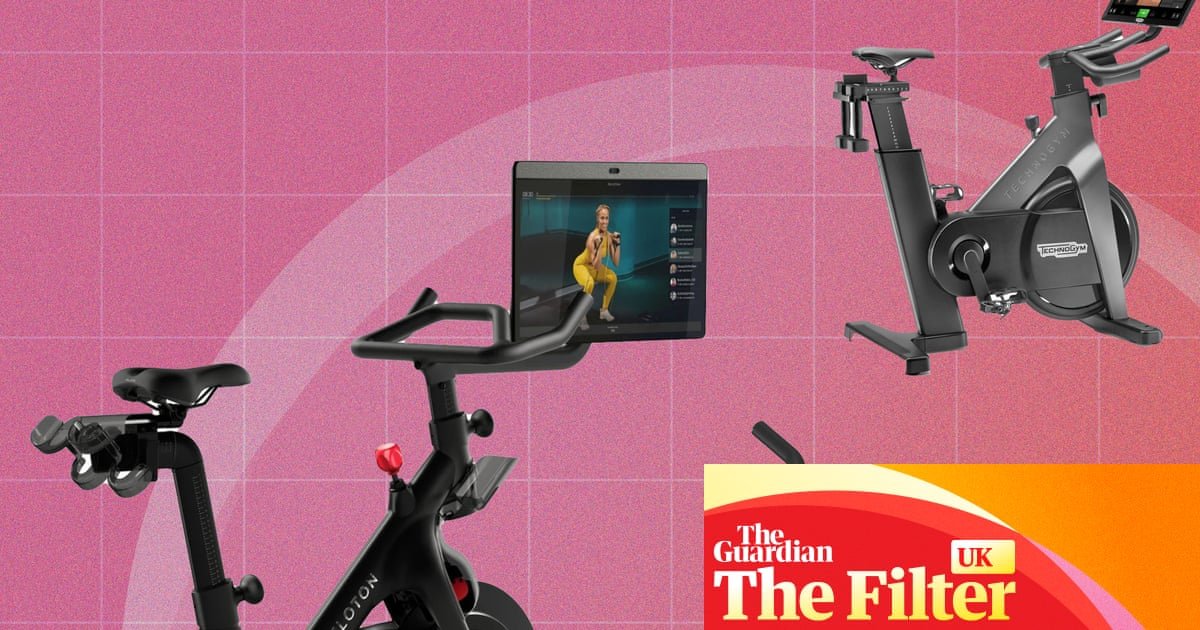
Cycling has the potential to benefit your health in myriad ways, whether it’s the mood-boosting properties of inhaling fresh air, the social element of riding with friends or the simple act of improving cardiovascular fitness with every pedal stroke.
The Guardian’s journalism is independent. We will earn a commission if you buy something through an affiliate link. Learn more.
The UK weather doesn’t always play ball, though, so for those who don’t want a dire forecast to result in a missed workout, indoor training replicates the exercise (if not the fresh air).
The best exercise bikes are not only fantastic for burning a few calories without donning all the outdoor gear, but they can also help you nail training goals if you’re a more serious rider. With many letting you connect your phone or laptop to make the most of online training tools, it’s never been easier or more enjoyable to work out from your home.
I tested 12 exercise bikes, including the sort you might find in a commercial gym, along with more dedicated riding simulators and recumbent models for those who find it tricky to sit hunched forward for any length of time. The resulting list features those that I think performed best.
While I’ve tried to appeal to a wide range of budgets, it’s difficult to recommend much under the £500 mark because the build quality of these cheaper models is often not worth the investment.
At a glance
£1,899 at One Peloton£569.99 at Johnson Fitness£1,575 at Wattbike£3,620 at Technogym£2,095 at John Lewis
Why you should trust me
While I no longer compete in official cycling events, I still consider myself a keen cyclist, often heading out with friends on a gravel bike, even if those rides now end in a warm pub, rather than a timed finish line. But when the weather isn’t playing ball, I’ll get stuck into a home- or gym-based exercise bike session to keep fit and stay in shape for when cycling season comes back around again.
Having tested exercise equipment for numerous publications, I’m always one to get stuck in and test a product for as long as possible. With exercise bikes, this meant getting plenty of hands-on experience, no matter how sweaty it made me.
How I tested
Wheels on fire: some bikes were tested in dedicated workout spaces. Photograph: Leon Poultney/The Guardian
Exercise bikes are bulky items that typically require an element of setup or construction. To make testing so many of them viable, I either borrowed a pre-assembled machine for one or two weeks or tested the bikes in a dedicated boutique or workout space.
During each test, I used any workout modes that were available, syncing a smartphone or laptop to take advantage of third-party software or online classes, if these were offered. The machines were judged on their build quality, features, ease of setup and storage (some companies offer premium white glove deliveries), as well as the overall adjustability or suitability for numerous members of the household.
After slipping into a pair of fetching cycling shoes, I assessed noise levels with a smartphone-based decibel meter, and made more subjective assessments on the general ride feel, comfort and the overall quality of the workout experience.
The best exercise bikes in 2026
‘Unmatched when it comes to live and on-demand classes’: the Peloton Bike+. Photograph: Leon Poultney/The Guardian
Best exercise bike overall:
Peloton Bike+
What we love
A wide range of engaging workouts that somehow feel fun
What we don’t love
The monthly subscription cost is hard to swallow, given the initial outlay
Photograph: Leon Poultney/The Guardian£1,899 at Peloton£1,899 at John Lewis
Many rivals have attempted to imitate Peloton, but few have managed to nail its overall experience. Above all, the brand is unmatched when it comes to live and on-demand classes, offering so many options – from a quick 15-minute spin class to hardcore sportive training, and all led by motivating instructors and accompanied by thumping soundtracks.
The Bike+ is the premium one of the brand’s two exercise bikes and has a 23.8in (huge!) high-definition display, which can be rotated for workouts that involve movements off the machine. There’s also an automatic resistance knob that adjusts to match the levels recommended by instructors during classes.
It’s expensive, with a £45-a-month “all access” membership fee on top, but for engaging, interactive workouts pitched at a wide range of users, nothing else comes close.
Why we love it
Although the Bike+ isn’t as aesthetically pleasing as some of its rivals, it’s comfortable, easy to adjust and not too imposing in any room. It also has wheels, so it is relatively easy to tip on its end and move around.
The touchscreen on the Bike+ is of excellent quality and the sound from its built-in speakers is impressive, but it’s the array of classes that makes Peloton so alluring. Unlike many rivals, which can feel prescribed, mundane and overly technical, Peloton somehow makes a gruelling 45-minute spin session feel enjoyable.
The weighted flywheel and belt-drive system are quiet enough to not disturb others in the household, although hardcore road cyclists will probably balk at the Bike+ for its lack of cycling realism and the bouncy, frenetic spin-class nature of many of its workouts.
It doesn’t play nicely with third-party cycling apps – such as Zwift, Rouvy and TrainerRoad – either, so, if that’s important to you, look at the Wattbike Proton below instead.
It’s a shame that … it doesn’t feel as realistic as some rivals, and there’s a monthly fee to access the classes and features
Dimensions: 56 x 137 x 152cm (WLH)
Weight: 65kg
Drivetrain: belt-drive with magnetic, digital resistance adjustment
Simulated grade: N/A
Connectivity: Bluetooth 5, ANT+, wifi (2.4GHz and 5GHz)
Folding: no
Noise level: about 30dB
Maximum user weight: 135kg
Built-in entertainment: yes, 23.8in rotating HD touchscreen with Peloton classes, Netflix, Disney+ and more
What we love
A wide range of engaging workouts that somehow feel fun
What we don’t love
The monthly subscription cost is hard to swallow, given the initial outlay
Best budget exercise bike for beginners:
Horizon 3.0SC Indoor Cycle
Horizon
3.0SC Indoor Cycle
from £569.99
What we love
Well built and capable, despite the low cost of entry
What we don’t love
Limited built-in workouts, and you’ll need your own screen
Photograph: Leon Poultney/The Guardian£569.99 at Johnson Fitness£569.99 at Amazon
At the time of writing, the Horizon 3.0SC Indoor Cycle cost £569.99, making it one of the cheapest exercise bikes I tested. But it certainly doesn’t feel cheap or any less capable than many of the other exercise bikes I poured sweat upon.
The 3.0SC has an ultra-smooth, front-mounted flywheel that uses electronically adjustable magnetic resistance to provide 32 effort levels. All of this is controlled via a funky and futuristic-looking digital dial that responds quickly to inputs – great for jumping out of the saddle during high-intensity efforts.
Although this is predominantly designed for use in spin classes, its ergonomically cushioned seat and easy-adjust handlebars make it a comfortable spot to pedal away the hours. Oh, and it’s whisper-quiet too, registering just 32dB during my testing.
It may not be the sort of thing I’d use to train for an upcoming cycling sportive, but it’s a well-priced tool for hitting daily fitness goals.
Why we love it
The 3.0SC looks great. It even blasts out eight vibrant colours from its flywheel, depending on the RPM and amount of effort you are putting in, adding a bit of Tron-like sci-fi to any room.
And aside from its relatively compact proportions and lightweight build, the bike is also well connected, playing nicely with Zwift, Kinomap and other third-party fitness apps. There are more realistic-feeling bikes out there, but if you swap out the pedals for a dedicated clipless system, it’s a fairly convincing road bike. Space between the cranks, for example, is as narrow as possible, making it ride like a genuine road machine.
If you’re looking for on-demand fitness classes, you can find these via Horizon’s free atZone workout app. Pair your phone or tablet with the bike, mount it to the secure plastic holder at the front of the bars, and you’re good to go. For a free service, there’s an impressive amount of content, and it’ll track your progress over time.
It’s a shame that … there isn’t an integrated display, meaning you’ll have to bring a tablet or smartphone for any instructor-led workouts.
Dimensions: 52 x 107 x 120cm (WLH)
Weight: 36kg
Drivetrain: belt drive with ECB (eddy current) magnetic, electronic resistance (32 levels)
Simulated grade: N/A
Connectivity: Bluetooth 5 (FTMS compatible for app integration)
Folding: no (but features transport wheels)
Noise level: about 32dB
Maximum user weight: 100kg
Built-in entertainment: no built-in screen; includes tablet holder and syncs with training apps
Horizon
3.0SC Indoor Cycle
from £569.99
What we love
Well built and capable, despite the low cost of entry
What we don’t love
Limited built-in workouts, and you’ll need your own screen
Best compact exercise bike:
Wattbike Proton
Wattbike
Proton
from £1,575
What we love
A realistic feel and easily customisable between family members
What we don’t love
You’ll need to bring your own video entertainment/inspiration
£1,575 at Wattbike£1,795 at Decathlon
Wattbike is probably best known for its original red, white and black Air bike machines, which can be found in gyms and health clubs up and down the country. The company has since ventured into home-workout territory, and the Proton sits somewhere in the middle of its range, offering a lightweight, compact footprint and support for popular third-party training apps, including Zwift and TrainingPeaks.
Racy looks and confusing workout programmes may risk putting off more casual users, but the Proton is designed to appeal to all of the family – comfortably adjusting for those between 4ft 6in and 6ft 6in tall. It’s not as quiet as some of its rivals, but the Proton feels realistic to ride and even has an auto-adjusting ergometer mode (ERG), so it can simulate gradients and gear changes without you having to lift a finger.
Why we love it
Wattbike has done an admirable job in retaining a realistic bike feel on such a lightweight and compact machine, with a fully adjustable seat post, saddle and handlebars that make it easy to set up to your requirements. I was able to quickly swap the standard toe-cage pedals for some Shimano clipless ones, which improved my performance and gave me greater control over pedal stroke. Most exercise bikes will allow you to swap the pedals, which takes about five minutes if you have the correct spanner or hex key. Adding cleats and pedals allows you to don a dedicated cycling shoe, which provides better power transfer between the legs and pedals compared with basic adjustable toe cages.
Wattbike’s background in working with pro athletes is evident from the Wattbike Hub app, which offers real-time feedback on pedal stroke and efficiency, among other nerdy data fields. The app has been tweaked to appeal to the more casual fitness fanatic, but it’s far from friendly to beginners, and you won’t find the same interactivity you would with a Peloton class. It’s more a case of following graphs and on-screen warnings about form than watching live demos from a bubbly personal trainer.
However, there are still plenty of workouts aimed at improving overall health rather than targeting highly trained athletes. And, if you like, you can always mount your iPad in the dedicated holder and binge television or complete a virtual workout session of your choice: the Proton’s Bluetooth FTMS technology means it will work with most third-party apps, such as Zwift, TrainerRoad and Rouvy.
It’s a shame that … the app isn’t slicker and with more to entice and retain a novice.
Dimensions: 57 x 102 x 127cm (WLH)
Weight: 48kg
Drivetrain: chain drive with electromagnetic resistance
Maximum power output: 1,800W
Simulated grade: up to +25% incline
Connectivity: ANT+ FE-C, Bluetooth (FTMS compatible for app integration)
Folding: no; includes front transport wheels for ease of movement
Noise level: about 40dB
Maximum user weight: 135kg
Built-in entertainment: no built-in screen; includes tablet holder
Wattbike
Proton
from £1,575
What we love
A realistic feel and easily customisable between family members
What we don’t love
You’ll need to bring your own video entertainment/inspiration
Best gym-quality exercise bike:
Technogym Bike
What we love
A superb performer with wide support and built-in apps
What we don’t love
It costs a fortune upfront, plus the subscription cost
Photograph: Leon Poultney/The Guardian£3,620 at Technogym
Technogym has been steadily raising the bar when it comes to smart fitness equipment, with a growing line of connected kit that aims to bring the personal trainer experience to your own home.
Clearly designed to take on the likes of Peloton, the Technogym Bike is a stylish machine with a 22in high-definition touchscreen that allows access to a raft of Technogym’s live and on-demand content.
Its compact, svelte frame looks and feels as if it’s aimed at more serious cyclists than Peloton’s offering, and the ride experience is smoother and slightly more natural than its rival. There’s plenty of adjustability for different-size riders, while the included double-sided pedals allow for use with trainers or SPD cycling shoes (a clipless shoe system).
The built-in screen is crisp and easy to navigate, granting access to entertainment apps, including YouTube and Netflix. It rotates to allow for off-bike sessions, too. However, it’s among the most expensive models I tested, and there’s a further membership fee, starting at £8.99 a month. Ouch.
Why we love it
The riding experience is comfortable without straying too far from a realistic simulation, while the powerful flywheel offers punishing levels of resistance. Technogym has live classes, as with Peloton, but it also appeals to the more hardcore athlete with dedicated training programmes geared towards those with ambitions of tackling the Col de Turini.
If you’re seeking the best in terms of design and build quality – and your bank balance permits the luxury – you’ll be happy with this bike. It’s a handsome, well-built machine that straddles the line between a dedicated cycling trainer and a spin bike well.
It also works with most third-party training apps and syncs up neatly with Apple Fitness and Apple Watch via a quick-tap NFC panel. For those totally dedicated to Lycra, Technogym offers an even more expensive Ride model, which feels built to compete with Wattbike and Wahoo’s most serious offerings.
It’s a shame that … it costs so much, and then Technogym charges yet more for a monthly membership.
Dimensions: 59 x 121 x 138cm (WLH)
Weight: 67kg
Drivetrain: belt drive with magnetic resistance (20 levels)
Simulated grade: not specified
Connectivity: supports streaming via external device (eg Chromecast, Fire TV Stick); Apple Watch pairing; Technogym Live integration and third-party apps
Folding: no
Noise level: about 30dB
Maximum user weight: 160kg
Built-in entertainment: yes, rotating display with ability to stream apps (TV shows, movies, games, etc) via smartphone, tablet or laptop
What we love
A superb performer with wide support and built-in apps
What we don’t love
It costs a fortune upfront, plus the subscription cost
Best recumbent exercise bike:
LifeFitness RS3 LifeCycle
LifeFitness
RS3 LifeCycle
from £2,095
What we love
Comfortable and ergonomic for those who need a more relaxed workout
What we don’t love
The console is tricky to use, and there’s no built-in multimedia
£2,095 at John Lewis£2,295 at Fitshop
Recumbent bikes are great for those who experience back pain, struggle with past injuries or simply find it daunting or uncomfortable to be perched atop a traditional exercise bike for any length of time. You can achieve the same, low-impact cardio workout while enjoying a more relaxed seating position that takes the pressure off the lower back, leg joints and neck.
LifeFitness is a reputable brand that supplies commercial gym equipment and kit more suited for use at home, with the RS3 sitting between the two. For the money, you get a comfortable, ergonomically fitted seat with backrest, 20 levels of resistance and a step-through design that makes it easy to get on and off. There’s also plenty of adjustment in the seat to get the perfect workout position.
Although larger than many more traditional exercise bikes, it can be lifted and moved because of its transport wheels.
Why we love it
More seasoned riders will probably find a recumbent bike a little too laidback, since it’s difficult to transfer maximum power through the cranks from the more relaxed seating position. That said, it’s not really designed for smashing PBs – it’s best placed for longer, low-intensity steady-state cardio sessions.
It links to Rouvy, Zwift and a bunch of other third-party fitness apps, but the digital offering is otherwise basic, with a handful of built-in and customisable workouts direct from the console. Users can also pair an Apple or Samsung Galaxy Watch for heart-rate tracking and more.
Some recumbent bikes can feel decidedly budget, but that’s not the case here. With excellent build quality and a smooth and quiet ride experience, the RS3 is a comfortable place to work up a sweat without the associated aches and pains.
It’s a shame that … the Track Connect 2.0 Console is fiddly to use, and there’s no built-in multimedia.
Dimensions: 68 x 164 x 131cm (WLH)
Weight: 69.8kg
Drivetrain: front-drive magnetic resistance, manual adjustment
Simulated grade: N/A
Connectivity: Bluetooth FTMS and NFC for syncing with apps, wireless HR receiver
Folding: no
Noise level: under 30dB
Maximum user weight: 181kg
Built-in entertainment: no, 7in LCD display with Track Connect Console allowing external tablet/smartphone streaming and app integration
LifeFitness
RS3 LifeCycle
from £2,095
What we love
Comfortable and ergonomic for those who need a more relaxed workout
What we don’t love
The console is tricky to use, and there’s no built-in multimedia
The best of the rest
Wahoo Kickr Shift
Wahoo
Kickr Shift
from £2,199.99
What we love
Customisable, and great compatibility with virtual cycling apps
What we don’t love
The Wattbike Proton is cheaper and similarly good
Photograph: Leon Poultney/The Guardian£2,199.99 at Wahoo£2,499.99 at Amazon
Best for: cycling enthusiasts
If you’re mad for virtual cycling apps such as Zwift, Rouvy and TrainerRoad, or simply want to replicate that road cycling feel at home, Wahoo’s Kickr Shift is among the best indoor training tools for enthusiasts.
The saddle, stem height and reach can all easily be adjusted on the fly, and users can even select their desired crank length. Heck, the bike even simulates several electronically assisted gearing group sets from Shimano and Campagnolo, mimicking the way the cogs feel when shifting under load.
It’s a wonderfully quiet, smooth and powerful machine that works perfectly with dedicated cycling training apps. For those who like to reach for the chamois cream at the weekend, this is the perfect indoor companion.
It didn’t make the final cut because … the Wattbike Proton feels like a slightly more rounded machine for all the family.
Dimensions: 78 x 140 x 110cm (WLH); weight: 36kg; drivetrain: belt drive with electromagnetic resistance; maximum power output: 2,200W; simulated grade: +20% incline, -15% decline; connectivity: ANT+, ANT+ FE-C, Bluetooth, wifi, Direct Connect; folding: no; noise level: under 30dB; maximum user weight: 113kg; built-in entertainment: no built-in screen; requires external device for app/display
Wahoo
Kickr Shift
from £2,199.99
What we love
Customisable, and great compatibility with virtual cycling apps
What we don’t love
The Wattbike Proton is cheaper and similarly good
NordicTrack X24 Studio Bike
NordicTrack
X24 Studio Bike
from £1,799
What we love
Great for spin classes with its huge 24in screen
What we don’t love
Not as slick as Peloton’s multimedia offering
£1,799 at John Lewis£1,799 at Fitness Superstore
Best for: a studio spin bike feel at home
Another Peloton Bike+ rival, NordicTrack’s indoor trainer is an excellent spinning machine for a smooth yet powerful ride, with a solid dose of realistic-feeling resistance that will feel tough even for seasoned cyclists. It also comes with a whopping 24in touchscreen for immersive online sessions.
Granted, the iFit virtual training environment doesn’t quite compete with the Hollywood sheen of a Peloton class, but it gets mightily close, and the physical bike feels accomplished and more modern than Peloton’s slightly frumpy-looking machine.
Its 20% incline to -10% simulated decline means it also doubles up as an excellent and quite realistic road or mountain biking training tool, with interactive videos that allow you to virtually cycle around some of the most beautiful places on Earth.
It didn’t make the final cut because … iFit just isn’t up to Peloton’s offering, and the multimedia setup isn’t quite as slick.
Dimensions: 55 x 143 x 159cm (WLH); weight: 81kg; drivetrain: silent magnetic resistance, 24 digital levels; simulated grade: +20% incline/-10% decline; connectivity: Bluetooth (headphone & HR monitor), wifi (for iFit), USB-C port, app integration via iFit (syncs with Strava, Garmin, Google Fit, Apple Health); folding: no; noise level: about 32dB; maximum user weight: 159kg; built-in entertainment: yes, 24in pivoting HD touchscreen with built-in speakers, iFit streaming of workouts, classes, and entertainment apps
NordicTrack
X24 Studio Bike
from £1,799
What we love
Great for spin classes with its huge 24in screen
What we don’t love
Not as slick as Peloton’s multimedia offering
Schwinn 510R Recumbent
Schwinn
510R Recumbent
from £999
What we love
Recumbent exercise at a reasonable price
What we don’t love
Questionable build quality and inaccurate heart-rate monitoring
Photograph: Leon Poultney/The Guardian£999 at Currys£999.99 at Decathlon
Best for: a recumbent bike on a budget
Offering a cheaper alternative to the LifeFitness recumbent above, Schwinn’s more basic model majors in comfort and adjustability but wraps it up in a slightly lighter and cheaper-feeling frame.
The 5.5in segmented LCD screen takes care of the basics, with several built-in workouts to get you going. And there’s always the option to pair a tablet or smartphone and make use of Zwift and other digital training apps.
It represents excellent value for money, but don’t expect the same sort of build quality as pricier rivals; the handle-mounted heart-rate monitor was hugely inaccurate during my testing, and there are some cheap plastic covers masking some of the fastening bolts. On that subject, don’t expect a white glove delivery service with something at this price.
It didn’t make the final cut because … it’s not quite as robust as rivals, and the built-in heart-rate monitor was way out during tests.
Dimensions: 69 x 163 x 113cm (WLH); weight: 37kg; drivetrain: belt-driven flywheel with 16 levels of manual magnetic resistance; simulated grade: N/A; connectivity: Bluetooth (FTMS compatible for app integration); wireless heart-rate compatibility (strap not included); folding: no; noise level: about 32dB; maximum user weight: 136kg; built-in entertainment: no built-in screen for media; includes a 5.5in LCD console (for metrics and programmes) and a media shelf for tablets
Schwinn
510R Recumbent
from £999
What we love
Recumbent exercise at a reasonable price
What we don’t love
Questionable build quality and inaccurate heart-rate monitoring
Matrix U50
What we love
Incredibly realistic feel and great build quality
What we don’t love
Pricey, considering its digital offering is a little weak
Photograph: Leon Poultney/The Guardian£3,779 at Johnson Fitness
Best for: a gym-quality upright bike
This model treads the line between a serious studio bike, such as the Peloton Bike+ or NordicTrack X24, and something more relaxed. It has a comfy padded seat, oversized self-balancing pedals and a unique handlebar design that allows for multiple hand positions. Despite the upright positioning, the ride feel is realistic, and there are 30 levels of resistance to contend with.
It’s expensive, given that the XUR digital console isn’t as good as those from Technogym, Peloton and NordicTrack, but this is a solid, reliable and comfortable bit of kit from one of the biggest names in commercial gym equipment.
It didn’t make the final cut because … it’s an expensive bike with a less impressive digital offering than cheaper rivals.
Dimensions: 63 x 122 x 143cm (WLH); weight: 60kg; drivetrain: Exact Force induction brake (electronically adjustable resistance); simulated grade: N/A; connectivity: wifi (entertainment apps, software updates), Bluetooth (FTMS compatible for app integration, HR monitor, headphones), HDMI port, USB (media and charging); folding: no, includes transport wheels; noise level: about 28dB; maximum user weight: 159kg; built-in entertainment: yes, 22in HD touchscreen with apps including Netflix, YouTube and Spotify, web browser, social media, plus tablet/HDMI mirroring
What we love
Incredibly realistic feel and great build quality
What we don’t love
Pricey, considering its digital offering is a little weak
What you need to know
Look for a connected bike with an integrated screen and app compatibility if you want to be entertained while riding. Photograph: Leon Poultney/The Guardian
How much should I spend?
Exercise bikes vary wildly in price, with the cheapest models often taking the form of basic upright or spin bikes that focus purely on pedalling, and the most expensive offering large HD touchscreens, automatic resistance adjustments and fully integrated training platforms.
Budget models typically start at £250-£400, but often lack the build quality and adjustability needed for long-term use. At the other end of the spectrum, premium connected bikes – such as those from Peloton, Technogym and NordicTrack – can set you back £2,000 or more, and often require monthly subscriptions on top for interactive classes.
For most riders, a budget of between £600 and £1,200 is a good place to start for solid build quality, smooth resistance and decent connectivity features without straying into commercial-gym territory.
How much room do you need?
Even the most compact exercise bikes take up space, with the smallest options measuring about 55 x 120 x 130cm (WLH). While that’s less floor space than a treadmill or cross trainer, you’ll still need clearance around the bike for safe mounting and dismounting, as well as enough ceiling height to remain comfortable when standing on the pedals.
Recumbent bikes, which offer a chair-like riding position, often require more floor space, while upright and indoor cycles are more compact. It might be tempting to look at folding exercise bikes, but they can often be flimsy and offer weak pedal resistance.
What features should I look for?
The most important thing is the resistance system: magnetic resistance is smoother, quieter and requires less maintenance than older friction-based systems found on traditional studio spin bikes. Belt-drive systems are also preferable to chain-driven units for their silent, low-maintenance operation.
Adjustability is another key factor – a bike with multiple saddle and handlebar positions will ensure better ergonomics and comfort over long sessions, and it will also fit more members of the household.
For those who want to stay entertained, connected bikes with integrated screens and app compatibility (Zwift, Peloton, iFit, etc) can make training more engaging. Heart-rate monitoring and Bluetooth/ANT+ connectivity are also useful for tracking progress.
Finally, noise levels are worth considering, especially if you live in a flat or plan to exercise when everyone else is sleeping. Modern magnetic systems are whisper-quiet, making them perfect for shared living spaces.
Leon Poultney has been a consumer technology and automotive journalist for longer than he cares to divulge. A lifelong fitness enthusiast, he can often be found trying not to kill himself on a mountain bike/surfboard/other extreme thing, often at the request of an editor. Whether getting to know the latest connected kettlebells or partaking in CrossFit sessions, Leon is always willing to put his body on the line for great editorial
For more:
10 safety essentials cyclists won’t leave home without
The best running shoes for men and women
The best treadmills, tested
The best fitness tech and gadgets, according to experts
