

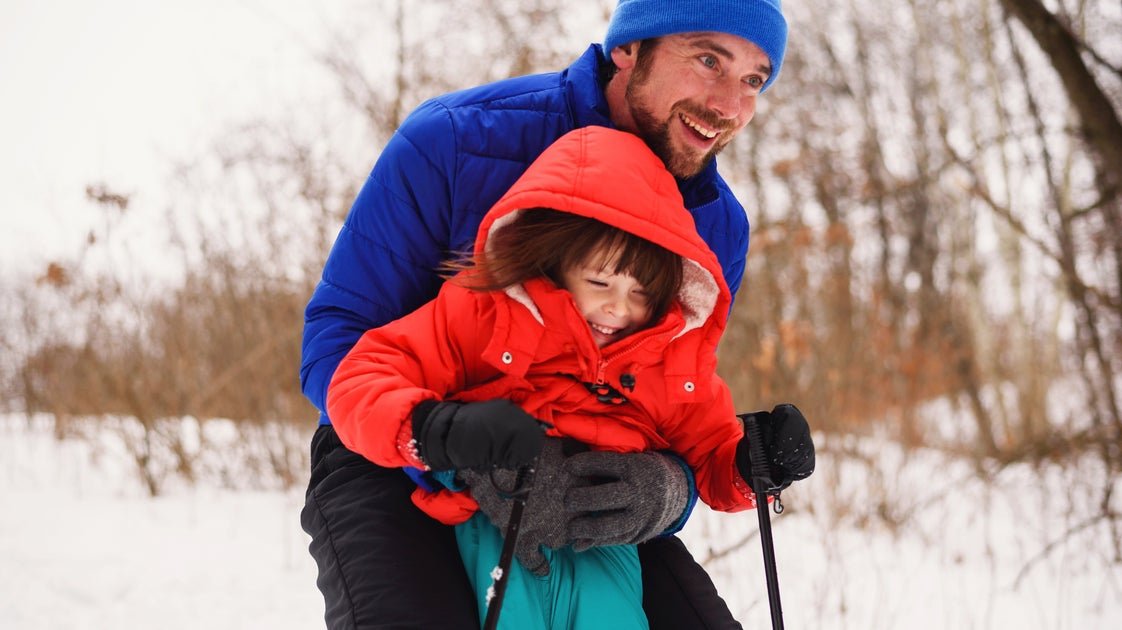
Winter activities that get kids out of the house during the colder months are great for their physical and mental well-being. They can provide a lot of fun, too.
Unfortunately, accidents and injuries do happen this time of year — even during family-friendly activities like sledding and ice skating.
We asked emergency room doctors which winter activities they wouldn’t want their own kids participating in and why. Below, our experts share safety advice for parents, caregivers and their children to reduce the odds of an ER visit this winter.
Sledding or snow tubing on steep or icy hills or near roads.
A 2021 retrospective analysis estimates that, between 2008 and 2017, more than 220,000 people were treated in U.S. emergency departments for sledding-related injuries, which also included injuries involving snow tubes, toboggans and snow discs. Nearly 70% of patients were kids under the age of 19; head injuries were especially common among this age group.
“As a dad of three adventurous girls, I love watching them have fun outside — but I draw the line at tubing on steep, icy hills without a long, clear run-out,” emergency medicine physician Dr. Dan Park, the associate chief medical officer for pediatrics at UNC Children’s in Chapel Hill, North Carolina, told HuffPost. “In the pediatric [emergency department], we see a sharp spike in winter trauma from tubing.”
“Kids can hit 20 to 30 miles per hour on icy surfaces, and unlike sleds, tubes offer no steering and no braking,” he added.
Dr. Nkeiru Orajiaka, a pediatric emergency medicine doctor in Dallas, also emphasized that the location and other conditions make a big difference in safety when sledding.
“Kids hit hidden obstacles under the snow, slide into traffic, or lose control on ice, leading to concussions, facial fractures and long-bone injuries,” she told HuffPost.
Park suggests choosing a hill that offers plenty of open space at the bottom of the run, free from trees, fences and other obstacles.
Having your kid wear a helmet for protection while sledding or tubing is a smart choice, all of our experts advised.
“I recommend treating sledding the same way you treat biking by having kids wear a properly fitted bike helmet,” Dr. Brad Sobolewski, a professor and pediatric emergency medicine physician at Cincinnati Children’s Hospital Medical Center, told HuffPost.
“Adult supervision is essential,” he added. “Stay off your phones and watch the kids while they are sledding.”
Time of day is another important safety consideration. Park suggests sledding during daylight to minimize injuries.
“As a parent, nighttime sledding sounds fun — until you realize how fast visibility disappears,” he said. “We see a surge of injuries from collisions with trees, fences, or even parked cars.”
Elizabethsalleebauer via Getty Images
Be cautious of frozen ponds or lakes.
Ice skating or playing on frozen ponds or lakes.
Every year, Park’s kids beg to skate on frozen ponds in their neighborhood. His answer? “A gentle, but firm no.” Natural ice can be deceptive and unpredictable.
“Even when ice looks thick, it can vary by inches within a few feet,” Park explained. “Cold-water immersion is extremely dangerous — the body temperature of a child can drop fast, and drowning is the second-leading cause of unintentional injury death in kids. Every year, we see near-drownings when a child falls through thin ice.”
Ponds and lakes in many parts of the country do not get cold enough to safely skate on, Sobolewski said. Factors like water chemistry, depth, weather conditions, currents, springs and temperature fluctuations can all impact ice strength.
Generally, people — and children in particular — are not capable of accurately judging ice safety.
“Unless local authorities confirm the ice is safe, families should stick to maintained rinks and keep adults close by,” Sobolewski said.
Riding ATVs in the snow.
Riding an all-terrain vehicle (or ATV) can be dangerous for kids anytime of year, but particularly in the winter season, Orajiaka said.
“Some think the ground is softer but the snow creates a false sense of softness. And a lot of kids ride it also without helmets,” she said. “Kids can skid off the road just like cars, can lose control and roll over and end up with significant head and bodily harm, even at low speeds.”
The American Academy of Pediatrics recommends that no child under 16 should operate or ride as a passenger on an ATV. Know that most ATVs are designed for only a single rider. Riding with or being a passenger increases the risk of crashing because it shifts weight and reduces control. Riding on public roadways is also “among the most dangerous of riding behaviors” and should be avoided, per the AAP.
Anyone operating an ATV, regardless of age, should be wearing a helmet, as it can significantly decrease the chance of moderate to severe head injuries.
Cars (or other vehicles) pulling kids on sleds, snowboards or tubes.
Orajiaka called this “one of the most high-risk winter activities.” Every year, she sees kids in the ER with injuries from riding on a sled pulled by a car, ATV or snowmobile.
“It is very dangerous. They can slide under a vehicle, slide away under a tree or fence, or parked cars, slip or even get thrown feet away,” Orajiaka said. “This is a huge risk for multiple injuries including head and brain injuries, fractures and even intra-abdominal injuries.”
As a dad, Park says this winter activity scares him “more than almost anything.”
“Kids standing on sleds or tubes pulled by cars look fine on social media — until they aren’t. In the ED, we’ve seen traumatic brain injuries and spinal injuries from even minor loss of traction,” he said. “The American Academy of Pediatrics explicitly warns against this because vehicle-pulled sledding creates high-speed ejection forces.”
Elizabethsalleebauer via Getty Images
ER docs insist that you and your kids should wear helmets while skiing or snowboarding.
Skiing or snowboarding without taking lessons and wearing a helmet.
Children make up roughly 20% of the skiing population, but research has shown that as many as 40% of ski-related injuries seen in U.S. emergency departments involve kids. Those include fractures, strains and sprains, contusions and abrasions, and concussions.
These winter sports are “terrific for kids,” Sobolewski said, “but proper lessons make a difference.”
“Instruction helps children control their speed, navigate terrain safely, and learn how to fall correctly,” he explained.
A 2022 survey from the University of Michigan Health C.S. Mott Children’s Hospital found that only 73% of parents say their child always wears a helmet while skiing or snowboarding.
“Kids should wear helmets designed for snow sports and stay on slopes that match their skill level,” Sobolewski said. “Build in regular breaks because fatigue increases the risk of injury.”
For both skiing and snowboarding, the pediatric trauma injury prevention program at Mott Children’s Hospital suggests parents ask ski shop personnel to ensure their child’s equipment, including helmet and boots, fits properly.
Adult supervision is a key safety component for any winter activities your family chooses.
“Nearly all serious winter injuries in children occur when adults are too far away to intervene,” Sobolewski said. “Being physically present and paying attention prevents most injuries before they happen.”
Park said the best safety strategy boils down to this: “Pick the right environment, supervise closely, and match the activity to your child’s age and abilities.”
“A few thoughtful choices on the front end allow kids to enjoy winter the way they’re supposed to — with joy, freedom, and a little bit of snow-covered chaos, but without the trip to the ER,” he added.
