

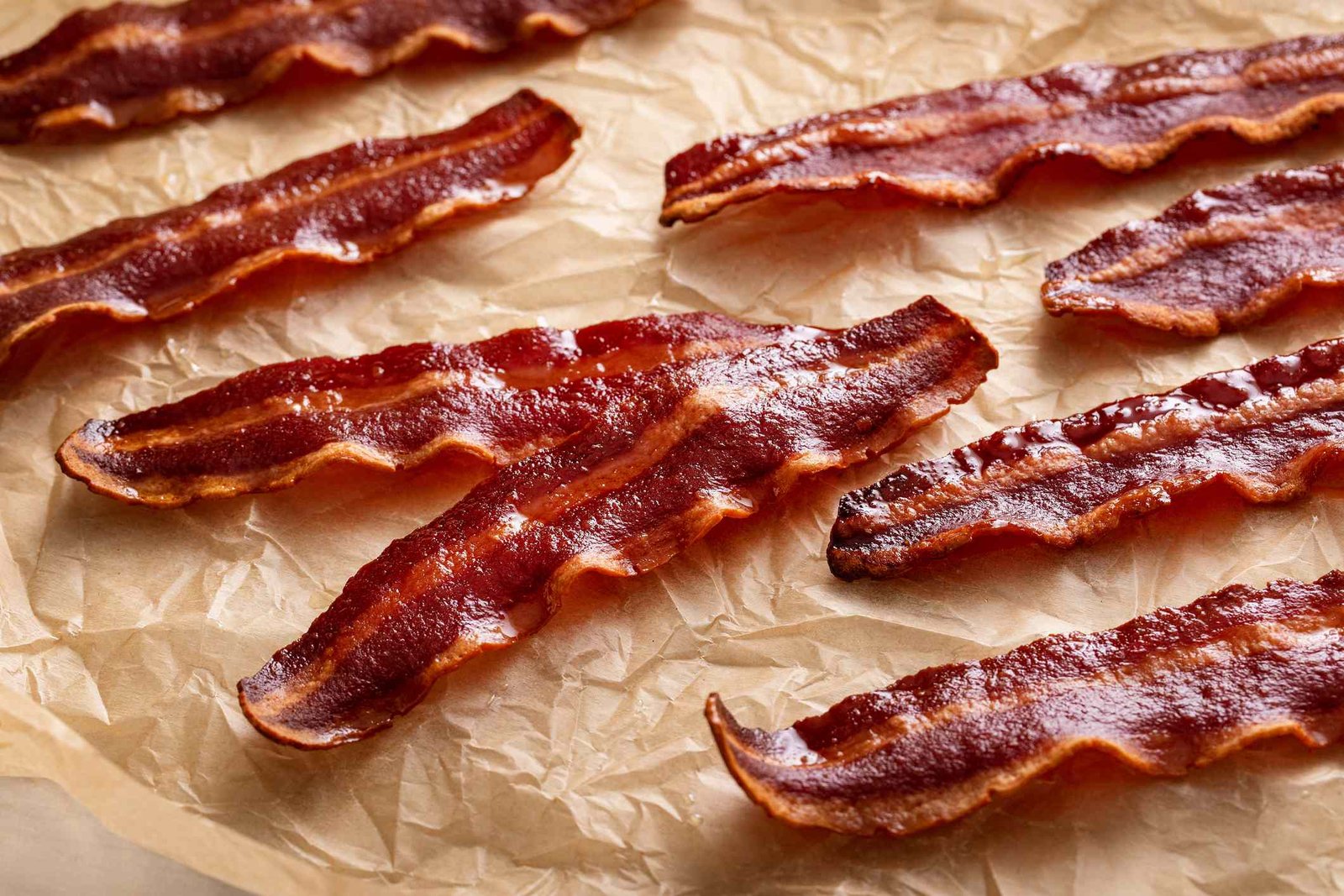
Turkey bacon is made by combining minced or chopped smoked turkey with seasonings, coloring, and preservatives. The mixture is then formed into bacon-like strips.
Turkey bacon can be a lower-calorie alternative to conventional bacon. Although pork bacon is considered a red meat, turkey bacon contains nearly as much fat and sodium.
Turkey bacon has about 29.8 calories per strip. The same serving of pork bacon, in contrast, has 43.3 calories. Replacing conventional bacon with turkey bacon can be a small change you make to help you lose or manage your weight. You must burn more calories than you take in to lose weight.
One slice of turkey bacon has about 164 milligrams of sodium, about 7% of the recommended maximum sodium intake of 2,300 milligrams per day. The same-size portion of pork bacon provides 162 milligrams of sodium, nearly the same amount as turkey bacon.
A major health difference is that pork is red meat, and turkey is not. Research has found that red and processed meats can increase the risk of cancer, primarily colorectal cancer. Experts advise limiting or avoiding red and processed meats due to their association with cancer. Turkey bacon is not red meat, but it is processed meat. It’s best to limit your consumption of turkey bacon.
You may opt for turkey bacon if you still want to enjoy bacon but cannot eat pork for health or religious reasons. Just make sure to double-check the ingredients list. Some turkey varieties can contain other meats, including pork.
Turkey bacon is not all that different from conventional bacon when it comes to healthiness, although it contains fewer calories. One slice of microwaveable turkey bacon has the following nutrients:
- Calories: 29.8
- Fat: 2.1 g
- Sodium: 164 milligrams (mg)
- Carbohydrates: 0.343 grams (g)
- Fiber: 0 g
- Added sugars: 0 g
- Protein: 2.39 g
It’s not entirely clear why red and processed meats, including turkey bacon, increase cancer risk. Possible causes include:
- Cooking the meat at high temperatures: This can trigger the production of heterocyclic amines (HCAs). These substances can harm DNA, increasing the risk of cancerous mutations.
- Heme iron: This is found in high amounts in red meat. Heme iron may damage cells that line your colon, increasing the risk those cells become cancerous.
- Nitrates and nitrites: Research has found that these substances can form cancer-causing compounds in humans.
- Smoking the meat: The smoking process produces polycyclic aromatic hydrocarbons (PAHs), a carcinogen (cancer-causing chemical).
No one food can make or break the healthfulness of your diet. Here are some ways you can healthily consume turkey bacon:
- Enjoy bacon in moderation: Reserve turkey bacon for special occasions like holidays or birthday brunches.
- Eat whole foods: Pair turkey bacon with nutrient-rich foods, such as whole grains, fruits, and vegetables. Serve BLTs on whole-grain bread with fresh tomatoes, lettuce, and avocado instead of mayo.
- Stay hydrated: All bacon, including turkey bacon, is high in sodium. High sodium intake can increase blood pressure and raise heart disease and stroke risk. Drink plenty of water while eating bacon to offset sodium’s effects on blood pressure.
- Consume potassium: Potassium-rich foods, like avocados or bananas, help manage the effects of sodium. Aim for 4,200 mg of potassium per day.
You may opt for healthier alternatives to turkey bacon, such as plant-based bacon alternatives. Plant-based bacon may be high in sodium, so check the nutrition facts label and stick to just a few strips.
If you do not want to give up meat, look for varieties without added nitrates. Nitrate-free turkey bacon is leaner, packs more protein, and has slightly less sodium than other options.
