

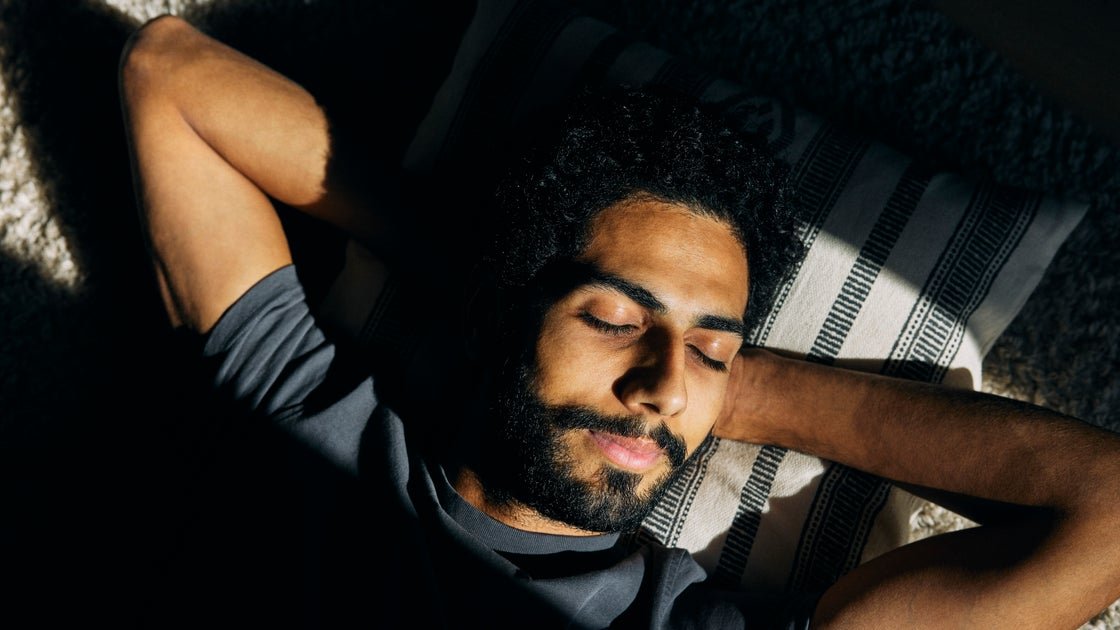
I looked at my watch as I trudged to the couch. 2:30 a.m. Again. It was like clockwork every night. Wake around 1:30 a.m., toss and turn for an hour, then give up and head to the living room.
For over a decade, I’ve struggled to sleep through the night. I’ve tried natural medicines, meditation apps, white noise machines, weighted blankets ― you name it. In pursuit of a solid night’s rest, I’ve spent thousands of dollars funding the sleep product industry.
When I started seeing a sleep hack going viral on social media, I had to try it. At least it was free, so I had nothing to lose. I decided to test it for two weeks.
It’s almost absurdly simple: close your eyes and roll your eyeballs slowly side to side, then up and down, then in circles, clockwise and counterclockwise. Keep the rolls slow and even until you get sleepy.
The hack gained traction after surgeon Dr. Katelyn Tondo-Steele shared it on Instagram, claiming it worked for her 14 out of 15 times when she woke in the middle of the night. Her video racked up millions of views, with countless commenters swearing by the method.
Does it work, or is this just another viral placebo destined to disappoint chronic insomniacs like me? We asked experts to break it down.
Why This Trick Might Help You Fall Asleep
There’s a neurological explanation for why this might work.
“By forcing your eyes to move back and forth in slow, smooth arcs, you’re simulating the oscillations that naturally take place during REM sleep,” explained Kiara DeWitt, a pediatric neurology nurse. “It’s a sort of subconscious messaging system to the rest of the nervous system that we should wind down rather than rev up.”
But there’s a simpler theory.
“When we wake in the middle of the night, the real problem isn’t just the waking. It’s the sudden, panicked thought: ‘Oh no, I’m awake. I’ll be exhausted tomorrow,’” said psychiatrist Ishdeep Narang.
Those thoughts trigger stress, keeping you alert. “This technique works by giving your mind a simple, boring, physical task to focus on. Instead of letting your thoughts spiral into anxiety about the clock, you are hijacking your own attention and forcing it to focus on the movement,” Narang said.
But is there any research behind this? Sadly, no ― at least not specifically on this method.
“There is no scientific evidence to support the argument that sleep can be induced by slow eye movements behind closed lids,” said ophthalmologist Dr. Gregg Feinerman. While slow rhythmic motions might be soothing by redirecting focus from anxious thoughts, “it is the brain that does the relaxation, not the eyes.”
Sleep specialist Alex Dimitriu confirms the evidence gap.
“While some research supports eye movements as a means to induce calm, this technique has not been studied specifically for sleep. Currently, this approach is anecdotal,” he said. Compare that to other methods: “There is substantial evidence supporting box breathing, progressive muscle relaxation, and possibly Yoga Nidra.”
This social media hack could help you fall asleep faster — but don’t expect it to work miracles.
Here’s what happened when people tried putting the trick to the test.
HuffPost asked a few people who had trouble sleeping to share their thoughts on the technique.
Waking up 10 or more times a night has been David Gull’s reality for most of his life. So when he tried the eye-rolling hack, he was cautiously hopeful. The results surprised him.
“I have to say, it seems to work really well. What’s interesting is I can’t remember ‘stopping’ doing the technique, because obviously I’m falling asleep while doing it.”
He’s used it both to fall asleep initially and after waking up in the middle of the night. “I may not be able to fix waking up 10+ times per night, but certainly falling back asleep faster is a game-changer.”
The results aren’t always that dramatic, though.
As a new mom juggling a business, Morissa Schwartz will try any viral sleep hack that promises rest. “Rolling my eyes upward while keeping my eyelids closed created a mild sense of relaxation, almost like a physical cue telling my brain, ‘We’re done here,‘” she said. It didn’t knock her out instantly, but “it did shorten the ‘lying-awake-overanalyzing-my-to-do-list’ phase.”
But not everyone had the same experience. For some people, it didn’t just fail ― it made things worse. Erika Lavin has dealt with insomnia since third grade, managing it with medication and melatonin. Every few weeks, though, anxiety breaks through and she wakes up with a panic attack. When this happened one night, she decided to try the eye rolling.
“I tried doing the eye roll hack and then added in box breathing, but I could feel the eye movement making me feel more and more awake,” she said. “It felt like the eye movements were feeding into my panic rather than counteracting it.”
She kept at it for 10 minutes, thinking maybe she needed more time. The next night, she tried again without the panic attack. Same result.
“I felt like it was waking me up that night as well even though I wasn’t panicked.”
When Denise Murray tracked the method with her smartwatch over a two-week trial, the data showed her heart rate went up, not down.
“The initial feeling this gave me was more awareness of my body, like the pressure of my eyeballs; I could also hear my heartbeat,” she said. Worse, her “mind switched from sleepy to analytical, thinking of campaign spreadsheets or meetings.”
By night 10, it was taking her nearly double the time to fall back asleep. She quit.
After speaking with these people, I also figured it was time to test this myself.
The first night felt weird. The rolling motions felt unnatural, and my eyes ached a bit. After several repetitions, I did drift off quicker than usual, about 15 minutes instead of my typical hour-plus. The second night brought similar results.
I was thrilled. Finally, a free solution! No more bankrupting myself on sleep gadgets.
That euphoria was short-lived. Over the next week and a half, the technique stopped working. Most nights, I’d give up, frustrated, and feel more awake. By week two, I was back on my couch at 3 a.m.
My overall take? Out of two weeks of testing, it genuinely helped maybe three times. When it worked, it shaved 30 minutes off my wake times.
If you’re constantly fatigued and can’t get to sleep, it’s important to talk to a doctor.
So, should you try it the next time you can’t sleep?
Sure, it’s low-risk and free. Just keep your expectations realistic.
If you decide to test it out, keep a few things in mind. Keep the movements slow and gentle ― don’t force your eyes into extreme positions. If you have any existing eye conditions, such as glaucoma or retinal issues, check with your doctor first.
Here’s the critical part: “If it isn’t working after a few minutes, it’s time to try something else and/or get out of bed,” said clinical psychologist Sari Chait, who specializes in treating insomnia.
Why? Because lying in bed awake trains your brain to associate your bed with being awake, making future sleep harder. Clearly, I need to take her advice and move to the living room sooner.
I’m not convinced my first two nights were anything more than a placebo. But even modest improvement matters when you’ve been an insomniac for a decade.
It works for some, fails for others, and might offer mild help for people like me. Just don’t expect miracles. That only happens on TikTok.
