

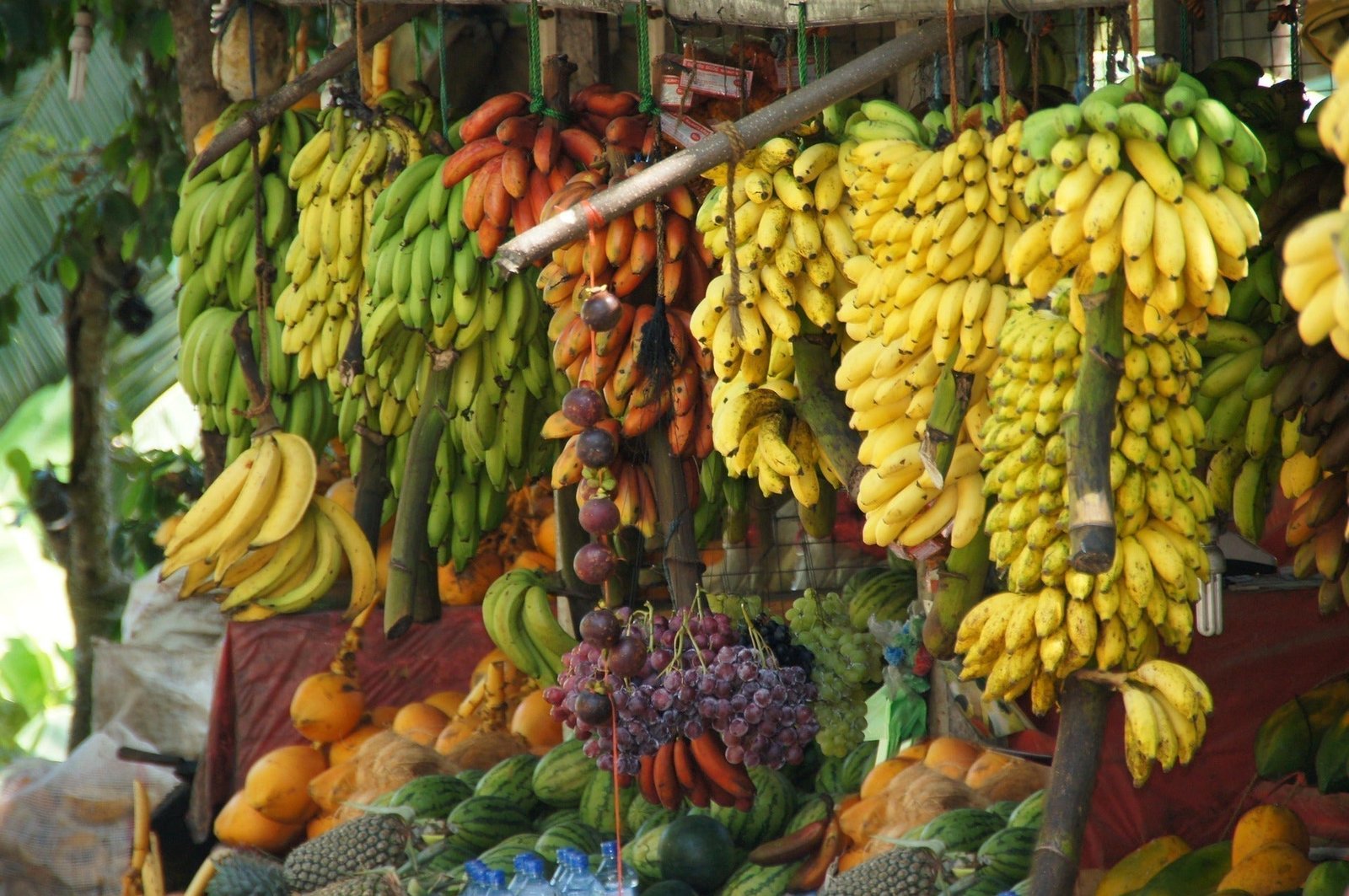
Whether you are just starting out or you have been following the Hallelujah Diet for a long time, you have probably come to like bananas quite a bit. They’re not the flashiest part of your diet, but they do make a big difference for you and for me, too. Where would we be without our daily banana or two? After all, bananas are a portable powerhouse that’s overlooked in the articles we write and talk about.
But if you’re like me, bananas hold an important place in your diet. With blended salads and fruit smoothies as an integral part of your diet, and mine, bananas hold a special place in anchoring a lot of your foods. And they are a bargain: a nutritional powerhouse with just a hundred calories per medium fruit.
Here Are Eight Benefits That You Get With Bananas
- They provide essential nutrients in a cheap, tasty, easy-to-eat package.
- They’re great for the heart.
- They help keep your blood pressure normal.
- They improve digestion and gut health.
- They’re great as an energy source during long endurance exercise events.
- They may help control blood sugar and keep you sensitive to insulin.
- They are a great source of antioxidants like dopamine.
- They can help reduce the risks of low potassium levels during hemodialysis and kidney stones.
Below are more details about these benefits and some of the evidence that backs up these claims.
1. Bananas Are Loaded With Essential Nutrients
A healthy diet is always composed of whole foods that provide a lot of nutrients for a small package of calories. Ultra-processed food is just the opposite: a lot of calories and very few nutrients. Bananas have earned a solid spot in a whole-foods diet as a nutrient-rich food.
A medium banana (126 g) contains:
- Potassium: 451 mg (9–12% of daily needs)
- Vitamin B6: 0.46 mg (25–33% DV)
- Vitamin C: 11 mg (11% DV)
- Magnesium: 34 mg (8% DV)
- Manganese: 0.34 mg (15% DV)
- Fiber: 3.1 g (mostly pectin + resistant starch in greener bananas)
Few foods deliver this much potassium and B6 in so few calories (~112 kcal).
USDA FoodData Central: https://fdc.nal.usda.gov/fdc-app.html#/food-details/173944/nutrients
2. Supports Heart Health and Lowers Blood Pressure
Sodium raises blood pressure, while potassium normalizes blood pressure. The ratio of sodium:potassium is the best way to keep track of this relationship. The answer to improving your sodium:potassium ratio isn’t just to eat less salt. You also need to increase your intake of potassium. Large cohort studies show every 1,000 mg increase in daily potassium (about 2 bananas’ worth of potassium) reduces systolic blood pressure by ~2–4 mmHg in people with hypertension and cuts stroke risk by 20–30%.
References:
INTERSALT study (33 countries): https://www.bmj.com/content/297/6644/319
Meta-analysis of 22 RCTs: https://www.bmj.com/content/346/bmj.f1378
3. Bananas Enhance Digestion and Gut Health
Bananas, especially the not-fully ripe ones, are a rich source of resistant starch, which acts as a prebiotic. This resistant starch is not digested by our own enzymes (thus the name) and passes into the large intestine. Upon arrival there, it is food for the beneficial bacteria. It produces short-chain fatty acids (SCFAs) that are the primary food for the colonocytes (cells that make up the lining of the large intestine). These SCFAs also help reduce inflammation, strengthen your gut barrier (less leaky gut and food allergy issues), and promote bowel regularity.
A systematic review of 14 studies found that resistant starch (RS) supplementation can improve insulin resistance in type 2 diabetes patients, particularly those with obesity.
Reference: https://pubmed.ncbi.nlm.nih.gov/31760943/
4. Provide a Natural Energy Boost for Exercise
A study in 2012 compared bananas or 6% carbohydrate sports drink to fuel cyclists on a 75-kilometer time trial. Glucose levels and performance were the same, but the bananas had more nutrients and antioxidants than the sports drink.
So if you’re cycling a long way, just eat a banana. Sports drinks are not real foods. They’re ultra-processed beverages.
Reference: https://journals.plos.org/plosone/article?id=10.1371/journal.pone.0037479
5. May Improve Blood Sugar Control and Insulin Sensitivity
I have measured my own blood sugar after drinking a fruit smoothie made with bananas, strawberries, almonds, and a little bit of pineapple. There was no blood sugar spike when I did it. It was very even-keeled. If you include ground flaxseeds or B-Flax-D, the blood sugar spike is even slower. And if you use bananas that aren’t fully ripe, there’s even less sugar to be released from the bananas. So if you are concerned about blood sugar, you may want to try bananas and see if you handle them well.
This may have to do with the glycemic index of bananas. A green banana has a glycemic index of 30-45, while a ripe banana has a glycemic index between 60-70.
6. Eating a couple of bananas during hemodialysis can help prevent arrhythmias and low potassium levels.
Restricting fruit consumption during dialysis is a common practice, but this can lead to very low levels of potassium in the blood, which then can cause arrhythmias and death. To test whether bananas could help resolve this issue, a randomized controlled trial in southern China with 122 patients undergoing maintenance hemodialysis was conducted. The people in the treatment group were given 250 grams of banana at the beginning of their hemodialysis. The control group received no food at the beginning of their dialysis session.
Both groups were monitored during their dialysis session. The group that got bananas at the beginning did not have as many low values of serum potassium (52% vs 85% with low potassium values) during the session and had fewer arrhythmias as well (8% vs 30%).
This result should be replicated, but it looks like fruit restriction during dialysis is actually a bad idea and leads to unnecessary complications.
Reference: https://pubmed.ncbi.nlm.nih.gov/38707694/
7. Rich Source of Antioxidants (Especially When Spotted)
Ripe bananas, that is, the ones with brown spots on them, have high levels of dopamine, which functions as an antioxidant. (Dopamine in the banana does not contribute to dopamine in the brain.)
You can tell how much dopamine (that is, the relative amount of dopamine) is in a banana by how fast the peel turns brown after peeling it. A green banana peel turns brown very slowly, but a ripe banana peel turns brown quickly because it has high levels of dopamine, which is a substrate for the polyphenol oxidase, the enzyme that is responsible for the enzymatic browning in a banana pulp and peel. (There is more dopamine in the peel than in the pulp of the banana. But no one’s going to start eating banana peels anytime soon. Just give them to your goats.)
Anyway, ripe bananas are a great source of antioxidants.
Reference: https://pubs.acs.org/doi/10.1021/jf9909860
8. Promotes Kidney Health and Reduces Kidney Stone Risk
High potassium diets increase urinary citrate (which binds calcium and prevents stones) and lower urinary calcium excretion. Among 45,000 men in the Health Professional Follow-up Study, those who had more than 4,000 mg per day of potassium had a 50% reduced risk of kidney stones compared to those who ate less than 2,900 mg of potassium per day during 4 years of follow-up. In the Nurses’ Health Study (a 12-year study of over 91,000 women) researchers found that those with the highest intakes of potassium/day had a 35% lower risk of kidney stones.
References:
HPFS: https://pubmed.ncbi.nlm.nih.gov/8441427/
NHS: https://pubmed.ncbi.nlm.nih.gov/9092314/
Bottom line
Eating a couple of bananas every day is one of the simplest, cheapest ways to boost your intake of potassium, resistant starch, vitamins, and antioxidants. There’s solid evidence that bananas are great for your heart, your digestive tract, your kidneys, your cardiovascular system, and for giving you great energy. Whether you eat them when they’re fully ripe or when they’re not so ripe, there are amazing benefits at every stage of the banana. So enjoy.
One of the best things about bananas is that they’re easy to combine with other foods, like making smoothies or just eating like a plantain with rice and beans. They’re simple to incorporate into your diet, and they make a great snack. Check out our recipes for more than 75 smoothie creations for more ideas on how to eat bananas.
