

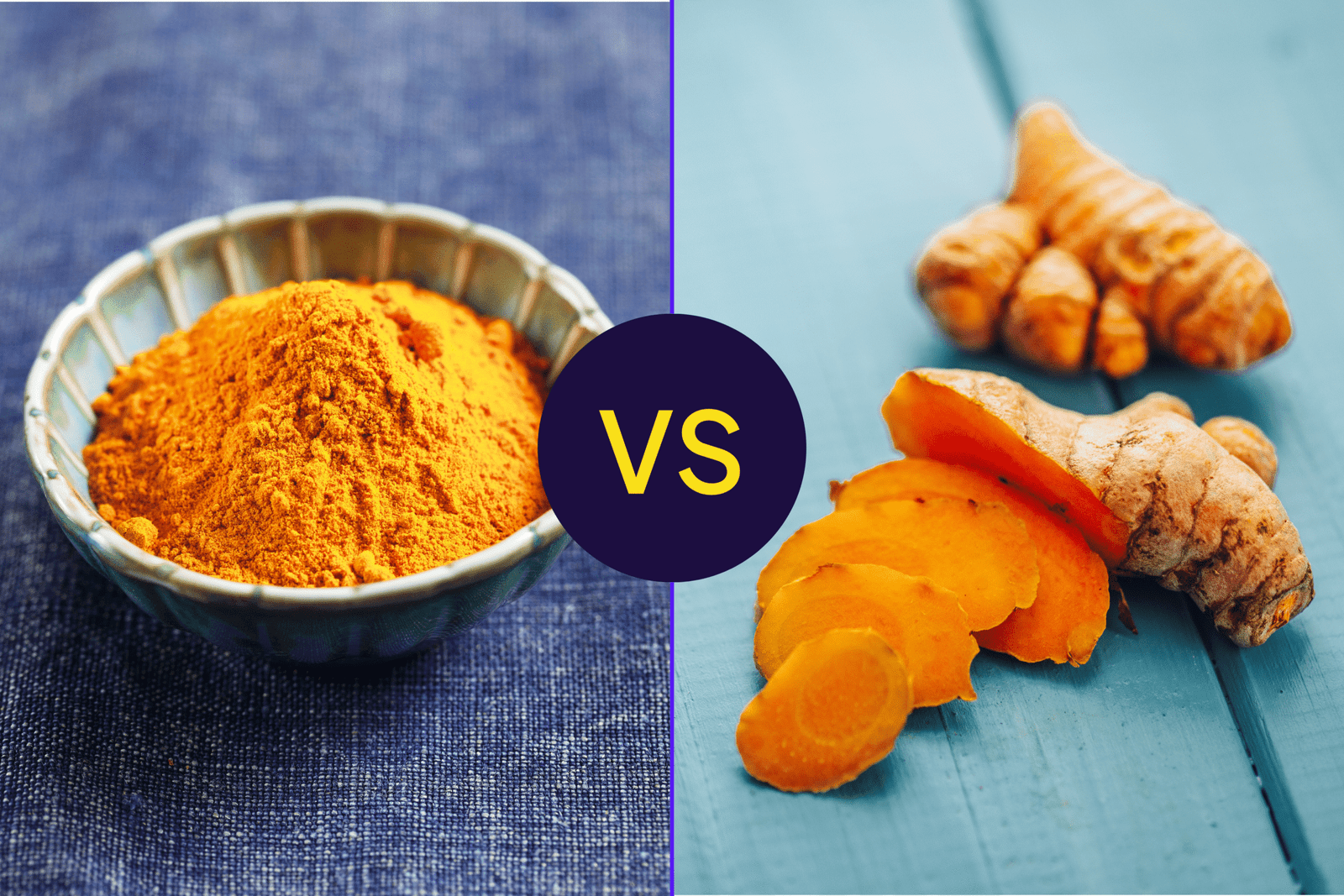
Both raw and powdered turmeric contain antioxidants that help repair cell damage and combat chronic inflammation, but experts say powdered turmeric comes out on top for its higher concentration of these beneficial compounds.
Raw and powdered—or ground—turmeric both offer antioxidants, and some research even suggests raw turmeric contains more total antioxidants. But the most potent antioxidant in turmeric is curcumin—and because ground turmeric is more concentrated, it contains much more of it.
“Raw turmeric has more water content than dried turmeric, so removing the water from turmeric (through drying it out) increases the total concentration of curcumin by volume,” Jenna Volpe, RDN, LD, IFNCP, CLT, integrative registered dietitian, herbalist, and author of Herbalism for the Health and Nutrition Professional, told Health. Raw turmeric’s curcumin levels typically range from 0.3% to 5.4%, while dried turmeric’s range higher, from 3% to 8%.
Powdered turmeric also tends to be more bioavailable, meaning its antioxidants are easier for the body to absorb, especially when paired with a nutrient enhancer like black pepper or fat. “The cell walls of dried, powdered turmeric are broken down, making it easier to extract the therapeutic constituents (such as curcumin) in the right conditions,” Volpe said.
That said, fresh raw turmeric has its own advantages. The earthy root is richer in volatile essential oils like turmerones and zingiberene. “These are known to offer certain therapeutic health benefits such as liver protection, antioxidant activity, and possible anti-cancer activity,” Volpe added.
Furthermore, Erin Jowett, MS, RD, LDN, functional dietitian and founder of Integrative Weight & Wellness, cautions that heavy processing used by some brands of ground turmeric can diminish its benefits. “Cheap, harsh drying can wipe out the good stuff,” she said.
Jowett and Volpe said liquid-based dishes like teas, soups, golden milk, and smoothies are where raw turmeric really shines. Steeped or grated, it adds a fresh, earthy flavor. Because the fresh root contains fewer antioxidants, you can try combining it with other antioxidant-rich ingredients—think turmeric-sweet potato soup or turmeric-pineapple smoothie.
Powdered turmeric, meanwhile, is ideal for cooked dishes. A small amount can flavor an entire recipe, and the powder blends seamlessly into dishes like curries, roasted vegetables, and stir fries. When shopping, choose a brand you trust. “When brands cut corners, you end up with turmeric that’s lower-quality and more prone to contamination,” Jowett said. “I always tell people: Trust the brand as much as the product.”
You can get a meaningful amount of curcumin through food alone, but supplements provide even higher doses. “Turmeric supplements deliver highly concentrated extracts, often paired with black pepper or special delivery systems, so the dose is far stronger than anything you’d get from food,” Jowett said.
This potency can be a good thing for quelling inflammation—but also calls for caution. High doses may cause digestive upset, increase bleeding risk, or worsen gallbladder issues.
Certain groups should avoid turmeric supplements altogether. “I don’t recommend turmeric supplements during pregnancy, breastfeeding, or early postpartum,” Jowett said. “Anyone with liver, kidney, or gallbladder disease or taking multiple medications should talk with their doctor before using them.”
