

Key Takeaways
- Prozac is an SSRI used to treat both depression and anxiety.
- It may take up to 12 weeks for Prozac to fully work, so don’t stop taking it abruptly.
- Talk to your doctor about any other medications you take to avoid dangerous interactions.
What Is Prozac?
Prozac (fluoxetine) is an antidepressant that was first introduced in the United States to treat depression in the 1980s. It is part of a class of medications known as selective serotonin reuptake inhibitors (SSRIs).
This article discusses how Prozac works and what you should know before taking it. It also covers potential side effects, interactions, withdrawal symptoms, and other medications you might consider.
How Prozac Works
As an SSRI, Prozac works by preventing the brain from reabsorbing naturally occurring serotonin. Serotonin is involved in mood regulation. In this way, Prozac helps the brain to maintain enough serotonin so that you have a feeling of well-being, resulting from improved communication between brain cells.
Research also highlights how medications such as Prozac may help in combination with psychotherapy. In a 2008 study in mice published in Science, Prozac helped the brain to enter a more immature and plastic state, possibly making it easier for therapy to have an effect.
Studies like this have provided insight into why combining medication such as Prozac with talk therapy can be effective for anxiety.
What It Feels Like to Take Prozac
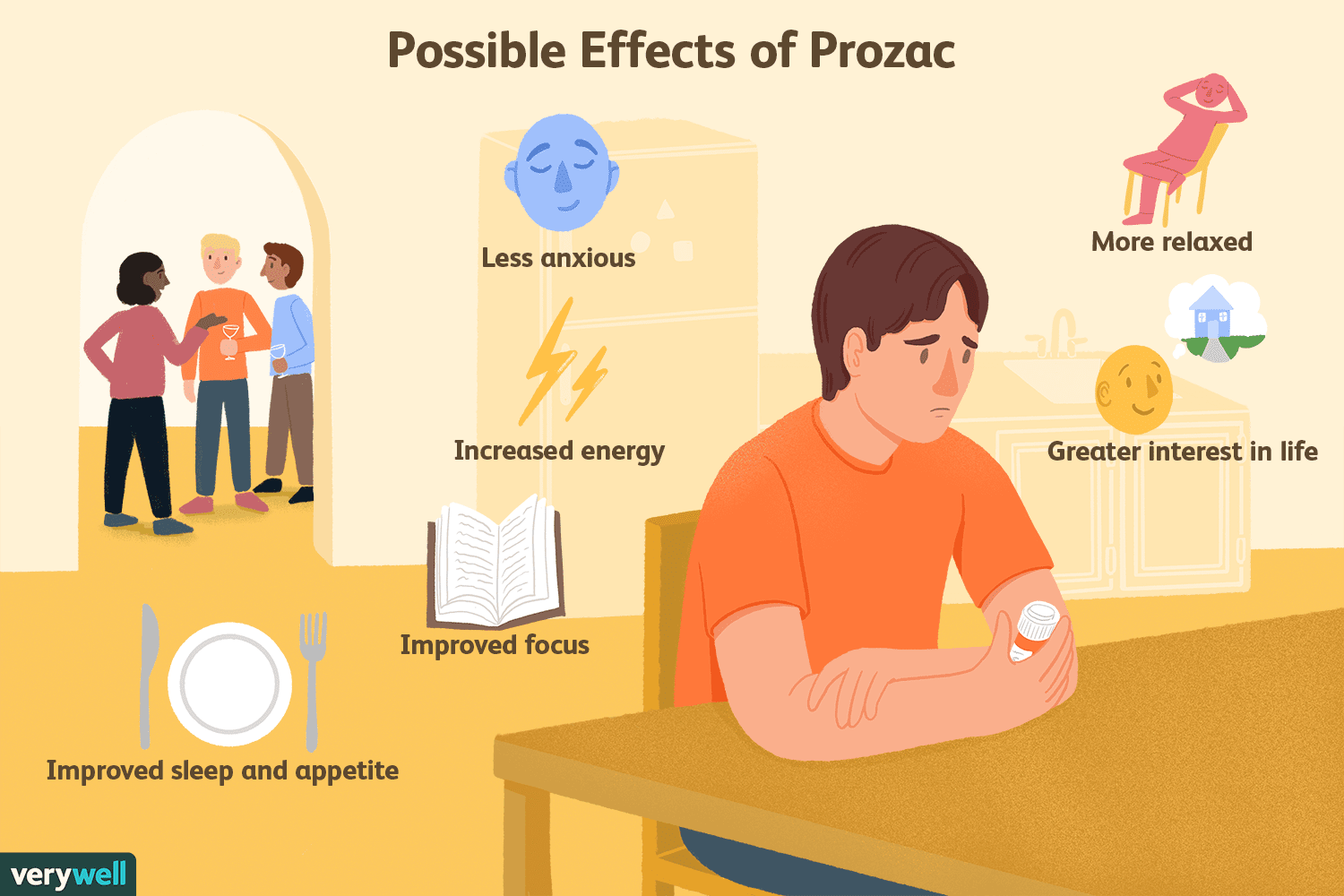
If you experience a positive response to Prozac, you might notice a decrease in your anxiety symptoms and feel more like yourself again. You may:
- Feel more relaxed and less anxious
- See improved sleep and appetite
- Have a greater interest in life
- Have more energy
- Notice improved focus
Remember that it may take time for these improvements to become noticeable—even up to 12 weeks in some cases. You may also experience side effects at first, so it may be hard to notice the improvements until the side effects lessen.
Using Prozac for Anxiety
Healthcare providers prescribe Prozac mainly for major depression, obsessive-compulsive disorder, and panic disorder (all of which are FDA-approved uses). However, they often use it off-label (a practice that’s legal and common) to treat other anxiety disorders. In fact, fluoxetine and other SSRIs are considered safe, effective first-line treatments for anxiety disorders, in part because their side effects tend to be more manageable than those of other types of treatment. Additionally, the risk of misuse and addiction is lower for Prozac than for other types of anxiety medications such as benzodiazepines.
However, you must follow a number of steps to get a prescription. Generally, a healthcare provider must diagnose you with a mental health disorder before prescribing Prozac or any other prescription treatment. It’s recommended that all adults younger than 65 should be regularly screened for anxiety. So, it’s important that you ask your doctor about getting tested for anxiety at your next visit.
Although a family doctor is qualified to write a prescription, you may benefit from seeing a mental health professional with experience in mental health disorders who can also prescribe medication, such as a psychiatrist.
Dosage and Administration
Prozac is usually prescribed at a low dose to start, and then gradually increased to 20 mg per day. The maximum dose is 80 mg a day. It can be taken as a liquid or capsule and should be used as prescribed. It can take several weeks for effects to show, so it is important not to stop taking Prozac abruptly even if you think it is not working.
Take the medication only as prescribed by a doctor or psychiatrist. Stopping suddenly could be dangerous and cause withdrawal symptoms.
Side Effects of Prozac
Some side effects of Prozac are more likely than others. Some people notice that side effects lessen over time, or become less bothersome.
Common side effects include:
- Anxiety
- Blurred vision
- Diarrhea
- Dizziness
- Dry mouth
- Fatigue
- Headaches
- Heartburn
- Loss of appetite
- Lightheadedness
- Nausea
- Sleep problems
- Sexual problems
- Sweating
- Yawning
Rare side effects include:
- Bleeding or bruising
- Extreme anxiety
- Feeling confused
- Fever
- Vomiting
- Seizures
- Rash/hives
- Suicidal thoughts or behavior
- Swelling
- Trouble breathing or swallowing
If you experience any of these severe side effects while taking Prozac, contact a healthcare provider right away.
Precautions Before Taking Prozac
There has been some controversy about the safety of Prozac, due to a safety warning issued by the Food and Drug Administration (FDA) in 2007 about the risk for suicidal thoughts among certain groups.
Despite this warning, Prozac continues to be prescribed and can be used safely (or discontinued if adverse effects develop) under the guidance of a physician. If you have concerns about the safety of taking Prozac, discuss them with a healthcare provider.
Medication and Drug Interactions
Prozac should not be combined with monoamine oxidase inhibitors (MAOIs) or taken within 14 days of discontinuing an MAOI. You should also allow at least five weeks after stopping Prozac before starting an MAOI.
The antipsychotics pimozide and thioridazine also increase the risk involved in taking Prozac. Prozac should not be taken at the same time as tricyclic antidepressants (TCAs), or drugs metabolized by CYP2D6. Care should also be taken if using drugs that affect the central nervous system (CNS), such as benzodiazepines.
The result of medication interactions can be serious and potentially fatal, so discuss all medications you are taking with a healthcare provider to determine whether potential interactions exist.
Prozac should not be combined with alcohol, certain over-the-counter (e.g., aspirin, due to the risk of bleeding) and prescription medications, and nutritional supplements or herbs (e.g., St. John’s wort). Be sure to tell your prescribing physician about everything that you are taking.
Recap
Taking Prozac with other medications or supplements can lead to drug interactions. Always tell your doctor about any other medications you are taking before you begin taking Prozac for anxiety.
Who Should Not Take Prozac
Prozac can be passed to babies during pregnancy and through breast milk. Consult with a doctor if you are pregnant or nursing before taking Prozac, to determine whether the benefits outweigh the risks.
There are also some potential risks for people aged 65 or older that should be discussed with a doctor. The safety and effectiveness of Prozac in children younger than 18 years of age has also not been established.
Warnings
Prozac can carry risks, including the potential for clinical worsening and in rare cases, increased thoughts of suicide. Serotonin syndrome can also occur, particularly if Prozac is used in conjunction with certain other medications. Prozac may also activate mania in people who are prone to it. Close monitoring by a healthcare provider is important.
Prozac also comes with a black box warning that it may increase the risk of suicide in people younger than 25 years old. In these individuals, the drug may lead to suicidal thoughts or worsening of these types of thoughts. If you belong to this group, your prescribing doctor should monitor you, particularly in the early stages, for these serious issues.
Withdrawal
If you stop taking Prozac suddenly, you may notice withdrawal symptoms, including:
- Dizziness
- Confusion
- Nightmares
- Insomnia
- Irritability
- Crying spells
For this reason, never stop Prozac (or other medications) without consulting a doctor. Prozac should always be tapered off to avoid withdrawal effects.
Alternatives to Prozac
If Prozac is not well tolerated, other SSRIs that are sometimes prescribed for anxiety include:
Effexor XR (venlafaxine) is another antidepressant called a serotonin-norepinephrine reuptake inhibitor (SNRI) that also may be effective in treating anxiety.
Benzodiazepines are another class of medication often used for anxiety, but they are generally a short-term solution because of a risk of dependence. Typical medications in this category include:
Summary
Prozac is an SSRI antidepressant that is sometimes used in the treatment of anxiety. It is often most effective when combined with psychotherapy. Discuss your options with a healthcare provider to determine if taking Prozac is the best approach to treat your symptoms. Potential side effects can occur and the medication may increase the risk of suicide in people age 25 and younger.
Frequently Asked Questions
Does Prozac give you energy?
As Prozac begins to work, you may notice increases in your energy levels. In some cases, it may cause symptoms of mania in some people taking this medication. Symptoms of mania include high energy levels, racing thoughts, trouble sleeping, and irritability. You should talk to your doctor if you notice such symptoms while taking Prozac.
How long does it take for Prozac to work for anxiety?
As with other antidepressant medications, it may take time before you begin to notice improvements in your anxiety symptoms. You might notice decreased anxiety symptoms after a few weeks of taking your medication, but it will take several weeks to experience the full effects.
How long should you take Prozac for anxiety?
In many cases, it is recommended to continue taking an antidepressant for at least six months to a year after symptoms disappear. If you stop taking your medication too soon, it may lead to a relapse of symptoms.
You should never stop taking your medication without talking to your doctor first. They will likely recommend gradually tapering your dose over a period of several weeks in order to reduce the risk of withdrawal symptoms.
Verywell Mind uses only high-quality sources, including peer-reviewed studies, to support the facts within our articles. Read our editorial process to learn more about how we fact-check and keep our content accurate, reliable, and trustworthy.
Maya Vetencourt JF, Sale A, Viegi A, et al. The antidepressant fluoxetine restores plasticity in the adult visual cortex. Science. 2008;320(5874):385-8. doi:10.1126/science.1150516
U.S. National Library of Medicine, Toxnet. Fluoxetine hydrochloride.
Melaragno AJ. Pharmacotherapy for anxiety disorders: from first-line options to treatment resistance. FOC. 2021;19(2):145-160. doi:10.1176/appi.focus.20200048
Melaragno A, Spera V, Bui E. Psychopharmacology of anxiety disorders. In: Bui E, Charney ME, Baker AW, eds. Clinical Handbook of Anxiety Disorders: From Theory to Practice. Springer International Publishing; 2020:251-267.
US Preventive Services Task Force. Screening for Depression and Suicide Risk in Adults: US Preventive Services Task Force Recommendation Statement. JAMA. 2023;329(23):2057–2067. doi:10.1001/jama.2023.9297
Eli Lilly. Prozac medication guide.
National Alliance on Mental Illness. Fluoxetine (Prozac).
Cleveland Clinic. Fluoxetine oral solution.
U.S. Food and Drug Administration. Prozac (fluoxetine hydrochloride): Highlights of prescribing information.
Thanks for your feedback!
What is your feedback?
Helpful
Report an Error
Other
