

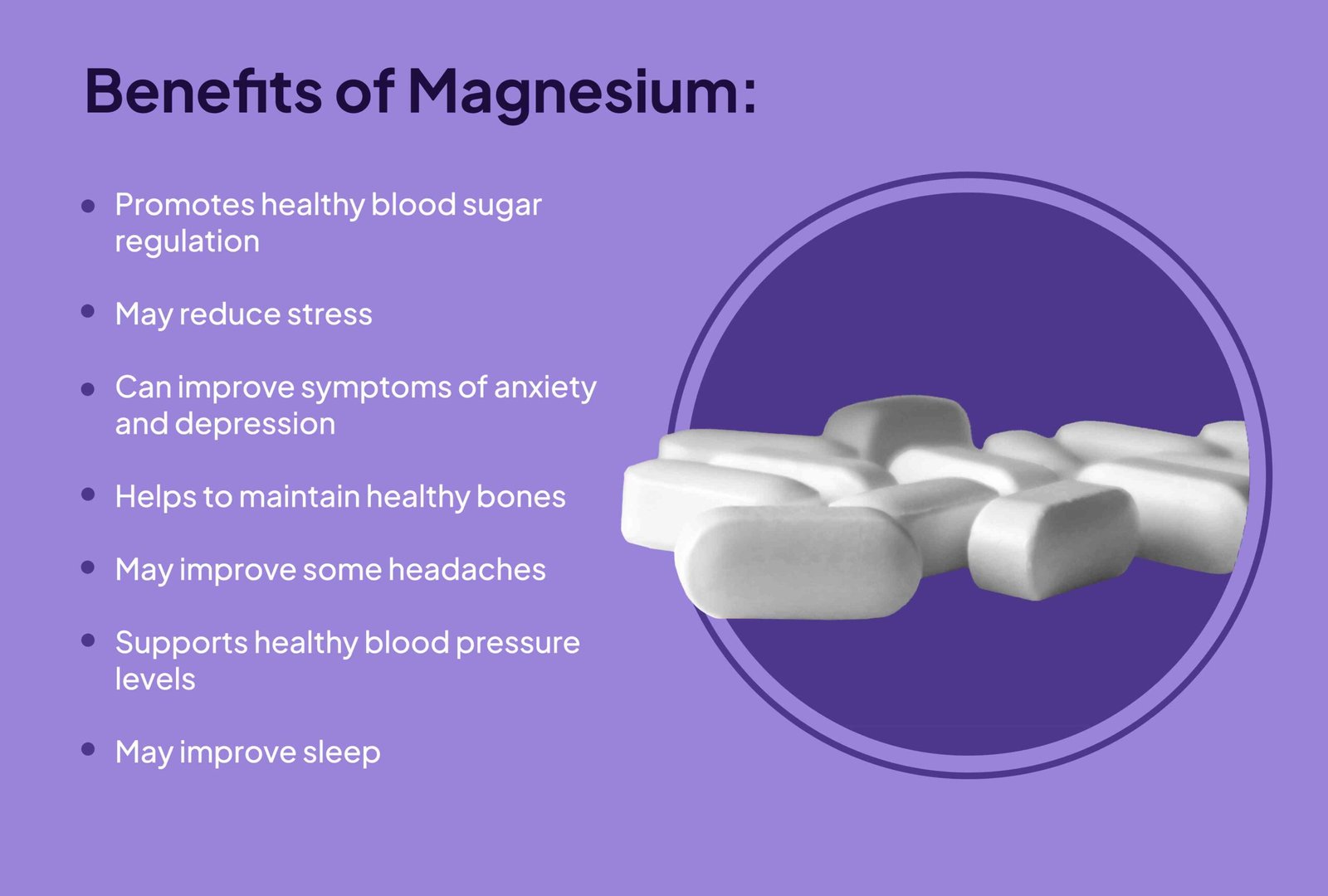
Magnesium supports the health of your bones, muscles, and nerves. It may also improve sleep and mood.
Maintaining healthy magnesium levels can help you get restful sleep. Magnesium binds to certain receptors in the central nervous stems and activates gamma-aminobutyric acid (GABA). GABA is one of the main neurotransmitters (chemical messengers) that helps regulate sleep.
Magnesium supplements can help people fall asleep faster and stay asleep longer. A review found that people with the highest magnesium intake, including both from diet and supplements, were the most likely to get 7-9 hours a night.
Magnesium is necessary for carbohydrate metabolism and insulin secretion. Maintaining optimal magnesium levels is essential for healthy blood sugar regulation. People with type 1 and type 2 diabetes who have high blood levels of magnesium tend to have better blood sugar control than people with lower levels.
A review of 25 studies looked at people with diabetes and those at high risk for diabetes. The authors found that magnesium supplements significantly reduced fasting blood sugar levels and improved insulin sensitivity in these groups compared to placebos.
Some evidence suggests that a magnesium deficiency can worsen premenstrual syndrome (PMS). PMS is a group of symptoms that can develop 1-2 weeks before your period. Some of the most common symptoms include acne, bloating, food cravings, and mood changes.
Research has shown that supplemental magnesium may reduce PMS symptoms. One study found that 300 milligrams of magnesium a day decreased bloating and mood changes in college-aged women with PMS compared to a placebo group.
Low blood levels of magnesium have been shown to affect mood and increase the risk of depression. Depression is a common mental health condition that causes persistent feelings of sadness and hopelessness.
A study of 112 people with depression found that daily supplementation with 248 milligrams of magnesium chloride for six weeks led to significant improvements in symptoms of anxiety and depression compared to a placebo group.
Your bones contain up to 60% of the total magnesium in your body. Low magnesium levels inhibit the activity of osteoblasts (cells that help form bone tissue) and increase the action of osteoclasts (cells that break down bone). Magnesium is also necessary to absorb and metabolize vitamin D. This nutrient is essential for bone health.
People with low blood levels of magnesium have a higher risk for bone disorders like osteopenia and osteoporosis. Some evidence suggests that magnesium supplements can improve bone mineral density and decrease fracture risk.
Magnesium plays an important role in your body’s stress response. Not getting enough magnesium can impact your ability to deal with stress. Research has shown that people who are frequently stressed have lower blood levels of magnesium compared to those who are not.
Magnesium supplements may be helpful for improving symptoms of anxiety. One review found that supplementing with magnesium may decrease symptoms in people with mild or moderate anxiety. More research is needed to know how well magnesium supplements can treat anxiety over time.
People who have frequent headaches, like migraines, tend to have lower blood levels of magnesium. Magnesium is necessary for nerve function. It also helps regulate inflammation and improve blood flow in the brain. Research has shown that magnesium deficiency is an independent risk factor for migraines.
A number of studies have shown that magnesium supplements can reduce the frequency and severity of symptoms in people with migraines. One review found that magnesium supplements help prevent migraine attacks and reduce the cost and side effects of medications for migraines.
Magnesium is involved in several processes that support heart health. It promotes the release of a signaling molecule called nitric oxide. Nitric oxide helps relax blood vessels, which maintains healthy blood pressure levels.
Magnesium supplements may reduce systolic and diastolic blood pressure in people with hypertension (high blood pressure). One review of 49 studies found that people with untreated hypertension may need high supplemental doses of at least 600 milligrams of magnesium a day to lower blood pressure.
Magnesium is found in a number of foods, including nuts, vegetables, seeds, and beans. Some dietary sources of magnesium include:
- Spinach: 156 milligrams (mg) per cooked cup, or 37% of the Daily Value (DV)
- Pumpkin seeds: 156 mg per ounce (oz), or 37% of the DV
- Swiss chard: 150 mg per cooked cup, or 36% of the DV
- Dark chocolate (70-85% cacao solids): 129 mg per 2-oz serving, or 31% of the DV
- Chia seeds: 111 mg per oz, or 29% of the DV
- Black beans: 120 mg per cup, or 28% of the DV
- Almonds: 80 mg per oz, or 19% of the DV
The best way to ensure you are getting plenty of magnesium on a daily basis is to follow a nutritious diet that’s high in plant foods. It’s also important to limit your intake of foods low in magnesium, like ultra-processed snack foods.
You can take magnesium any time of day, with or without food. It’s important to note that there are several forms of magnesium, so read the back of supplement labels to make sure you choose the right kind for your health needs.
The body better absorbs certain forms, such as magnesium citrate, magnesium glycinate, magnesium acetyl taurate, and magnesium malate. Other forms, like magnesium oxide and magnesium sulfate, may not be absorbed as well.
Dosage
Magnesium supplements provide varying doses of magnesium. Most pills and capsules contain around 100-150 milligrams of magnesium. Keep in mind that you may have to take several pills or capsules in order to meet your dosage recommendations. Most adults need 310-420 milligrams of magnesium per day, depending on age and sex.
More than half of people in the United States fall short of these intake recommendations. The current daily intake recommendations are usually enough to prevent magnesium deficiency. They may not be high enough to promote optimal magnesium status. Most people would benefit from increasing their magnesium intake through diet or supplementation.
Magnesium supplements are generally safe and not associated with significant side effects when you use them appropriately. It’s possible to take in too much magnesium from supplements, which can lead to serious complications. People with kidney disease and older adults with bowel conditions are more susceptible to hypermagnesemia (high blood levels of magnesium).
Potential Drug Interactions
Several medications can deplete magnesium stores. Magnesium supplements may reduce the absorption of some medications:
- Antibiotics: Magnesium supplements can reduce the absorption of antibiotics like tetracyclines, fluoroquinolones, and nitrofurantoin.
- Blood pressure-lowering medications: Magnesium may reduce blood pressure. People on blood pressure medications should not take magnesium without first checking with a healthcare provider.
- Diuretics: Diuretics (water pills) can increase magnesium excretion and increase the risk of magnesium deficiency.
- Proton pump inhibitors (PPIs): Medications that treat acid reflux, like Nexium (esomeprazole), can lead to a magnesium deficiency.
What To Look For
Choosing a bioavailable form of magnesium can help increase your body’s ability to absorb magnesium and reduce the risk of side effects. Bioavailable forms include magnesium glycinate or magnesium citrate.
Magnesium supplements contain different doses. It’s a good idea to ask a healthcare provider how much supplemental magnesium you should be taking before selecting a supplement.
Can You Take Too Much?
The Tolerable Upper Intake Level (UL) for magnesium is 350 milligrams per day. A UL is the maximum daily intake of a nutrient unlikely to cause harm. Keep in mind that the UL only applies to supplemental magnesium.
Taking extremely high doses of magnesium can lead to a dangerous condition called magnesium toxicity, which occurs when blood levels of magnesium exceed 1.74-2.61 millimoles per liter. Magnesium toxicity is rare and usually related to accidental overdoses of products like antacids and laxatives. It can cause symptoms like hypotension (low blood pressure) and irregular heartbeat and can be fatal.
Side effects from magnesium are typically uncommon. However, high doses can lead to a few side effects, which mainly impact the gastrointestinal system. Certain forms, including magnesium oxide and magnesium chloride, are also more likely to cause side effects than others.
Changing the form of magnesium you take or cutting back on the dose may help reduce the risk of side effects like:
- Diarrhea
- Nausea
- Mild abdominal pain
