

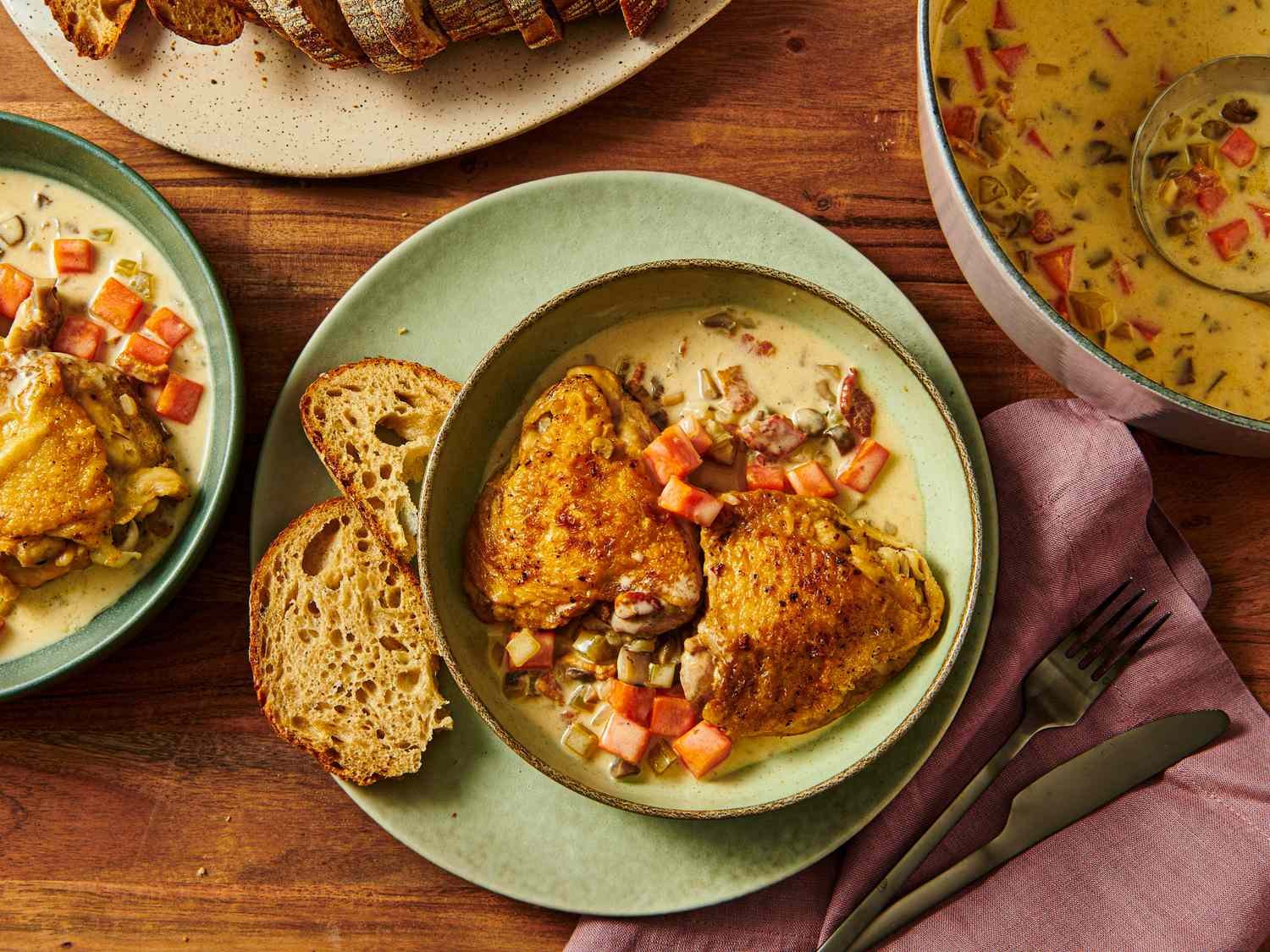
Why It Works
- Browning the chicken and gently braising it results in tender, flavorful meat.
- Thickening the sauce with a cornstarch slurry instead of a sauce velouté, which requires preparing a roux in a separate pot, keeps dishes minimal while giving the sauce a similarly silky texture.
- Adding the heavy cream to the dish once it’s off the heat prevents the sauce from splitting.
Last fall, my boyfriend and I had dinner reservations at Le Pichet, one of our favorite French restaurants in Seattle. We’d made the booking weeks in advance and were looking forward to enjoying a cozy evening filled with good wine and some of the best french fries in town. Around lunchtime, the restaurant’s host called to inform us that the kitchen’s hood fan had broken. While they planned to keep the restaurant open, they would offer a temporary menu of dishes that require minimal stovetop use. In other words, the steak frites I had been dreaming about for weeks wasn’t going to happen.
We arrived at the restaurant with drastically lowered expectations. To my surprise, the temporary menu featured many delicious-sounding offerings, including salads, charcuterie, and steak tartare. Blanquette de poulet—a creamy braised chicken with bacon and white wine—caught my eye. It arrived in a shallow bowl: A tender chicken leg and stewed vegetables lay over pearled farro, soaked in a light cream sauce. The dish was comforting and creamy, but not overly heavy. It reminded me of coq au riesling—essentially a version of coq au vin made with white wine instead of red—but with more vegetables and a creamier sauce. I practically licked the bowl and told my server that I hoped they would add it to their regular menu. (They unfortunately have not.) I tried to recreate it at home the very next week.
Serious Eats / Qi Ai
Cooking something en blanquette refers to the French method of preparing white meat in a white sauce. This homey French stew is typically made with veal (blanquette de veau), but chicken (blanquette de poulet) and other meats can be used as well. To make it, cooks simmer veal and vegetables in stock until tender, remove the meat, and thicken the broth with a roux to make a sauce velouté—essentially a béchamel with a base of chicken stock instead of milk. Finally, a mixture of cream and egg, called a “liaison” in French, thickens the sauce further, adding richness and a super silky texture. The meat is returned to the pot along with some sautéed mushrooms, and the dish is served with rice, bread, or egg noodles.
The dish I enjoyed at the restaurant fell somewhere between a blanquette de poulet and a classic coq au riesling. My homage to their recipe begins with cooking chopped bacon until crispy, then browning bone-in, skin-on chicken thighs in the rendered fat. Once the meat is golden, I remove it from the pan and add a mixture of onions, carrots, and celery. These aromatics form the base of the dish, with the carrots adding a sweetness that rounds out the finished sauce. At this point, I also add the chopped mushrooms. In both a classic blanquette and coq au riesling, the mushrooms are typically sautéed separately and added towards the end to preserve their pure umami flavor and allow them to brown slightly. Having tried that method and found the difference in flavor negligible, I prefer to just cook them with the vegetables. Once the vegetables are soft, the chicken is returned to the pan with some white wine and stock, then slowly braised until the meat is fall-apart tender—about 45 minutes.
While I love the texture of a classic sauce velouté, the roux requires an extra pot, and it can be tricky to reheat without curdling the egg. I found I could get similar results with a simple cornstarch slurry and a splash of cream, which produces a sauce just thick enough to coat the back of a spoon without turning gloppy or gelatinous. Adding the cream at the very end, once the pot has been removed from the heat, helps minimize the risk of the sauce splitting. (When cream is added to a dish that’s too hot, the heat can cause the dairy proteins to separate, resulting in split or curdled dairy.)
Traditionally, a blanquette-style stew is served with white rice, but my favorite way to eat it is with a hearty grain, such as farro or barley, which can stand up to the richness of the cream sauce. Pearl couscous is another good choice, as is a piece of good old-fashioned crusty bread. Like most braises, this dish is excellent the next day. And on more than one occasion, I’ve turned my leftovers into an easy pot pie by simply adding a sheet of store-bought puff pastry on top and baking until golden. No matter how you serve this dish, one thing is for sure: You’re in for an incredibly comforting meal that will keep you cozy on even the coldest winter night.
Serious Eats / Qi Ai
