

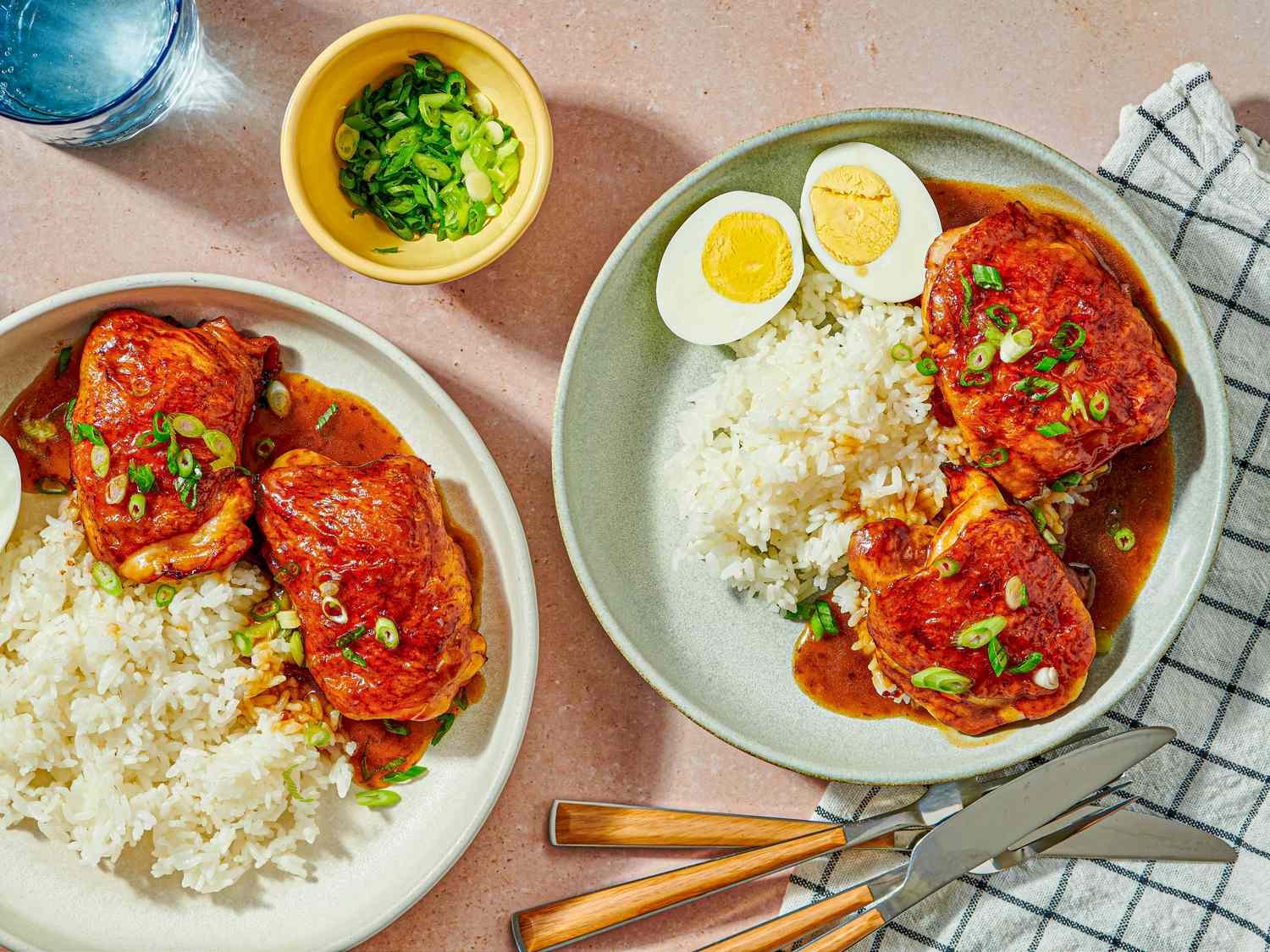
Why It Works
- Rubbing the chicken with dark soy sauce gives it an umami note and a deep caramel hue.
- Brushing the chicken with toasted sesame oil helps crisp up its skin, while also giving it a nutty aroma.
- A cornstarch slurry and a dash of soy sauce turn the flavorful chicken drippings into a velvety, savory pan gravy.
When I was a kid, my mom’s signature dish was chicken rubbed with soy sauce and sesame oil, smothered in a rich gravy made with the pan drippings. She served it with steamed Calrose rice, a shower of thinly sliced green onions, and halved hard-boiled eggs on the side. It was a dish from her childhood, something my great-grandmother Emily—who arrived from the Philippines with my great-grandfather Anthony in the late 1940s, just after World War II—frequently made.
Like many other immigrants, my great-grandparents made great efforts to assimilate into American culture, even going so far as to change their last name from Sartout to Ogilvie—an American-sounding name they picked from the phone book. While food was one of the ways they stayed connected to their culture, the way they ate also changed, as many of the ingredients available in the Philippines were much harder to come by in supermarkets in Seattle, where they settled.
I never got the chance to ask my great-grandmother about this beloved dish, as she died before I was born. My mother suspects the meal was inspired by the Filipino flavors my great-grandparents missed so much, but adapted to use affordable ingredients readily available at the time. My great-grandmother’s original recipe calls for just five ingredients: chicken, dark soy sauce, sesame oil, cornstarch, and water. (Seattle was, and still is, home to a large population of Chinese immigrants, which is partly why those ingredients were so readily available at the time.) Though my version of the dish is almost unchanged from the one my mom ate 50 years ago, I like to season the finished chicken to taste with a touch more salt and a dash of light soy sauce, which I think makes the dish even more delicious.
Serious Eats / Qi Ai
Opt for Dark Soy Sauce
The first step is to rub the chicken with dark soy sauce and sprinkle it with a small pinch of salt. I prefer dark soy sauce, which is slightly sweeter and thicker than light soy sauce. Its viscosity allows it to cling nicely to the meat, and the condiment gives the chicken an intense umami flavor and a deep caramel hue. In addition to the dark soy sauce, I lightly season the chicken with salt, just to ensure it’s well seasoned. If you have time, you can let the chicken sit, refrigerated and uncovered, for up to 24 hours, which will result in meat that’s even more tender, juicy, and well-seasoned. That said, if you’re in a hurry—which I always am!—feel free to cook the chicken right away. You’ll still end up with perfectly tasty chicken.
Serious Eats / Qi Ai
Sesame Oil Makes for Crispy, Golden, and Delicious Chicken Skin
Sesame oil is the other key ingredient in this dish, and it goes onto the chicken once the skin has had a chance to dry out in the oven. There’s a reason I don’t coat the chicken with both soy sauce and sesame oil at the same time: Oil and water don’t mix, and in my testing, I found that adding both at once resulted in the oil simply sliding off the chicken to the bottom of the pan. After about 15 minutes in the oven, however, the chicken skin has slightly dried, allowing the oil to adhere to it. As the chicken continues cooking, the sesame oil helps the skin turn golden brown and crisp, while also perfuming it with the aroma of toasted sesame.
Getting the Sauce Right
My mom always used half a chicken cut into pieces, but I prefer thighs, which are harder to overcook and, thanks to their higher fat content, yield more drippings—crucial for making a delicious pan sauce. Once the chicken is done cooking, I remove the meat from the pan, then incorporate a cornstarch slurry to thicken the drippings into a velvety sauce. You can season it with a touch of regular or light soy sauce, or simply stick with salt. If you like, a sprinkle of MSG wouldn’t go amiss either, nor would a dash of fish sauce.
For a time, when I was in high school, we ate this meal at least once a week—and I got completely sick of it. In fact, before writing this recipe, I hadn’t eaten this chicken in nearly 10 years. But when cravings for comfort food hit me hard in early autumn, my mom suggested I revisit her family recipe. Making this chicken myself reminded me how delicious it is, and I now understand why we had it for dinner so often: With just a handful of ingredients and 10 minutes of active prep time, you’re well on your way to a cozy, satisfying meal.
I never got to meet my great-grandparents, and I’m not particularly close with my mother’s side of the family, but I’ve always felt connected to them and to my own Filipino ancestry through the food my mother cooked for me. For my mother, this chicken evokes memories of her own childhood—and to me, it simply tastes like home.
Serious Eats / Qi Ai
