

Key Takeaways
- A CDT blood test checks for levels of carbohydrate-deficient transferrin, which can reveal heavy alcohol use.
- The CDT test is more dependable than self-reported drinking habits, which are not always honest.
- Heavy drinkers are more likely to deny their drinking levels, so the CDT test helps provide a more accurate picture.
There are a few different ways to learn about a person’s alcohol use. One is to ask them questions or use some screening questionnaire. In other cases, a blood test for alcohol can help healthcare providers learn more about current intoxication levels or regular alcohol consumption. The carbohydrate-deficient transferrin (CDT) blood test can provide information about a person’s past alcohol use and help diagnose an alcohol use disorder.
Tests for Alcohol Use
When gauging alcohol use in their patients, healthcare providers rely mainly on three methods:
- Traditional brief screening
- The blood alcohol concentration (BAC) test
- The carbohydrate-deficient transferrin (CDT) test
The traditional brief alcohol screening isn’t as reliable as the other two methods because its accuracy depends solely on the patient being accurate and honest about how much they drink. While the BAC test measures the level of alcohol currently in the bloodstream, CDT testing uses biomarkers to detect a recent history of harmful levels of alcohol consumption.
The CDT test is a better indicator of binge drinking or daily heavy drinking (four or more drinks per day) than the other two tests. It can even help determine if a person with alcohol use disorder has had a relapse.
What Constitutes Heavy Drinking?
The Centers for Disease Control and Prevention (CDC) defines heavy drinking as consuming at least 15 drinks/week (for men) or eight drinks/week (for women). Notably, an estimated 90% of heavy drinkers don’t meet the diagnostic criteria for moderate or severe alcohol use disorder, a chronic brain disease that interferes with daily life.
What Is a CDT Blood Test?
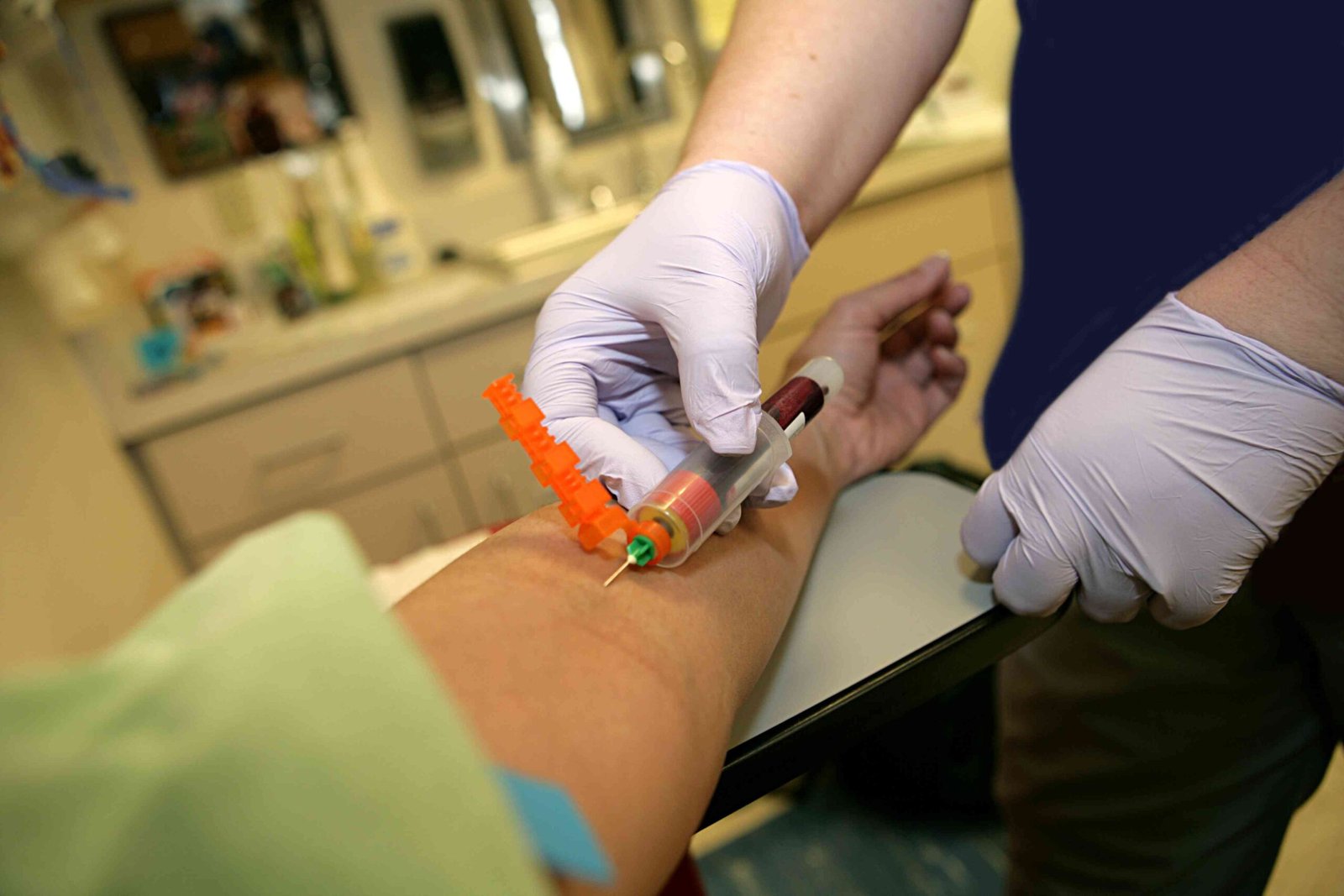
As the name suggests, CDT blood testing measures the level of CDT in the bloodstream. Carbohydrate-deficient transferrin (CDT) is a substance that carries iron to the bone marrow, liver, and spleen.
When someone drinks heavily, the level of CDT in their body increases to a point at which it can be measured in a blood sample. Therefore, this increase is a biomarker of excessive alcohol use.
Biomarker
A biomarker (short for “biological marker”) is a molecule in the body that signals some condition or process. Healthcare providers and researchers use biomarkers in diagnosis, treatment, and testing—for example, to check how well a cancer treatment is working or to detect high cholesterol.
How the CDT Test Works
People who do not drink or drink only moderately have lower CDT levels in their blood than those who drink heavily. Some CDT tests use a cutoff of less than 1.7%. People who drink four or more drinks a day, at least five days a week, for two weeks before the test show significantly greater levels of CDT.
The CDT test is highly accurate in detecting heavy drinking. Similar to how an A1C test detects blood glucose levels over the previous 90 days, the CDT test detects heavy alcohol consumption over a long period. When a person stops drinking, CDT levels go back to normal after two to four weeks. Likewise, if they resume drinking, the levels once again increase after a few days.
When and Why CDT Is Tested
The CDT test gives a healthcare provider a far more reliable diagnostic tool than the traditional brief alcohol screening test, which relies on a patient’s honesty about their drinking habits.
People who don’t consume alcohol excessively tend to self-report accurately, but those who do are more likely to minimize their drinking levels. The greater the misuse, the more likely the person will deny heavy alcohol consumption.
Medical Conditions
Alcohol consumption is contraindicated for many medical conditions. People with diabetes, high blood pressure, hepatitis C, or liver disease should not drink heavily.
One study found that of 799 patients studied, 9% of subjects with diabetes and 15% of those with high blood pressure were consuming alcohol at harmful levels. When extrapolated to the population at large, these results could mean that millions of people with diabetes and hypertension are risking their health by drinking alcohol.
Using the CDT test to identify patients with diabetes, hypertension, and other conditions who are drinking too much could reduce medical complications and healthcare costs significantly.
Drug Interactions
Patients who take certain prescription and over-the-counter medications can experience harmful effects if they drink alcohol. Similarly, people who are being treated with opioid painkillers, sedatives, or sleep aids risk central nervous system depression should they drink alcohol heavily.
In a medical emergency, CDT testing could uncover alcohol use that’s reacting with medications and causing problems.
Recovery
CDT testing also can help healthcare providers monitor abstinence and relapse because the test is sensitive enough to detect increases and decreases in alcohol use.
Some psychotherapists and psychiatrists use the CDT test to determine a baseline level when they first begin treating a patient for alcohol use disorder. In the weeks and months that follow, they can use the CDT test to determine if the person is remaining sober or has had a relapse.
Accuracy of the CDT Blood Test for Alcohol
Researchers have conducted many studies on the effectiveness of using CDT testing to identify heavy alcohol consumption. Those studies find that the test is accurate but not foolproof.
Research has shown, for example, that transferrin mutations can cause false positive results, which can affect the diagnostic accuracy of the test.
False Negatives
In a small percentage of people, heavy alcohol consumption does not raise levels of CDT in the blood. A healthcare provider who suspects heavy drinking despite a negative CDT test may then turn to digital DNA methylation techniques, which rely on blood or saliva samples to detect heavy alcohol consumption.
False Positives
Biological factors such as genetic variants, female hormones, and end-stage liver disease can falsely increase CDT levels. The earliest CDT tests returned false positives due to these factors. Newer tests can identify genetic variants that can cause false positives and negatives, as well as patterns caused by liver disease related to heavy drinking.
Getting Help
It is crucial for your doctor or therapist to understand your alcohol consumption so they can determine which treatments may be most helpful for you. If your alcohol use is heavy and chronic, detoxing may put you at a higher risk for seizures and other symptoms of delirium tremens. Knowing this, your doctor may recommend medical monitoring during the detox process and prescribe medications that can minimize withdrawal symptoms and reduce alcohol cravings.
Verywell Mind uses only high-quality sources, including peer-reviewed studies, to support the facts within our articles. Read our editorial process to learn more about how we fact-check and keep our content accurate, reliable, and trustworthy.
Solomons HD. Carbohydrate deficient transferrin and alcoholism. Germs. 2012;2(2):75-78. doi:10.11599/germs.2012.1015
Liang SS, He Y, Huang ZG, Jia CY, Gan W. Evaluation of the diagnostic utility of carbohydrate-deficient transferrin in chronic alcoholism. Medicine (Baltimore). 2021;100(4):e24467. doi:10.1097/MD.0000000000024467
Fiorelli D, Romani L, Treglia M, et al. Carbohydrate-deficient transferrin (CDT) as a biomarker of alcohol abuse: A retrospective study of the Italian drinking trend among drivers from 2016 to 2022. Toxics. 2023;11(11):914. doi:10.3390/toxics11110914
National Cancer Institute. Dictionary of cancer terms.
Fagan KJ, Irvine KM, McWhinney BC, et al. Diagnostic sensitivity of carbohydrate deficient transferrin in heavy drinkers. BMC Gastroenterol. 2014;14:97. doi:10.1186/1471-230X-14-97
National Institute on Alcohol Abuse and Alcoholism(NIAAA). Harmful interactions.
Zühlsdorf A, Said M, Seger C, et al. It is not always alcohol abuse—a transferrin variant impairing the CDT test. Alcohol and Alcoholism. 2016;51(2):148-153. doi:10.1093/alcalc/agv099
van de Luitgaarden IAT, Schrieks IC, Kieneker LM, et al. Urinary ethyl glucuronide as measure of alcohol consumption and risk of cardiovascular disease: A population-based cohort study. J Am Heart Assoc. 2020;9(7):e014324. doi:10.1161/JAHA.119.014324
Miller S, A Mills J, Long J, Philibert R. A comparison of the predictive power of DNA methylation with carbohydrate deficient transferrin for heavy alcohol consumption. Epigenetics. 2021;16(9):969-979. doi:10.1080/15592294.2020.1834918
Fagan KJ, Irvine KM, McWhinney BC, et al. Diagnostic sensitivity of carbohydrate deficient transferrin in heavy drinkers. BMC Gastroenterol. 2014;14:97. doi:10.1186/1471-230X-14-97
Thanks for your feedback!
What is your feedback?
Helpful
Report an Error
Other
