

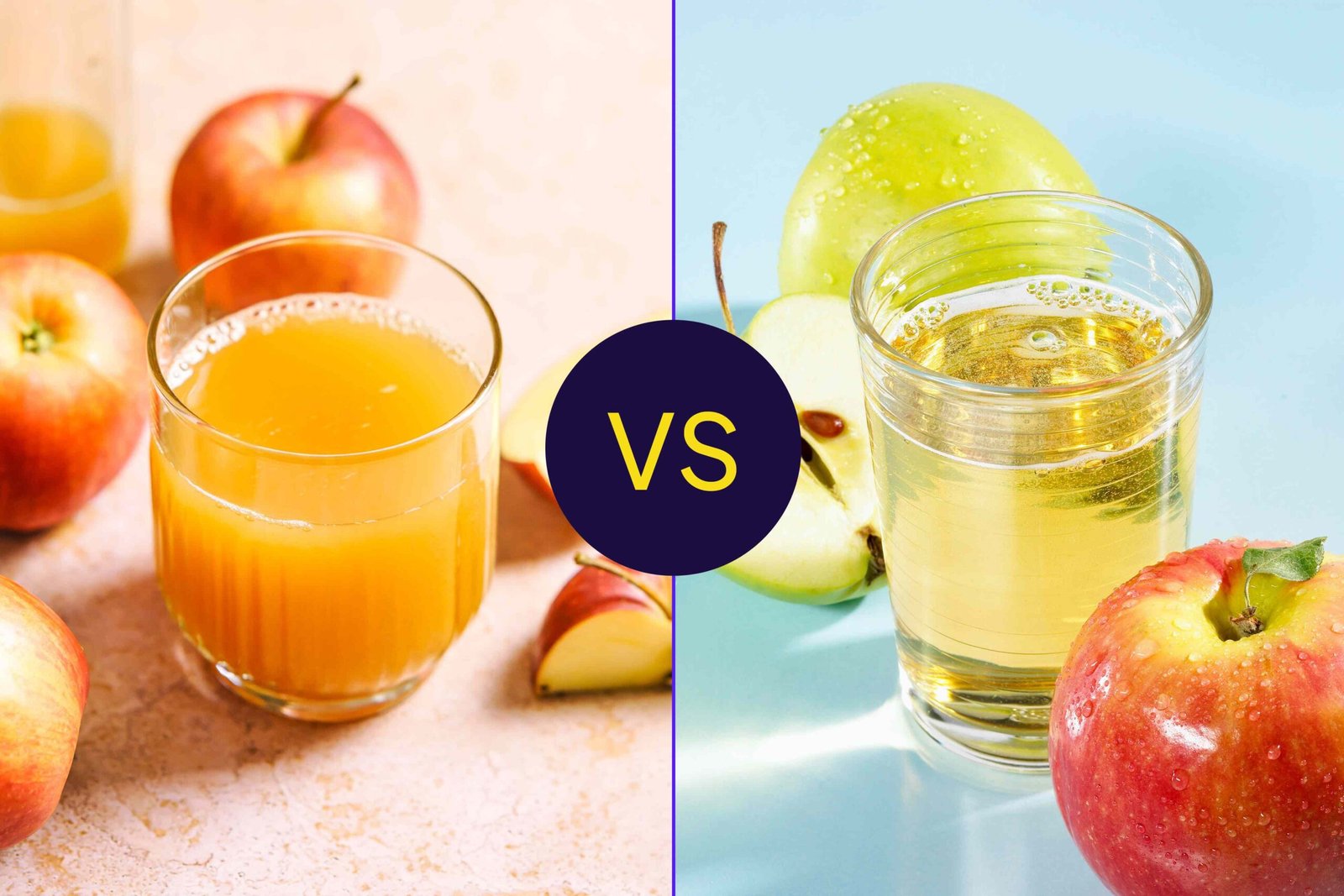
Apple cider and apple juice are both made from apples, but there are some important differences between the two.
Here’s how apple cider and apple juice compare nutritionally, how they impact your health, and which one might be a better fit depending on your health goals.
Though apple juice and apple cider are made from apples, they’re processed differently.
Apple Cider
Apple cider is typically made by crushing apples into a pulp and pressing the pulp to extract juice. Apple cider is commonly unpasteurized and unfiltered, which results in a cloudy finished product with a sweet, intense apple taste. Cider can also have spices, like cinnamon, added to it.
Hard apple cider is fermented. Fermenting is a process where yeast consumes the natural sugars in apple juice and turns them into alcohol and carbon dioxide. This gives fermented cider a tangy flavor as well as an alcohol content.
Apple Juice
On the other hand, apple juice undergoes more processing, including filtration and pasteurization to kill bacteria and make a more shelf-stable product. Though you can find unfiltered apple juice, most apple juices found in grocery stores go through a filtration process that removes solid particles from the crushed apple liquid, which results in a clear juice.
Most apple juice on the market, including 100% apple juice, is made with apple juice concentrate, which is made by extracting juice from apples, then removing water from the juice, which results in a concentrated, syrup-like product. To make juice, water is added back to the concentrate to create a ready-to-drink beverage.
Apples are naturally high in sugar, which is why unsweetened apple juice and cider are sweet.
Here’s how an 8-ounce serving of 100% apple juice and unfiltered apple cider compare.
Calories
Sugar
Apple juice
110
28.1 grams
Apple cider
113.3
24 grams
The calorie and sugar content of apple cider and apple juice are similar, though apple cider contains slightly more calories and less sugar than apple juice. Keep in mind that calorie and sugar content can vary between products, depending on how they’re made.
However, some apple juice products contain added sugar. For example, apple juice blends often have sugar added to them to improve their taste. Ocean Spray Cran-Apple Juice contains a whopping 23 grams, or 5.75 teaspoons, of added sugar per 8-ounce serving.
Apple cider usually contains 100% apple juice, with no added sugars. However, hard ciders can be very high in added sugar, so it’s important to always read ingredient and nutrition labels when shopping for beverages.
Apple cider and apple juice are high in carbs and low in nutrients that support satiety and regulate blood sugar, like protein and fiber.
Satiety and Blood Sugar
Drinking beverages high in carbs, and low in protein and fiber, like apple cider and apple juice, will lead to a spike in blood sugar as the sugars found in these drinks are easily and quickly absorbed into the bloodstream.
Fiber and protein slow digestion, reducing the speed at which sugar is absorbed, leading to a slower and steadier rise in blood sugar. This is why it’s best to consume apple juice and apple cider alongside meals and snacks high in protein and fiber rather than drinking them on their own.
Fiber and protein also promote fullness by triggering the release of satiety hormones. Apple juice and apple cider lack these nutrients, so they aren’t very filling and shouldn’t be used as meal or snack replacements.
Nutrients and Plant Compounds
On their own, apple juice and apple cider aren’t a good source of vitamins and minerals. However, many apple juice products are fortified with vitamin C. For example, an 8-ounce serving of Mott’s 100% Original Apple Juice covers 120% of the Daily Value for vitamin C.
Apple juice and apple cider also contain phytochemicals, including polyphenol compounds—like chlorogenic acid, caffeic acid, p-coumaric acid, and ferulic acid—which have powerful cellular protective properties. Diets high in polyphenols may protect against common health conditions, like heart disease and certain cancers.
However, the processing that apples undergo to be made into juice can reduce polyphenol levels by up to 90%. Clear apple juice has the lowest polyphenol content, while unfiltered, cold-pressed juices and ciders retain the most polyphenols.
Apple juice and apple cider can fit into most well-rounded diets, even if you’re trying to lose weight or manage your blood sugar. The key is limit your consumption and pair these drinks with meals and snacks that promote satiety.
Here are a few tips to help you enjoy apple cider and apple juice in a healthy way:
- Pair them with fiber and protein: Drinking them alongside protein and fiber-rich meals and snacks can help slow sugar absorption and support feelings of fullness.
- Choose unsweetened versions: Some apple juice products contain added sugar, which can harm health when consumed in large amounts. Check the nutrition label for added sugars and look for “100% juice” made with no added sweeteners.
- Mind your portion size: Stick to small portions, such as between 4-8 ounces of juice and cider. To maintain optimal hydration, it’s better to drink water throughout the day and enjoy drinks like apple juice sparingly.
- Consider dilution: If you’re concerned about their impact on blood sugar, you can dilute apple cider and apple juice with water, which significantly cuts its carb and calorie content while still delivering flavor.
Since juices lack key nutrients such as fiber and phytochemicals, eating whole fruits gives you more nutrition and greater health benefits.
Both apple cider and apple juice can fit into a healthy diet in moderation, but neither should replace whole fruit.
They both are high in natural sugars but low in satiating nutrients, like fiber, which is why these beverages should be enjoyed in small amounts.
Health.com uses only high-quality sources, including peer-reviewed studies, to support the facts within our articles. Read our editorial process to learn more about how we fact-check and keep our content accurate, reliable, and trustworthy.
Cousin FJ, Le Guellec R, Schlusselhuber M, Dalmasso M, Laplace JM, Cretenet M. Microorganisms in Fermented Apple Beverages: Current Knowledge and Future Directions. Microorganisms. 2017;5(3):39. doi:10.3390/microorganisms5030039
U.S. Department of Agriculture. FoodData Central. 100% apple juice
Basturk B, Koc Ozerson Z, Yuksel A. Evaluation of the Effect of Macronutrients Combination on Blood Sugar Levels in Healthy Individuals. Iran J Public Health. 2021;50(2):280-287. doi:10.18502/ijph.v50i2.5340
Akbar A, Shreenath AP. High fiber diet. In: StatPearls. StatPearls Publishing; 2024.
- Moon J, Koh G. Clinical evidence and mechanisms of high-protein diet-induced weight loss. J Obes Metab Syndr. 2020;29(3):166-173. doi:10.7570/jomes20028
Du G, Zhu Y, Wang X, et al. Phenolic composition of apple products and by-products based on cold pressing technology. J Food Sci Technol. 2019;56(3):1389-1397. doi:10.1007/s13197-019-03614-y
Cory H, Passarelli S, Szeto J, Tamez M, Mattei J. The Role of Polyphenols in Human Health and Food Systems: A Mini-Review. Front Nutr. 2018;5:87. doi:10.3389/fnut.2018.00087
Oras A, Akagić A, Spaho N, Gaši F, Žuljević SO, Meland M. Distribution and Stability of Polyphenols in Juices Made from Traditional Apple Cultivars Grown in Bosnia and Herzegovina. Molecules. 2022;28(1):230. doi:10.3390/molecules28010230
