

Dietary fat is important for health in many ways. It supports energy and helps insulate your body. It’s also important for skin, hair, and hormone health. Plus, fat helps your body absorb vitamins A, D, E, and K. For most adults, you should make 20–35% of your calories come from fat.
Although fat is often labeled as bad, it’s an essential nutrient for health. The key is to eat a balanced diet and prioritize healthier fats. However, eating an imbalanced diet with too much fat can harm health.
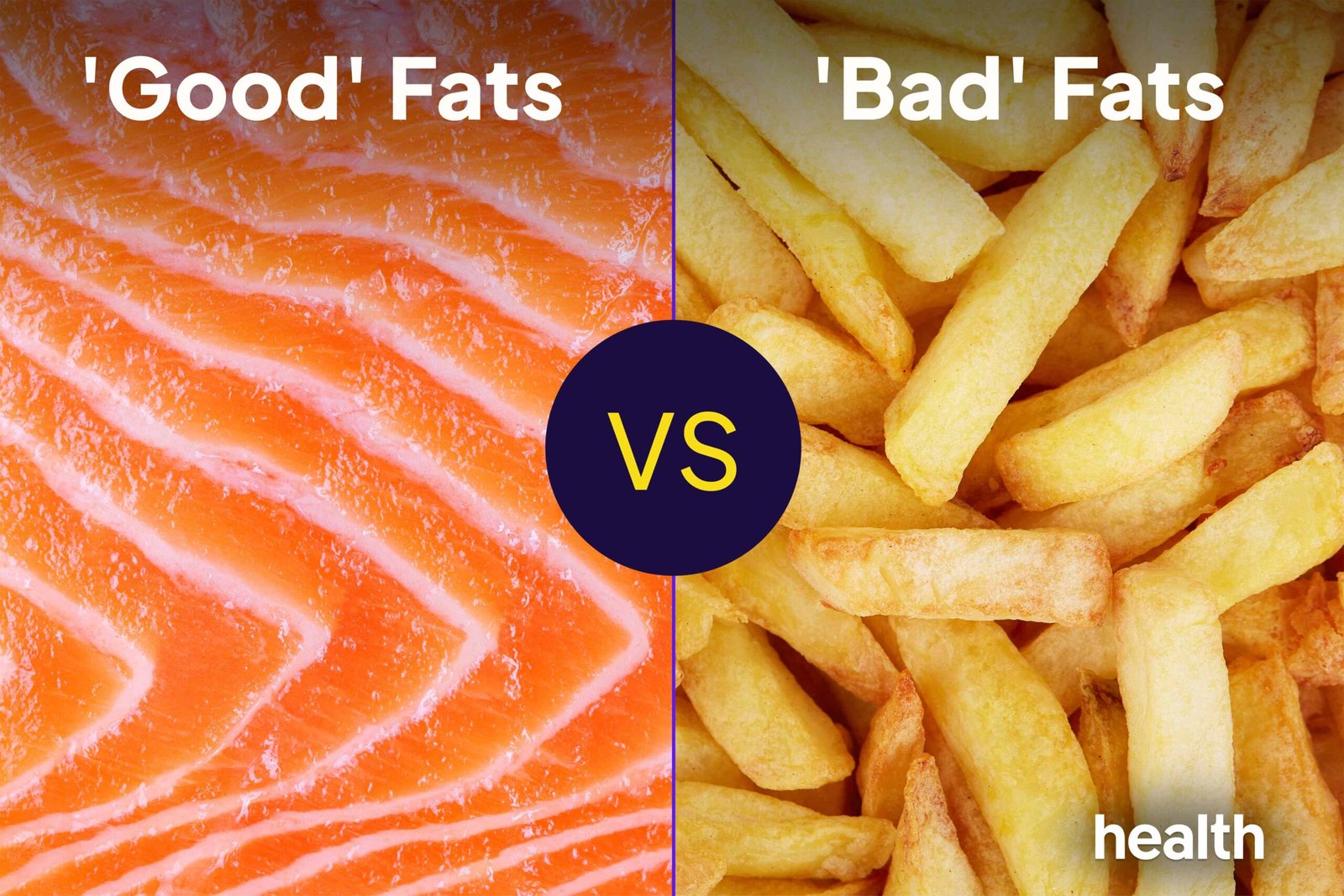
‘Good’ fats are ones that help lower cholesterol and inflammation. Eating these fats instead of ‘bad’ fats can help protect your heart health. Some ‘good’ fats also promote brain health and helpful blood clotting.
‘Bad’ fats are those that raise LDL cholesterol levels (the ‘bad’ kind of cholesterol) and lower HDL cholesterol levels (the ‘good’ kind of cholesterol). This increases your risk of health issues like heart disease and stroke.
Certain types of fats, such as unsaturated fats, are better for heart health, while other fats, like trans and saturated fats, can harm health when you eat too much of them on a regular basis.
Saturated Fats
Saturated fats are typically considered less healthy fats. Eating too many saturated fats can raise your LDL cholesterol levels. This can increase your risk of heart disease and stroke.
Saturated fats are solid at room temperature. They’re mainly found in animal products and some tropical vegetable oils, such as:
- Beef
- Pork
- Chicken
- Butter
- Full-fat dairy
- Coconut oil
- Palm oil
However, some studies show that coconut and palm oil are better for health than animal sources of saturated fat like beef or dairy.
The Dietary Guidelines for Americans recommend that no more than 10% of your daily calories come from saturated fat. For a 2,000-calorie diet, that’s about 22 grams per day. The American Heart Association has stricter recommendations. They recommend limiting saturated fats to less than 6% of your daily calories. For a 2,000-calorie diet, that’s about 13 grams per day.
Trans Fats
Trans fats are another type of ‘bad’ fat. They are found naturally in some foods but can also be made artificially. Artificial trans fats are made when hydrogen is added to liquid vegetable oils (like corn or canola oil) to make them solids. Some restaurants fry their food in oils with trans fats because they can be reused many times. Other food manufacturers may use trans fats because they’re an affordable, easy way to improve a food’s taste and texture.
Trans fats can raise LDL cholesterol and decrease HDL cholesterol. In turn, they can increase your risk of heart disease, stroke, and type 2 diabetes.
The U.S. Food and Drug Administration (FDA) has banned trans fats due to their health concerns. However, they are allowed in amounts of less than 0.5 grams per serving and may still be in packaged foods in countries outside of the United States.
It’s best to eat as little trans fat as possible. Try to limit foods that list hydrogenated or partially hydrogenated vegetable oil as an ingredient. Some foods that may have trans fats include:
- Donuts
- Cookies
- Crackers
- Muffins
- Pies
- Cakes
Monounsaturated Fats
Monounsaturated fats are a type of ‘good’ fat that can benefit your heart health. Replacing saturated and trans fat with monounsaturated fat can lower your LDL cholesterol levels. This can lower your risk of heart disease and stroke. Plus, sources of monounsaturated fat, like olive oil, often have other essential nutrients like vitamin E.
Some common sources of monounsaturated fats include:
- Olive oil
- Canola oil
- Avocados
- Peanut butter
- Almonds
- Pumpkin seeds
Polyunsaturated Fats
Polyunsaturated fats are another type of ‘good’ fat. Like monounsaturated fats, polyunsaturated fats can help lower your LDL cholesterol levels to improve heart health. They also provide essential nutrients like omega-3 and omega-6 fatty acids. Your body can’t produce these on its own, so it’s important to get them from food.
Most of your total fat intake should come from poly- and mono-unsaturated fats. Some sources of polyunsaturated fats are:
- Canola oil
- Corn oil
- Fatty fish
- Walnuts
- Flaxseeds
- Tofu
The two healthiest fats are monounsaturated and polyunsaturated fats. These are also called unsaturated fats. Eating unsaturated fat instead of saturated and trans fat promotes overall health, especially heart health.
Additionally, the American Heart Association recommends eating two servings (6 ounces) of fatty fish per week. Fatty fish are rich in omega-3 fatty acids, which help reduce inflammation and support heart and brain health.
Here are some tips for eating more healthy fats:
- Snack on nuts and seeds instead of foods with trans fats, like donuts and cookies
- Stock up on canned fish like salmon or sardines since they’re nutritious, affordable, and shelf-stable
- If you eat meat, prioritize lean options like 93% lean ground beef, pork loin, and skinless chicken breasts
- Cook with non-tropical vegetable oils like olive or canola oil instead of butter
- Add avocado to grain bowls, sandwiches, and smoothies
- Add nut butter to smoothies and toast
- Eat more plant-based meals using proteins like tofu or legumes to reduce your saturated fat intake
- Opt for fat-free, low- or reduced-fat dairy products
Read the nutrition facts label if you’re unsure how much fat is in certain foods. The most helpful lines to check are saturated fat and trans fat. Do your best to pick products with no trans fat and less than 10% of the daily value (DV) for saturated fat.
The Mediterranean diet, which emphasizes healthy fats, is commonly ranked as one of the best eating patterns for overall health. This diet has been shown to increase life expectancy and lower the risk of cardiovascular disease, type 2 diabetes, atrial fibrillation (irregular heartbeat), breast cancer, and more. It’s rich in heart-healthy fats like olive oil, salmon, and nuts.
Dietary Approaches to Stop Hypertension (DASH) is another popular diet created for people with high blood pressure. It highlights healthy fats like nuts, seeds, fish, and non-tropical vegetable oils. It is very similar to the Mediterranean diet but has less of an emphasis on olive oil.
Here is a one-day example of a well-balanced diet full of heart-healthy fats:
- Breakfast: Chia pudding with berries
- Snack: Almonds with dried mango
- Lunch: Tuna sandwich with lettuce, tomato, and onions
- Snack: Carrot and cucumber sticks dipped in hummus
- Dinner: Rice with roasted salmon and green beans
Dietary fats are important for overall health. However, some fats are considered healthier than others due to their effects on heart health. For instance, eating unsaturated fats in place of saturated and trans fats can help lower your cholesterol and support heart health.
Limit foods high in saturated and trans fats like fatty cuts of meat, butter, coconut or palm oil, and baked goods. Instead, prioritize sources of heart-healthy unsaturated fats like fatty fish, nuts, seeds, non-tropical vegetable oils, and avocado.
