

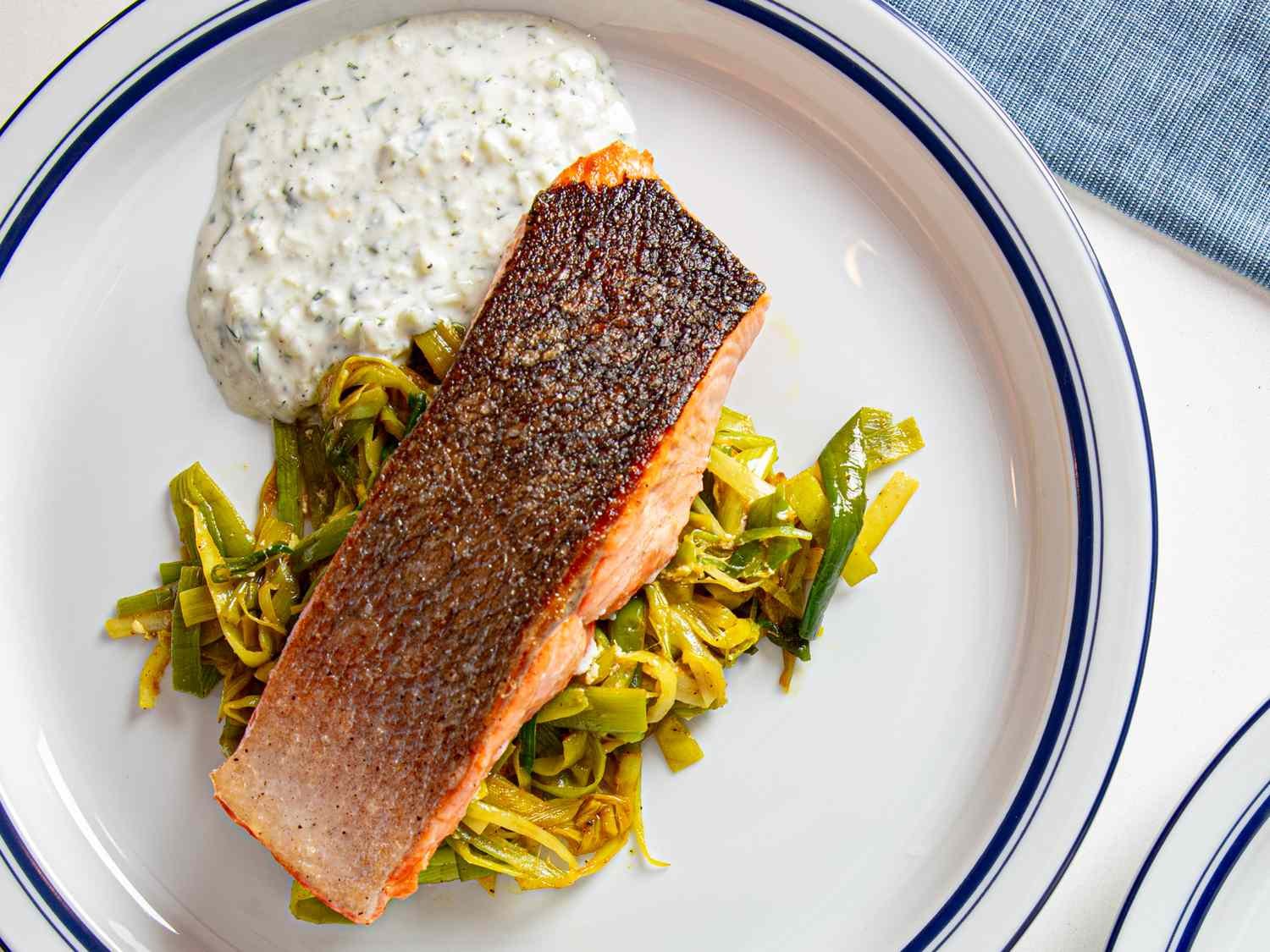
For fish with crisp, golden skin that won’t stick to the bottom of the pan, dry the skin thoroughly, add enough oil to coat the skillet, heat until you see the faintest smoke, and cook mostly skin-side down without moving it before flipping.
Few sounds in the kitchen are as thrilling to me as the first sizzle of fish skin hitting a hot pan. The crackle of fat and the faint whiff of the sea turning savory are a promise that you’re just minutes away from a piece of fish crowned with a golden, shattering crust. Done right, crisp skin is a work of art: glassy and wafer-thin, giving way to tender, succulent flesh beneath.
And yet, many cooks encounter the darker side of this story when using a stainless steel skillet to sear fish. You go to flip your fillet, your spatula poised with care, only to find the skin fused to the pan, refusing to let go. You tug once, then again, until it finally releases—leaving behind a sad patchwork of skin where there should have been a crisp, golden sheet. The moment that was supposed to be triumphant turns into one of quiet defeat, the kind that has you swearing you’ll never cook fish in stainless steel again.
But it’s not the pan’s fault. With the right prep, heat, and touch, stainless steel can give you the kind of crisp, intact skin you thought only belonged to restaurant kitchens—and in my years cooking in restaurants, stainless steel was exactly what I used for searing fish, day in and day out.
You might be tempted to reach for a nonstick skillet for insurance, but the skin will never achieve the same crispness you get from stainless steel. And while the following steps work beautifully in a well-seasoned carbon steel or cast iron skillet, you don’t need any specialty pan to get great results.
6 Key Steps to Searing Fish in a Stainless Steel Skillet
1. Start with bone-dry fish skin. Moisture is the enemy of crisp skin. Any water on the surface has to evaporate before browning can begin; otherwise, the skin steams instead of sears. Use the edge of a knife to gently scrape the skin—it’ll pull up surprising beads of moisture. Wipe the blade clean after each pass until it comes up dry, then pat the fillet with paper towels. The drier the skin, the quicker it crisps.
2. Use enough oil to coat the pan. For crisp skin, you need enough oil to fully coat the pan, but not so much that you’re pan-frying. In a pan fry, the fish would sit in a shallow pool of bubbling oil that comes partway up the sides; here, you just want a thin layer covering the bottom (think of it as a shallow puddle rather than a slick). For a 12-inch skillet, that usually means about three tablespoons of oil. Swirl the pan so the oil covers every inch before you turn on the heat. Use a neutral, high-heat oil, such as canola, grapeseed, or peanut for more temperature control, but olive oil works too—just be aware that it has a lower smoke point and will start smoking sooner, so keep a close eye on it.
3. Heat the pan until the oil just begins to smoke. Fish skin sticks when its proteins bond to the metal before they have a chance to cook. Oil that’s hot enough will instantly sear those proteins, creating a barrier. To ensure this, heat the oil in the skillet over medium-high until you see the faintest hint of smoke rising from the oil—this is your cue to cook. Any cooler, and the skin may stick; any hotter, and the oil will smoke heavily, burn, and likely set off your fire alarm. Some people test the pan by splattering a bit of water into the pan after heating but before adding the oil; if the droplets bead and dance across the surface, it’s assumed the pan is ready. This happens because of the Leidenfrost effect, where water skitters on a layer of its own steam—but it can still occur even after the pan has overheated, making it a less-than-ideal test. I don’t recommend this method here as you’ll get more reliable results by watching for that first faint trace of smoke from the oil instead.
4. Test before you commit. Lower the fillet, skin side down, but don’t let go just yet. Gently drag it across the pan’s surface—if it glides like an ice skater, you’re good. If it catches, pull back and let the pan heat a touch longer. This slow, controlled lowering also helps prevent hot oil from splattering.
5. Press the fish flat. Skin-on fillets curl as soon as they hit the heat. For even browning, use a thin slotted spatula to press the fish down for the first 30 seconds or so—just enough to keep the skin in full contact with the pan.
6. Let it be. Once it’s in the pan, resist the urge to poke, nudge, or flip the fish. The skin needs steady contact with the heat to crisp. If needed, lower the heat slightly to avoid burning, and cook almost entirely on the skin side. Flip only when the flesh has turned mostly opaque, with just a thin, translucent strip running through the center. After flipping, cook for only 20 to 30 seconds more—just until the last bit of translucence disappears—then immediately remove the fish from the pan so it doesn’t overcook.
How to Serve Pan-Seared Fish
A perfectly seared fillet of fish doesn’t need much to shine. Serve it straight from the pan with a generous squeeze of lemon and a sprinkle of flaky salt, or set it over a bed of greens for a weeknight dinner. Or plate it alongside roasted potatoes and aioli, with a spoonful of salsa verde, or flaked over rice with a drizzle of soy sauce and chili oil. The beauty of perfecting stainless steel searing is that it turns even the simplest piece of fish into something truly special—fast enough for a Tuesday night, impressive enough for company. And with these pro tips, you’ll get that crisp, golden skin every time—without the mess or heartbreak of it sticking to the pan.
