

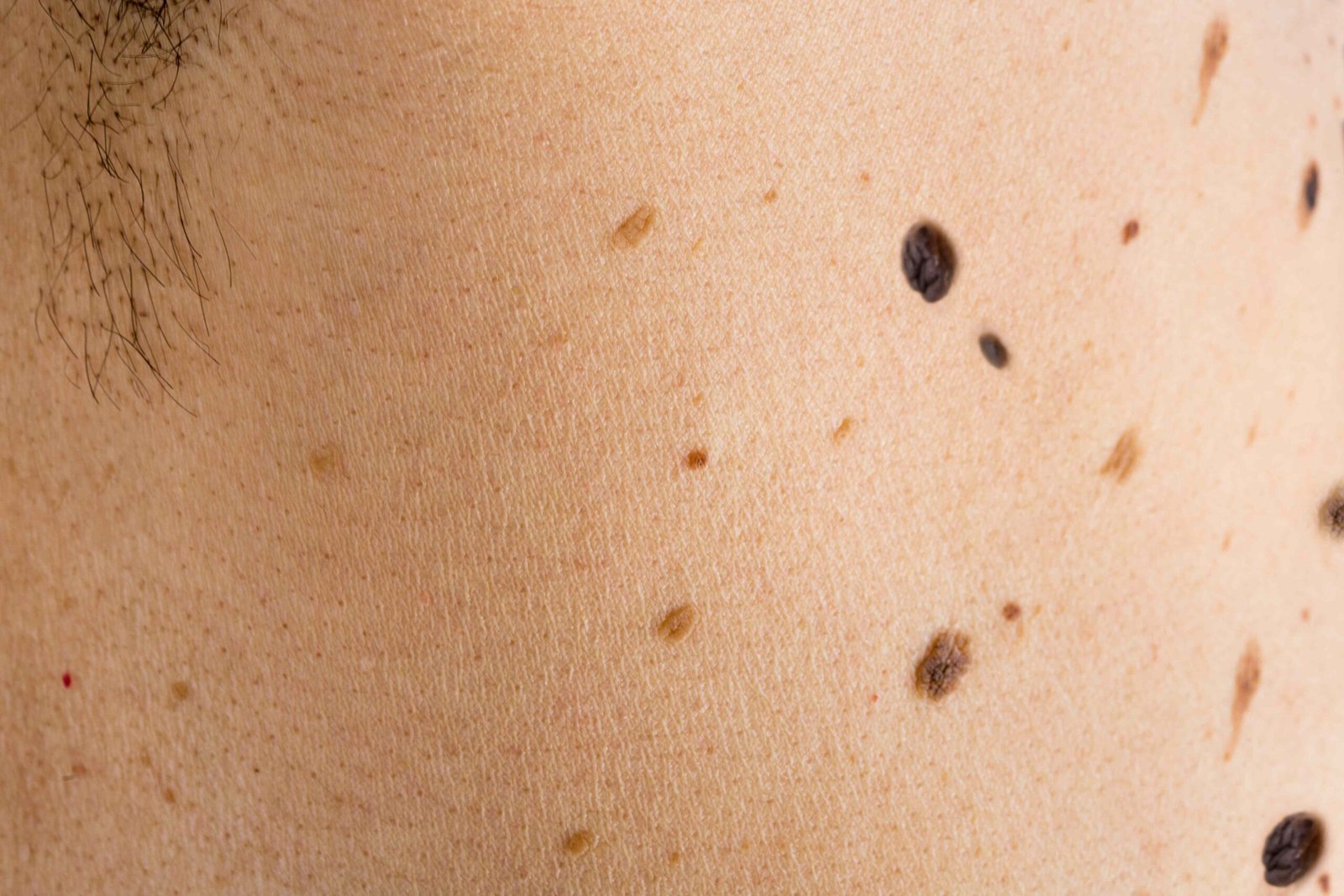
Moles, which occur when pigment cells called melanocytes cluster together, are very common. Most people have 10-40 moles on their skin, especially on sun-exposed areas. How many moles you have may depend on factors such as your genetics, sun exposure, or hormonal changes.
If you have many moles—or any new or changing moles—it’s important to monitor your skin. Most moles aren’t cancerous, but people with 50 or more moles may be at an increased risk of skin cancer.
Anyone can get moles, although people with lighter skin tend to have more moles than people with darker skin, especially if they spend time in the sun.
People with light skin have less melanin, a pigment that protects your skin from the sun. People with darker skin have more melanin, and this added sun protection may be why they’re less likely to develop as many moles.
Researchers don’t fully understand why people develop new moles, but they’ve found that some factors may increase the chances.
- Sun exposure: Exposure to ultraviolet (UV) rays from the sun or a tanning bed can lead to new moles. UV rays cause melanocytes to produce more pigment to help protect the skin. This new pigment can cluster to form new moles.
- Age: Most people develop new moles during childhood up until their 40s. Older adults tend to have fewer moles than children, adolescents, and young adults.
- Family history: Moles tend to run in families. If you have a family history of moles, light skin, or light hair, you are more likely to develop moles during childhood and adolescence.
- Genetics: Certain genetic mutations can raise the risk of benign (noncancerous) moles or the risk of melanoma.
- Hormonal changes: It’s also common to develop new moles during times of hormonal changes, such as puberty or pregnancy.
Ordinary moles are usually harmless. But about 1 in 10 adults in the United States has at least one atypical or unusual mole. These moles, also referred to as dysplastic nevi, are more likely than ordinary moles to develop into an aggressive form of skin cancer called melanoma.
To determine if you have an atypical mole that is high-risk, see a dermatologist (a doctor who specializes in treating and diagnosing skin conditions). They can assess the mole’s size, shape, and color to determine if further testing is needed.
To look for signs of melanoma, you and your doctor may use the ABCDE rule:
- A for asymmetry: The mole has an unusual shape, and one half does not match the other.
- B for border: The edges of the mole are jagged and uneven.
- C for color: The mole’s color is uneven and may change over time. Unusual colors may include black, red, blue, white, or pink.
- D for diameter: The mole is wider than 6 millimeters (about the width of a pencil eraser).
- E for evolving: The mole’s color, shape, or size has changed over time.
The ABCDEs of melanoma can help you remember unusual symptoms to look for.
Design by Health
How To Prevent Melanoma
It is not always possible to prevent melanoma, but you can help lower your risk by protecting your skin from the sun’s UV rays. These tips can help:
- Wear sunscreen every day.
- Wear a hat and long-sleeved shirt when spending time in the sun.
- Take frequent breaks in the shade.
- Wear sunglasses to protect your eyes.
- Avoid tanning beds.
See a doctor or dermatologist if you’re concerned about a new or changing mole and whether it’s at risk of becoming cancerous. Early detection matters. Early-stage melanoma is treatable, and your dermatologist can remove concerning moles before cancer spreads.
Signs to watch for include:
- A new mole that developed in adulthood
- A mole that is changing in color, shape, or size
- A mole that has an open sore that does not heal
- A mole with rough or raised edges
Moles are growths on the skin that develop when pigmented cells called melanocytes cluster together, causing darkened areas. Exposure to the sun’s UV rays is a common risk factor for developing moles. Among other factors, it may explain why you have multiple moles.
Most moles are considered ordinary and benign. Atypical moles may be a sign of skin cancer, however. See a doctor if you develop a new mole in adulthood or notice that one of your moles is changing in color, shape, or size.
