

Of all age groups, one seems to be paying the most attention to their digestive health: millennials.
That’s one of the major findings of a recent survey of 2,001 adults conducted by Health, which revealed that people between the ages of 29 and 44 were more likely than other generations to take supplements, make dietary changes, and upgrade their toilets with accessories to support gut health.
They also appear to get their symptoms checked more than their younger and older counterparts—55% said they have visited the doctor for digestive issues, compared to just 42% of Gen X, 39% of Gen Z, and 29% of boomers.
To some extent, these trends may reflect that many millennials are dealing with serious digestive issues: 49% reported being diagnosed with a digestive condition—7% more than Gen X and boomers, and 19% more than Gen Z. But gastroenterologists say cultural factors, like shifting attitudes around communicating about gut health, could also be driving this proactivity.
Here’s what experts say might be making millennials so focused on digestive health—and whether their habits are actually worth adopting.
Millennials may be proactive about their digestive health because they simply want to feel better. Nearly half say they’ve received a digestive-related diagnosis, higher than their younger and older counterparts. The most common condition is gastritis, or inflammation of the stomach lining, affecting about 24%, followed by irritable bowel syndrome (IBS), reported by 22%.
Health.com / Datawrapper
What’s more, 40% reported grappling with symptoms from at least one of their diagnoses in the last month, compared to about a quarter of Gen Z and Gen X and 13% of boomers.
Wendi LeBrett, MD, a board-certified gastroenterologist who’s gone viral on TikTok for her gut-health videos, told Health she’s noticing similar trends among her patients. “As people get older, they tend to have more digestive issues,” she said. “That’s why I think we’re seeing this difference between Gen Z and millennials.”
Millennials are also at an age when multiple life stressors tend to converge, LeBrett said—like more responsibilities at work, buying a home, raising children, or caring for aging parents. And stress can trigger or worsen a range of digestive issues, including IBS.
Older generations are also less likely to seek care for—or even discuss—their digestive health. “With my boomer patients, there’s more hesitancy to speak about these symptoms,” Olufemi Kassim, MD, a board-certified gastroenterologist and clinical assistant professor in the Division of Gastroenterology and Hepatology at Northwestern Feinberg School of Medicine, told Health. “It’s not one of those things you talk about in polite conversation.”
Her younger patients don’t hold back in the same way: “I think it’s because social media has made people feel a lot more connected and open about these issues.”
Many millennials are turning to natural methods to help manage their digestive health, with 65% saying they take a vitamin, probiotic, or fiber supplement. While that rate is on par with Gen X, it’s higher than Gen Z (60%) and boomers (55%).
Health.com / Datawrapper
Yet LeBrett said supplements probably won’t do much for gut health unless you have a nutritional deficiency or specific medical conditions.
The hype around probiotics, in particular, is often overblown. “The idea is you can take this magic pill to fix your symptoms,” LeBrett said, but the science doesn’t back up their use for general digestive support.
Research does, however, support their use in certain cases, like treating pouchitis (inflammation of an internal pouch formed after colon removal surgery) and preventing diarrhea after taking antibiotics.
Fiber supplements, like those made of psyllium husk, have stronger research to back their potential perks, such as helping to regulate bowel movements, stabilize blood sugar, and improve IBS-related symptoms.
Adults need between 22 and 34 grams of fiber daily, and it’s easy to fall short if you’re not intentional about eating fruits, vegetables, and whole grains. In that case, supplementing can be helpful, LeBrett said.
“Food should be the cornerstone of gut health,” said LeBrett, who was encouraged to see that Health’s survey found that nearly as many millennials who take supplements for gut health also focus on managing their diets. That’s 64%—higher than both Gen Z (60%) and boomers (41%).
Among millennials who prioritize diet, 51% reported avoiding certain foods for digestive reasons, 32% seek out certain foods, and 22% follow a diet such as gluten-free, low-FODMAP, or high-fiber.
According to Kassim, most adults could benefit from certain dietary changes, especially increasing their fiber intake, drinking more water, and avoiding acidic foods if they’re prone to acid reflux. But she warns against hopping on trendy (and often restrictive) diets that claim to be cure-alls for digestive woes.
“Certain people need to follow specific diets. If you have celiac disease, for example, it’s important for you to stay gluten-free,” she said. But cutting out entire food groups without a true medical reason can lead to missing out on essential calories and nutrients.
“If someone has questions about whether they’re eating the right things, they should bring it up to their primary care doctor,” Kassim said.
Millennials are also prioritizing a niche form of self-care: According to the survey, they’re most likely to own some kind of toilet technology. More than two in three say they own flushable wipes, a Squatty Potty, a bidet, or a seat warmer.
Health.com / Datawrapper
The GI doctors interviewed think it’s positive that younger adults are investing in toilet accessories. “Younger people are a lot more aware that these devices are options and that they can be helpful,” Kassim said.
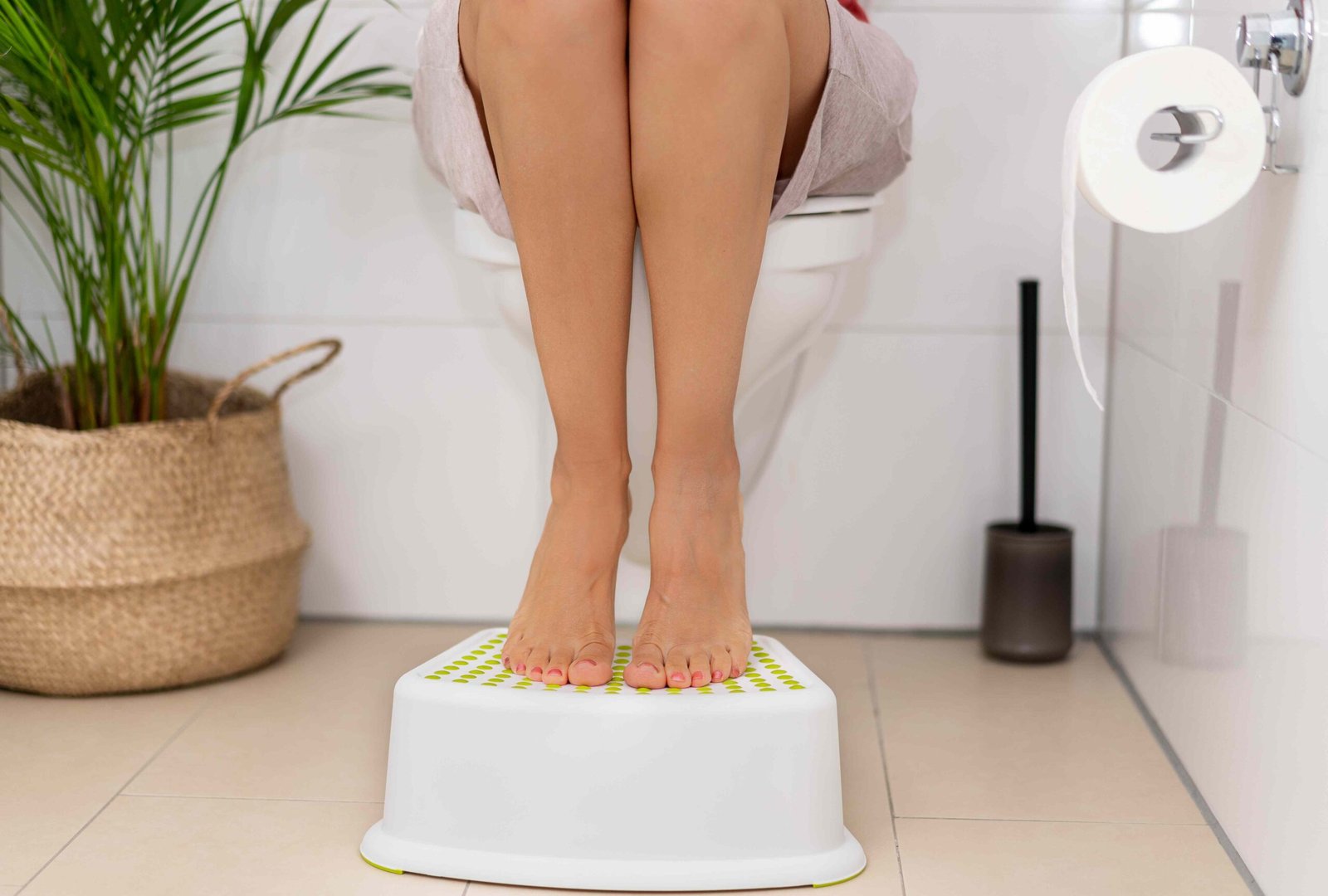
LeBrett is a big fan of the Squatty Potty—which, for the uninitiated, is a footstool that helps position your body into a more natural squatting position. “It can be helpful for people with constipation and hemorrhoids,” she said.
Meanwhile, Kassim noted the benefits of bidets. They’re “helpful for people who have a lot of rectal irritation, hemorrhoids, or fissures. It’s just a more gentle way to clean yourself,” she said.
Wipes can be less harsh than toilet paper, too, Kassim said (just note that many aren’t actually “flushable” despite claims).
Another finding that pleasantly surprised Kassim: Millennials are most likely to have used an app to track their bowel movements, with 15% saying they’ve ever done so, compared with 10% of Gen Z and just 1% of boomers.
It’s not unlike keeping a written symptom journal to help identify patterns in your health, she said. For example, tracking how often you poop (or what your poop looks like day to day) may help you realize you always get diarrhea or constipation after eating a particular type of food.
Millennials are all about heading to the doctor’s office when their guts start acting up—and both experts agreed that’s a positive thing.
This trend probably comes down to several factors, including greater awareness about gut health and rising anxiety around early-onset colorectal cancer, which is becoming more common among younger adults.
While not every cancer “red flag symptom”—like blood in your poop, persistent changes in bowel habits, or unintentional weight loss—actually signals cancer, Kassim said it’s always worth getting checked. “If anyone has concerns, they should absolutely bring them up to their doctor and not feel embarrassed or ashamed,” she said.
And if there’s one generation that doesn’t seem afraid to speak up, it’s millennials. As LeBrett put it, “The social media generation has done a great job in empowering people to seek care.”
Health.com surveyed 2,001 adults living in the U.S. from June 11-19, 2025. The survey was fielded online via a self-administered questionnaire to an opt-in panel of respondents from a market research vendor. In order to qualify, respondents must be over the age of 18 and living in the U.S. Quotas were implemented in sampling using benchmarks from American Community Survey (ACS) from the U.S. Census Bureau for age, race/ethnicity, and household income.
