

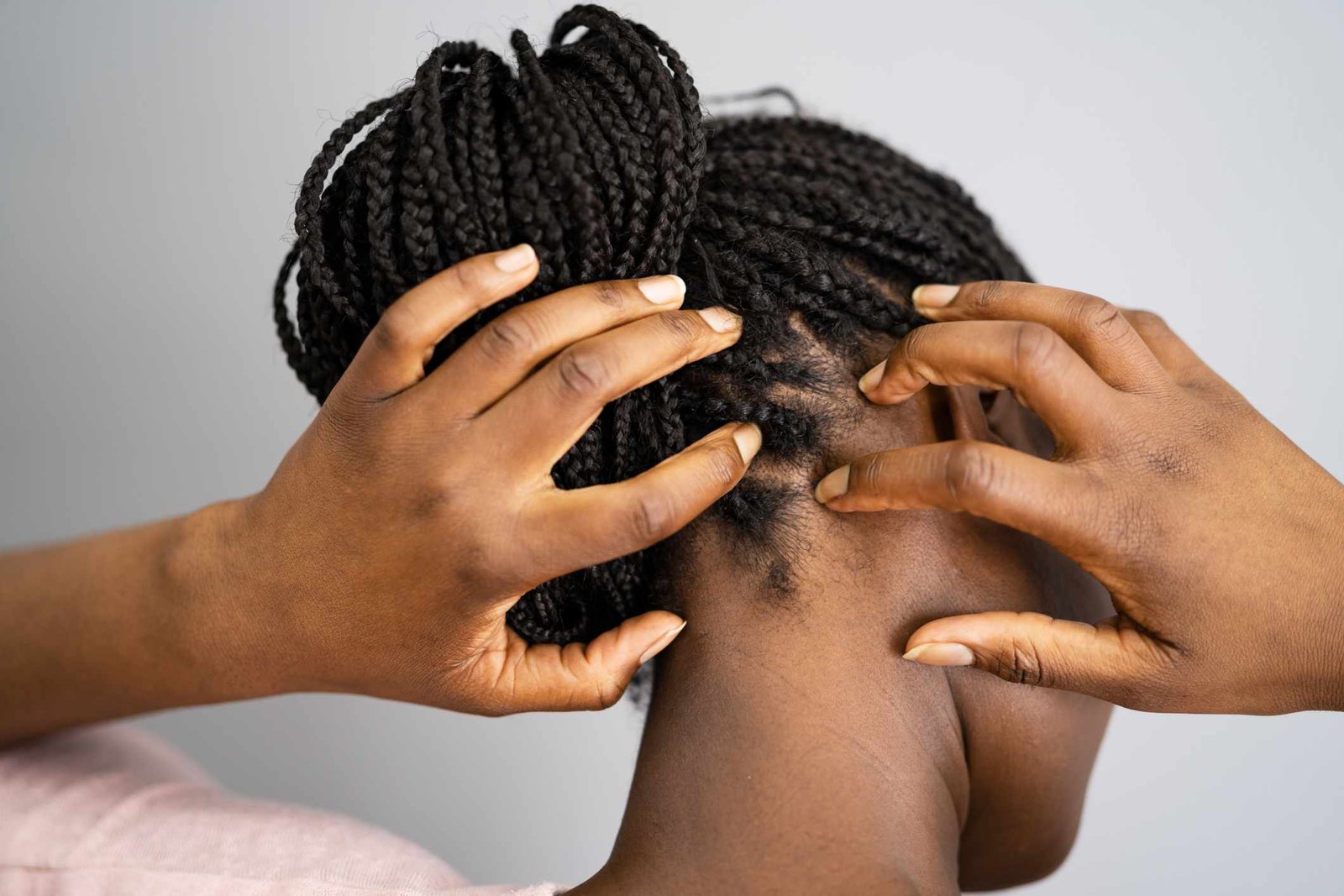
Scalp pain can be caused by skin conditions, headaches, and infections. Medicated shampoos, antifungal medication, and gentle scalp care can help relieve pain.
Mild dermatitis (skin inflammation) may cause dry, itchy, inflamed patches of skin, like a rash. Dermatitis can appear anywhere on your body, including the face and scalp.
Dermatitis can develop from genetics, an overactive immune system, allergens, or irritants.
Scalp psoriasis causes dry, itchy, scaly, and painful patches. Your immune system mistakenly attacks healthy cells, triggering inflammation.
Stress, cold weather, or dry air can trigger scalp psoriasis. It can also cause bleeding if you scratch the patches too roughly. You may also experience a burning sensation and soreness on the scalp.
Folliculitis occurs when bacteria infect the hair follicles. This can happen on your scalp due to frequent shaving or wearing tight hats, especially in hot or damp weather.
This can cause a painful, itchy, and tender scalp. You may also notice a red or discolored ring around the hair follicle.
Fungal infections on your scalp, such as tinea capitis (ringworm), can lead to one or more scaly, uncomfortable balding patches. These patches may be painful and are contagious.
A tension headache, which usually feels like a dull or tight ache around the temples, develops when muscles in your neck and scalp become too tense and contract.
People with chronic (long-term) migraine may experience allodynia, in which nerve ending signals cause the scalp to feel painful in response to hair brushing or wearing a hat.
Severe pain in your scalp may also develop with occipital neuralgia, when nerves that run across your scalp become injured and inflamed.
Tight hairstyles can cause damage and inflammation of blood vessels in your scalp and hair follicles. These include high ponytails, updos, buns, or braids.
People with different types of hair loss, like alopecia areata and telogen effluvium, often report scalp sensitivity.
Another form of hair loss, known as central centrifugal cicatricial alopecia, primarily experienced by Black women, also commonly causes scalp pain and tenderness.
Direct sun exposure on your scalp can cause pain if a sunburn develops. Scalp sunburns can form with just a small amount of ultraviolet (UV) exposure, even in the winter.
Specific treatment for scalp pain will depend on the cause. There are a few home remedies that can help, such as:
- Apply anti-itch and salicylic acid products to control itchiness, irritation, and inflammation.
- Avoid contact with irritants for dermatitis or scalp psoriasis.
- Use medicated shampoo to clear mild rashes or flaky patches.
- Perform a gentle scalp massage to soothe tension headaches and improve circulation.
- Release tight hairstyles to relax hair strands and follicles.
- Use cool packs or heating pads for temporary relief.
Consider the following recommendations to improve your hair health and prevent pain:
- Avoid scratching your scalp.
- Reduce stress.
- Shampoo and style your hair gently.
- Test out any new hair or scalp products.
- Wear a hat or use powder or spray sunscreens to protect your scalp from sunburns.
Visit a healthcare provider if your scalp pain is long-lasting or moderately painful. Based on a physical exam and blood or imaging tests, a healthcare provider can recommend treatments.
They might prescribe a medicated shampoo or topical product to help with conditions like dermatitis and scalp psoriasis.
Infections usually require oral or topical antibiotics or antifungal medication. Topical corticosteroids help relieve inflammation and related symptoms.
Neurological conditions like migraines have a range of prescription treatment options, including medications and injectables.
