

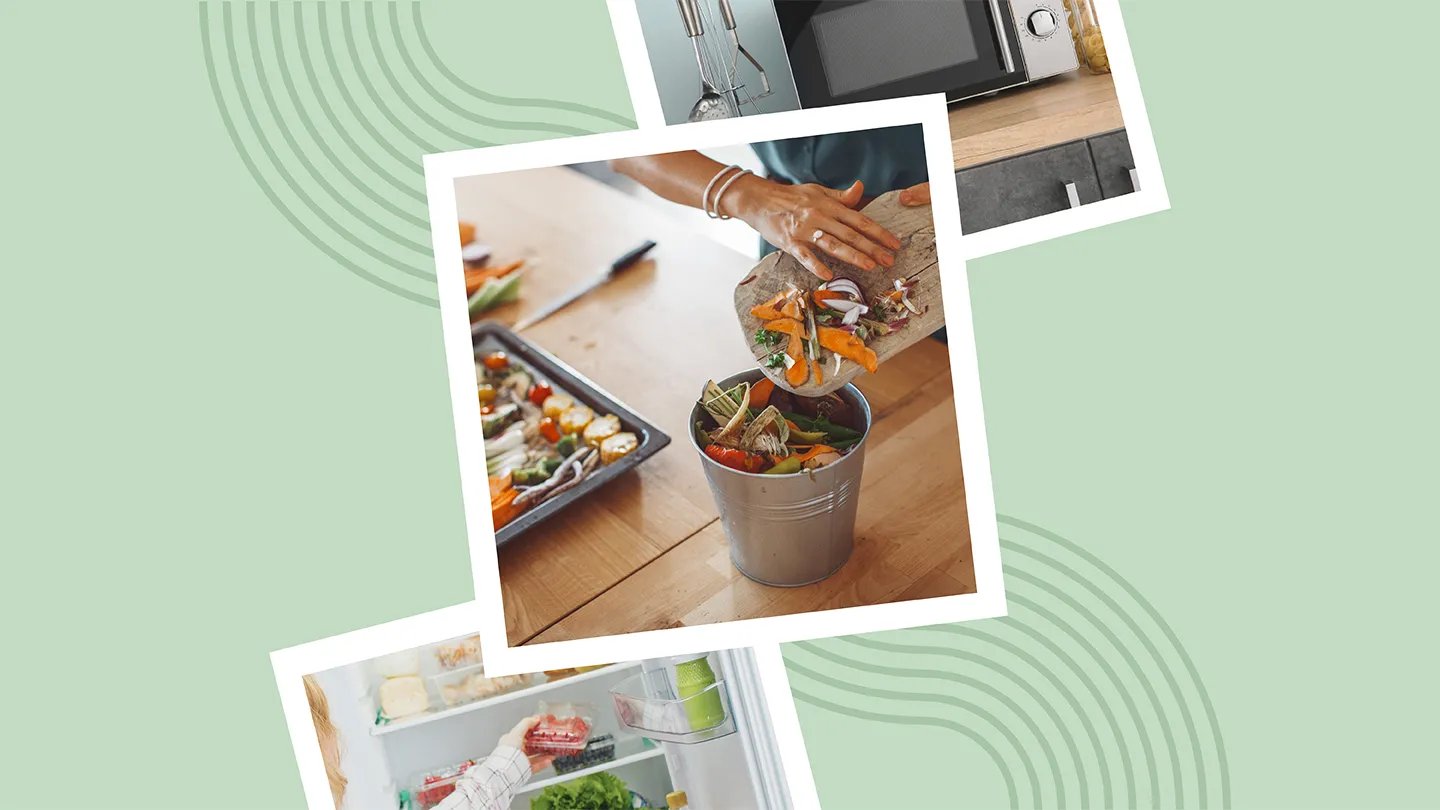
2. Eat Food You Already Have
Every year, the average American family of four loses an estimated $1,500 to uneaten food, according to the USDA.
[4]
That’s money you could be saving.
You can avoid this by taking a regular inventory of your kitchen pantry, fridge, and freezer to see what leftover food needs to be used and planning meals around those ingredients.
“It’s important to take the time to see what you have on hand, sit down with your recipe apps, books, online sources, etc. and write out your grocery list. Then go to the store,” says Poland. That way, you don’t keep buying tuna if you already have five cans, for example.
Here are some tips to help you avoid wasting food you already have.
- Rotate items in your fridge and freezer from the back to the front as a reminder to use them.
- Store food in transparent or clearly labeled containers with use-by dates on them.
- Designate one day a week as a clean-out-the-pantry day to make meals out of items you have on hand.
You might find that using leftover items allows you to get more creative with your food menu.
3. Store Greens to Last
Improperly kept greens can become slimy and mushy after about a week. There’s a right way to store them that will extend their freshness and your food budget.
The most effective way to keep salad greens at their best is to line a storage container with a few paper towels, scatter your greens on top, then cover with another layer of paper towels. Seal shut with a lid and refrigerate.
[5]
Paper towels will absorb the moisture that can transform your salad mix from crisp to limp. Make sure there is room in your greens container for air to circulate.
Heartier greens like kale and collards tend to last longer than delicate ones like romaine. If you like premade salad kits, shredded cabbage and broccoli mixes will last longer than those with lettuce bases like iceberg, says Poland.
If your greens start to go bad, you can try making them into a pesto and freezing them in an ice cube tray for individual portions.
4. Make Use of Scraps
Instead of composting mushroom stems, leek tops, or celery trimmings, try making them into homemade broth. This can be a great, inexpensive way to add flavor to a variety of dishes.
Simply stash scraps in the freezer in a zip-top bag or other sealable container, and when you have a sizable quantity, make your own vegetable broth to use in soups, chili, or sauces.
Be careful with trimmings from cruciferous vegetables, like broccoli and Brussels sprouts, though, as they can impart a bitter taste.
For a rich broth, aim for a one-to-one ratio of solids to water and simmer in a large pot.
You can freeze vegetable broth for up to three months. When freezing, try dividing the liquid into smaller containers to use in recipes that require a smaller amount.
5. Eat More Plant-Based Protein
Protein from animals, like beef and fish, tends to be among the most expensive grocery items. Adding more plant-based protein sources to your diet can be easier on your bank account.
A study published in October 2021 in Lancet Planetary Health analyzed dietary patterns from 150 countries. Researchers found that in wealthier countries like the United States, a diet higher in plant-based foods was 22 to 34 percent less expensive than other diets.
[6]
When adding plant-based proteins, stick to whole, minimally processed sources, like lentils and tofu, to help save money on your grocery bill. Packaged plant-based meat alternatives can be even pricier than meat.
According to the Good Food Institute, plant-based meat products are up to two to four times more expensive pound for pound than conventional meat products.
[7]
Getting more of your protein from plants can also have benefits for your overall health. A review published in July 2020 in the BMJ of more than 30 studies linked higher plant protein intake to lower all-cause mortality risks.
[8]
This is likely due to increased intake of fiber, antioxidants, and other nutrients along with decreased intake of saturated fat.
6. Use Your Microwave
Microwaving food may have a bad reputation, but if your goal is to save money, using your microwave more often can be a good place to start.
Microwave ovens use less energy than conventional ovens and stoves. They work more efficiently by directly heating the water in your food.
[9]
Also, a microwave won’t heat up your kitchen in warmer months like a conventional oven will, which can help with air-conditioning costs.
While it can’t do all the jobs a standard oven does, a microwave can do a lot more than just reheat leftovers and make popcorn.
Here are examples of dishes you can cook in a microwave instead of your regular stovetop or oven:
- Steamed fish or veggies in parchment paper
- Poached eggs
- Crispy bacon
- Creamy oatmeal
- Mac and cheese
- Boneless pork chops
7. Keep Food Longer
Always throwing away food when it passes the “best by” date may be unnecessary and wasteful. If you find these labels confusing, you’re not alone.
A study published in 2021 in the Journal of Nutrition Education and Behavior found that only 64 percent of adult survey respondents understood the “best if used by” label. Only 44.8 percent knew the precise meaning of the “use by” label.
[10]
“It’s important to understand there is no regulation for dates on the food label,” Poland says.
Food manufacturers use product dating to advise consumers about when items are of the highest quality and best flavor, rather than when it’s safest to eat. This means that unless an item is showing obvious signs of spoilage, like sour milk or mold on bread, they may still be okay after these dates have passed.
[11]
You can also freeze food you’re not likely to eat before it goes bad. Most foods can be frozen for future use, and the FDA provides a guide to how long common foods will last in the freezer.
8. Make Packaged Products From Scratch
You can save money on some packaged staples by making them from scratch in your kitchen.
“I’ve found that hummus is a store-bought item that is very expensive but is easy to make homemade, saves you money, and tastes better,” Poland says.
Examples of other items you can make yourself include:
- Grainy mustard
- Granola
- Ketchup
- Bread and breadcrumbs
- Sauerkraut
- Hot cocoa mix
- Energy bars
- Pasta sauce
- Yogurt
You can also make some beverage items at home for a fraction of the cost, like kombucha and carbonated drinks. Home carbonation machines are easy to find and reasonably affordable. After the initial up-front cost, you can make your own bubbly water for under $1 per liter.
Additionally, you can brew several cups of coffee at home for the price of a single one at your local coffee shop.
The Takeaway
- You can stick to or lower your grocery budget by reducing food waste. The average American family of four loses approximately $1,500 a year to uneaten food.
- Proper food storage techniques, like using airtight containers for greens and rotating pantry items, can extend shelf life and reduce waste, saving on your grocery bill.
- Plant-based proteins can be a cost-friendly alternative to animal proteins. Choose minimally processed options, like lentils and tofu.
- Your microwave uses less energy than traditional stoves and ovens, making it a budget-friendly cooking option.
