

If you’re constantly waking up exhausted, your nighttime routine could be to blame. To boost your morning energy, there are a number of low-effort evening habits you can start implementing–even if you don’t get enough sleep every night. Here are eight simple evening routines backed by science and sleep experts to help you wake up with more energy.
“Even if you feel like you can fall asleep just fine, caffeine can still reduce deep sleep, which affects how rested you feel the next day,” Kathleen Benson, CSSD, CPT, RDN at VNutrition, told Health.
Caffeine has a half-life of approximately 2-12 hours, the time required for your body to metabolize half of the amount you consume. Because it takes caffeine even longer to be fully cleared by the body, it’s recommended to stop drinking caffeine at least eight hours before bed to avoid disrupting sleep.
Eating later meals can lead to lower-quality sleep and next-day fatigue. Instead, eat lighter, earlier dinners to improve sleep quality (just make sure you don’t go to bed hungry).
“Going to bed hungry isn’t helpful for high-quality sleep either,” said Benson. “Ideally, dinner happens early enough to allow for digestion and comfort, but if hunger shows up later, a small snack with some protein and fiber can actually support sleep rather than disrupt it. For example, an apple with peanut butter, a cheese stick with a few crackers, or an orange with a small handful of almonds.”
While alcohol can help you fall asleep at first, it ultimately disrupts rapid eye movement (REM) sleep and lowers sleep quality, which can leave you feeling drained the next day.
“Alcohol has many effects relevant to sleep, and none of them are particularly good,” Thomas M. Tolbert, MD, assistant professor of medicine (pulmonary, critical care, and sleep medicine) at the Icahn School of Medicine at Mount Sinai, told Health. “As you sleep and the alcohol is metabolized, you may eventually have a ‘REM rebound,’ a kind of vengeful REM with more vivid, intense dreams, more snoring, and—in some individuals—more sleep apnea breathing.”
To achieve quality sleep, it’s best to skip alcohol for maximum benefit.
To reduce decision fatigue the following morning, prep one thing the night before.
“When you reduce next-day uncertainty, you reduce anticipatory stress,” Bruce D. Forman, PhD, a psychologist and author specializing in trauma-informed behavioral sleep medicine and the Insomnia Course director at the World Sleep Academy, told Health. “That means lower evening activation of the HPA axis (the system that controls cortisol release). If your brain doesn’t feel like tomorrow is a problem to solve, then it’s more willing to power down at night.”
To promote a more restful sleep, Forman recommends laying out clothes or making a to-do list the night before, which helps decrease mental load and reduces nighttime rumination (being stuck in a loop of worrying thoughts).
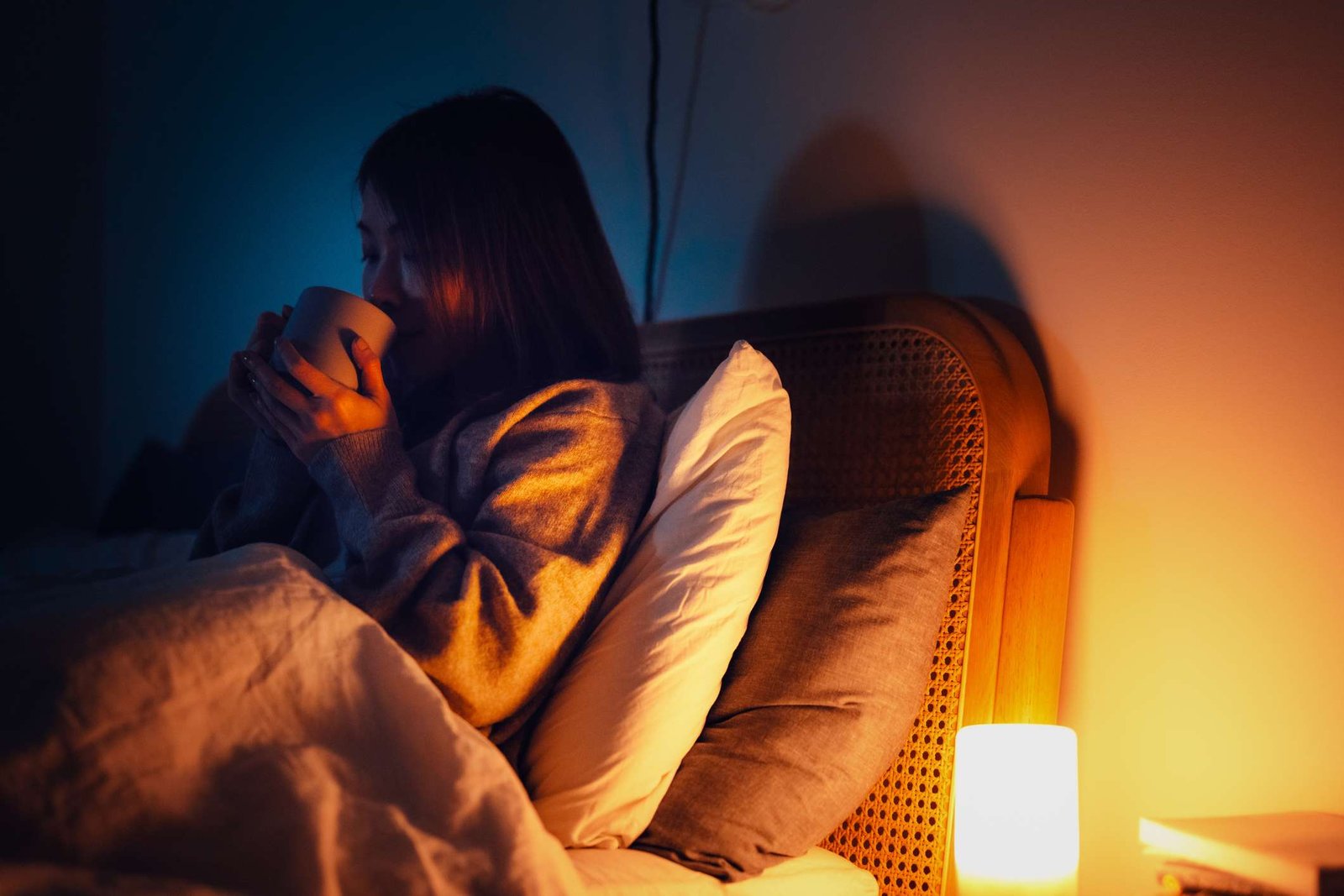
To prepare for a good night’s sleep, it’s recommended to dim the lights and reduce screentime at least two hours before bed. Dimming the lights before bed helps boost production of melatonin, a hormone that helps you fall asleep more quickly. It also helps regulate the body’s circadian rhythm, our body’s internal clock that controls sleep-wake patterns.
“Like many bodily functions, sleep is controlled by the brainstem, which has a neurologic ‘switch’ that alternates between ‘wake’ and ‘sleep’,” said Tolbert. “The switch is less likely to flip into the sleep position (and stay in the sleep position) if the brainstem gets stimuli that favors staying awake–and light is the most important stimulus for ‘wake’.”
Creating a predictable 10-minute wind-down ritual before bed is important for reducing cortisol, the body’s primary stress hormone, and for reducing the activity of certain neurotransmitters that promote wakefulness.
“During the day, stress hormones like cortisol and alertness chemicals like norepinephrine help you stay focused,” said Forman. “At night, those need to drop so sleep-promoting systems can take over.”
Forman reports that a consistent 10-minute bedtime routine can reduce sympathetic nervous system activity (which stimulates the body’s fight-or-flight response) and promote melatonin release, thereby supporting sleep. He recommends wind-down activities such as dimming the lights, gentle stretching, slow breathing, meditating, or having a warm shower.
When it comes to staying alert during the day, recent studies suggest that going to bed at a consistent time each night may be more important than the number of hours you sleep.
“It’s easiest to fall asleep and stay asleep when the sleep drive is high and circadian alertness is low,” said Tolbert. “It’s easiest to stay awake when the sleep drive is low, and the circadian alertness is high. Inconsistent times in and out of bed confuse the brainstem by misaligning these two drives, so it tends to be more difficult to get the goal of seven to nine hours of sleep.”
After waking up, step outside to get some natural outdoor light–it’s important for circadian rhythm regulation and sleep health.
“Morning light exposure–especially natural light–suppresses both melatonin and adenosine that strengthen your circadian rhythm,” said Forman. “Light and activity also improve serotonin regulation.”
