

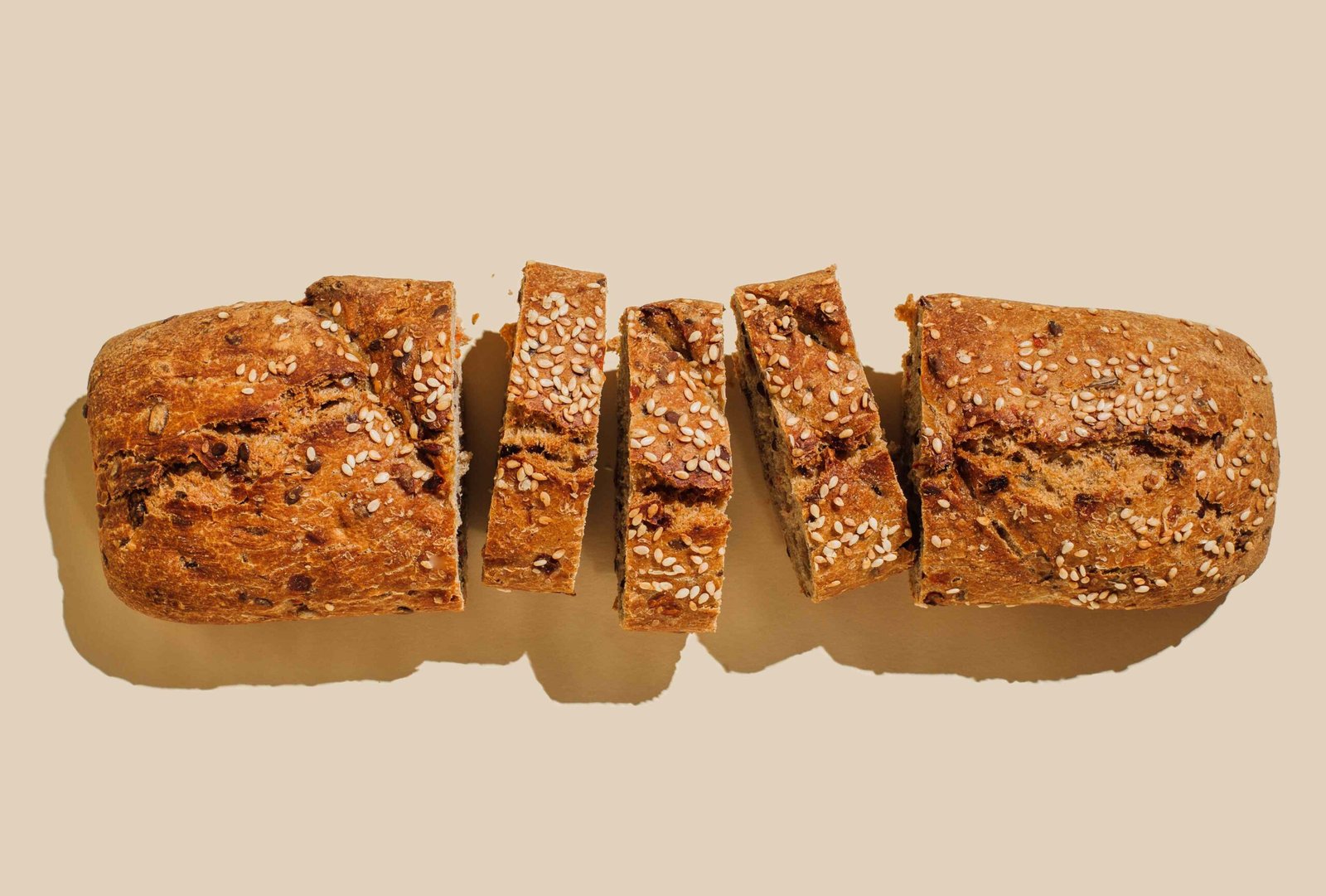
The healthiest types of bread include sprouted grain, whole wheat, rye, and sourdough. They provide fiber, protein, vitamins, and minerals your body needs to stay healthy.
Sprouted grain bread is made from whole grains that have been soaked until they germinate (begin to sprout). The whole grains provide more fiber, vitamins, and minerals than white bread.
Sprouting increases the protein in some whole grains and makes them easier to digest. It boosts antioxidants and decreases antinutrients (like phytates) that block mineral absorption. This may help your body absorb more calcium, iron, and zinc.
One slice (40 grams) of sprouted Ezekiel bread provides:
- Calories: 90
- Protein: 6 grams (g)
- Total fat: 1 g
- Carbohydrates: 16 g
- Fiber: 3 g, or 12% of the Daily Value (DV)
- Iron: 1.08 milligram (mg), or 6% DV
Whole wheat bread is made with wheat flour that keeps the entire wheat kernel intact, including the bran, endosperm, and germ.
The bran and germ, which are removed from refined grains like white bread, are high in fiber, iron, and B vitamins.
Some refined breads have vitamins and minerals added back, but they typically do not have fiber. Fiber helps lower cholesterol levels and the risk of heart disease. It also helps maintain a healthy gut.
A slice (40 grams) of 100% whole wheat bread provides:
- Calories: 117
- Protein: 4.56 g
- Total fat: 1.87 g
- Carbohydrates: 20.6 g
- Fiber: 2.96 g, or 10.5% DV
- Iron: 1.04 mg, or 5.7% DV
Sourdough bread is made by fermenting yeast and lactic acid bacteria. This natural process increases nutrients and breaks down some gluten, a protein in grains that can be hard to digest.
The fermentation also lowers FODMAPs, short-chain carbohydrates that the small intestine does not absorb well. Sourdough may be easier to tolerate for people with digestive diseases like irritable bowel syndrome (IBS).
A slice (59 grams) of sourdough bread made with enriched white flour provides:
- Calories: 188
- Protein: 7.67 g
- Total fat: 1.26 g
- Carbohydrates: 36.5 g
- Fiber: 1.8 g, or 6.4% DV
- Iron: 2.28 mg, or 13% DV
Multigrain bread is made from grains, including wheat, oats, and barley, which makes it high in fiber and protein.
A slice (43 grams) of multigrain bread provides:
- Calories: 114
- Protein: 5.74 g
- Total fat: 1.82 g
- Carbohydrates: 18.6 g
- Fiber: 3.18 g, or 11.3% DV
- Iron: 1.08 mg, or 6% DV
Note: Not all multigrain breads are the same. Some are made with mostly refined white flour with a sprinkling of seeds, which decreases their nutritional value. You may look for loaves made with 100% grains for the most benefits.
Rye bread can be made from pure rye flour, but most store-bought versions combine rye and wheat flour.
Like other whole grains, rye is high in fiber. Compared to wheat bread, rye may affect blood sugar less after meals. However, more research is needed.
A slice (43 grams) of rye bread provides:
- Calories: 111
- Protein: 3.66 g
- Total fat: 1.42 g
- Carbohydrates: 20.8 g
- Fiber: 2.49 g, or 8.8% DV
- Iron: 1.22 mg, or 6.7% DV
Flaxseed bread is typically made from whole-grain flour with flaxseeds.
Flaxseeds are rich in fiber and alpha-linolenic acid (ALA), a heart-healthy omega-3 fatty acid. They are also high in antioxidants like lignans, which help prevent cell damage and inflammation.
A slice (40 grams) of multigrain bread with flaxseed provides:
- Calories: 100
- Protein: 4 g
- Total fat: 1.5 g
- Carbohydrates: 19 g
- Fiber: 3 g, or 11% DV
- Iron: 1 mg, or 6% DV
Oat bread is made from oats and whole-wheat flour.
Oats are a source of fiber, especially a soluble fiber called beta-glucan. Beta-glucan blocks cholesterol absorption.
A slice (43 grams) of oat bread provides:
- Calories: 129
- Protein: 4.01 g
- Total fat: 2.1 g
- Carbohydrates: 23.2 g
- Fiber: 1.89 g, or 6.8% DV
- Iron: 1.29 mg or 7.1% DV
Gluten-free bread is necessary for people with celiac disease or gluten sensitivity. They are made from gluten-free grains like rice, millet, or quinoa.
Some gluten-free breads are highly processed and low in fiber. However, loaves made with whole grains can be a nutrient-rich option.
A small slice (25 grams) of gluten-free bread made with tapioca starch and brown rice flour provides:
- Calories: 77.2
- Protein: 1.81 g
- Total fat: 2.34 g
- Carbohydrates: 12.3 g
- Fiber: 1.22 g, or 4.3% DV
- Iron: 0.19 mg, or 1% DV
Nutrients can vary between brands. Reading the label can help you decide which bread is the healthiest choice for you.
Whether it’s rye, multigrain, or sourdough, you may look for:
- Made with 100% whole grains: The first ingredient will be “whole wheat flour” or another whole grain. If the label says enriched flour, it’s refined.
- High in fiber: You may aim for at least 3 grams of fiber per slice. Thin-sliced breads may have less per slice, but can still be comparable when you consider the serving size.
- Protein content: You might choose breads with 3-6 grams of protein per slice. Protein helps you stay full longer.
- Low in added sugar: Bread, including whole-grain types, can have added sugars. It’s best to choose loaves with less than 2 grams per slice.
