

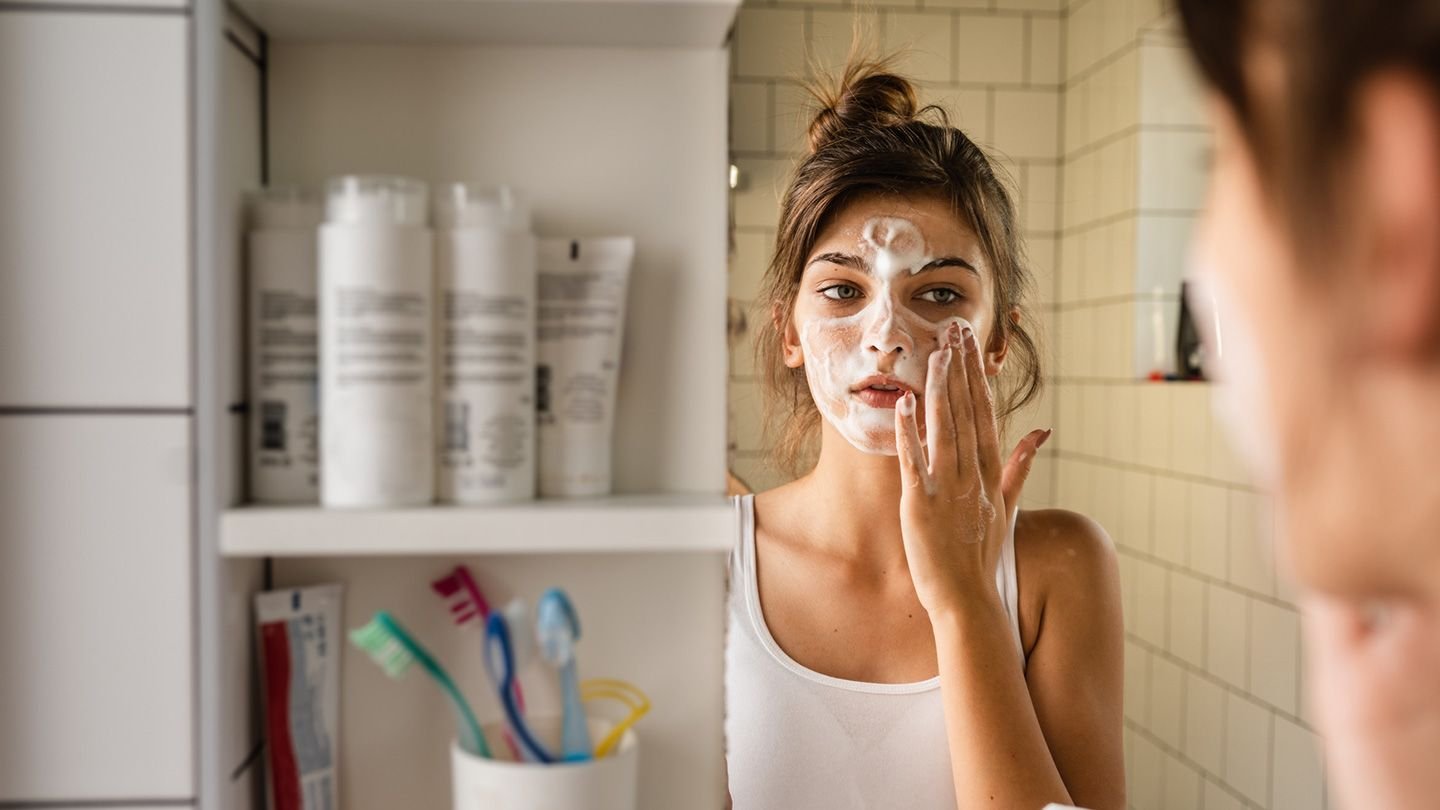
3. Use Gentle Cleansers to Avoid Triggering a Potential Flare
As with moisturizer, the type of cleanser you’re using is essential for your rosacea self-care. “If you have rosacea, you need to avoid harsh cleansers and astringents, as they can make rosacea much worse,” Green says. But rosacea can resemble acne, and many acne treatments can be irritating for people with rosacea. Benzoyl peroxide, a common anti-acne ingredient, may be too harsh in high concentrations for people with rosacea, but a 5 percent benzoyl peroxide cream specifically designed for people with rosacea can be effective for rosacea breakouts, notes the National Rosacea Society.
[2]
Also be careful with products that contain retinoids or salicylic acid. Follow the same skin-care guidelines you do when choosing a moisturizer: Your cleanser should be fragrance-free and hypoallergenic. “Be careful about how you use it,” Green adds. Remember, scrubbing has no place in a rosacea skin-care routine.
4. Be Careful With Facials — They May Do More Harm Than Good for Rosacea
Chemical peels, microdermabrasion treatments, and even run-of-the-mill facials may be suitable for your best friend’s complexion, but they may make your rosacea worse, Green says. “These treatments can irritate the skin, which can aggravate rosacea,” she warns. If you want a rejuvenating treatment to make your skin look younger or smoother, you can work with your dermatologist to find other skin-care options. In some cases, there are various light peels, such as lactic or mandelic acids, that may be more gentle for rosacea-prone skin; check with your doctor to find out if that’s a good option for you.
5. Opt for Mineral-Based, Fragrance-Free Makeup When Possible
Makeup may be used for rosacea self-care to cover up ruddy cheeks, but it can also worsen rosacea symptoms, says Taub. “Choose fragrance-free, mineral-based makeup,” she suggests. “This tends to be much less irritating to the skin than other types of makeup.” The formula of any makeup for rosacea is also essential. When choosing a foundation, Green suggests opting for pressed powder over liquid formulas, as liquid can clog pores and exacerbate rosacea symptoms. If you’re unsure about how a product might affect your skin, check with your dermatologist first.
6. Practice Sun Safety to Prevent Rosacea Flares
A survey by the National Rosacea Society found that the top trigger for rosacea is sun exposure. In fact, 81 percent of respondents said that the sun triggered a rosacea flare. When you’re out in the sun, practice sun safety: Apply sunscreen, wear a wide-brimmed hat, and stay in the shade as much as possible.
[3]
“In general, sunscreens with chemicals are too irritating for people with rosacea, but part of the treatment for rosacea is sun protection,” says Chris G. Adigun, MD, a dermatologist in Chapel Hill, North Carolina. “Choose sunscreens with physical blockers, such as zinc oxide or titanium.” Just as you carefully choose rosacea skin-care products, make sure your sunscreens are also fragrance-free and hypoallergenic. Apply them generously, and reapply often.
7. Take Self-Care Steps to Calm Down Rosacea Flares When They Occur
Flares happen when you have rosacea. To minimize rosacea symptoms, try placing ice packs on your face to calm down the inflammation, Taub suggests. Green tea extracts can also be soothing, she adds. Always monitor the temperature of any product you apply to sensitive skin. “Don’t use anything hot, as that will make it worse,” she says. Work with your dermatologist to develop a strategy for managing rosacea flares. They may have specific rosacea skin-care products to recommend.
8. Get to the Bottom of What’s Irritating Your Skin in the First Place
While there is no cure for rosacea, treatments are becoming more tailored to people’s personal rosacea symptoms, Taub says. Topical medications, such as creams, lotions, and gels, as well as oral medications, may help reduce inflammation and redness. “If you have a lot of bumps and breakouts with rosacea, topical and oral antibiotics come into play,” Taub adds. Individuals with dilated blood vessels, persistent redness, and other changes on the nose and cheeks may benefit from light therapy treatments or surgical options, such as laser procedures, according to the American Academy of Dermatology.
[4]
Consult your dermatologist to ensure you’re doing everything possible to minimize your symptoms.
The Takeaway
- Rosacea is a skin condition primarily affecting the face.
- It can cause outbreaks that resemble acne.
- Managing the condition involves knowing your triggers and choosing gentle skin-care products.
- It is also vital to practice sun protection.
- A healthcare provider can help you develop a personalized skin-care plan.
Additional reporting by Melinda Carstensen.
