

Exercising your hamstrings is important for mobility (movement), athletic performance, and reducing injury risk.
A glute bridge improves hip stability and alignment (proper position of the hips). This exercise is excellent for beginners as it works your hamstring muscles without adding stress on your spine.
How to do it:
- Lie on your back with your knees bent and feet flat on the floor.
- Press through your heels as you lift your hips up until your shoulders, hips, and knees all align. Squeeze your glute (butt) muscles together as you reach the top of the move.
- Lower your hips slowly until you’re back to the starting position.
- Repeat three sets of 10 repetitions (reps).
The single-leg bridge exercise challenges your hamstrings, improving strength and stability. Adding this exercise to your routine can improve hip stability and reduce the risk of injury.
How to do it:
- Lie on your back with your knees bent and feet flat on the floor.
- Kick one leg towards the ceiling while keeping the other foot on the floor.
- Push through your heel on the floor as you lift your hips until your shoulders, hips, and knees are aligned. Think about squeezing your glute muscles together as you reach the top of the move, especially the muscle on the back of the lifted leg.
- Lower slowly back to the starting position.
- Repeat three sets of 10 reps on each side.
Squats strengthen and increase the power of the muscles in your lower body, including your hamstrings. Adding squats to your routine can boost the overall performance of your hamstrings.
How to do it:
- Stand with your feet shoulder-width apart and with your toes turned very slightly out.
- Imagine zipping up a pair of tight jeans as you engage your core muscles (muscles in your abdomen) and keep your chest and head up.
- Bend your knees and push your hips back as if you were going to sit in a chair, lowering yourself until your thighs are parallel to the floor, or as close as they can get.
- Press through your heels and stand back up, squeezing your glutes at the top of the move.
- Slowly and with control, perform three sets of 10 reps.
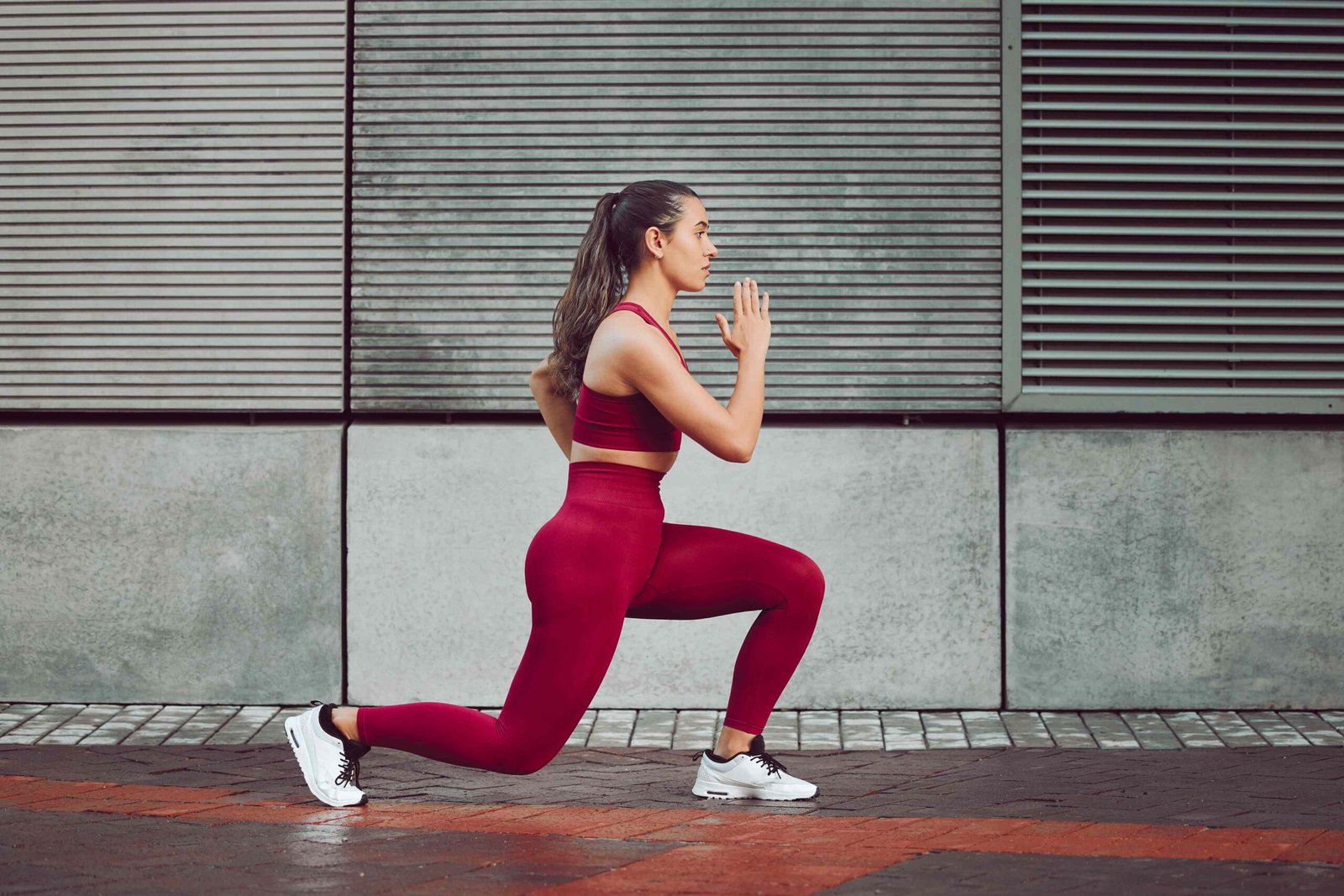
Lunges build muscle in your hamstrings, glutes, and quadriceps, the large muscles on the front of the thighs. Adding lunges to your routine can improve hamstring muscle strength, athletic performance, and stability.
How to do it:
- Stand with your feet hip-width apart.
- Step one leg forward and lower your hips until both of your knees bend at about a 90-degree angle.
- Keep your chest up and your front knee over your ankle.
- Push through the heel of your front foot to return to standing.
- Repeat three sets of 10 reps on each side.
The single-leg Romanian deadlift exercise specifically targets your hamstring muscles. Adding this exercise to your routine can help you build strength, balance, and power.
How to do it:
- Stand on one leg, keeping the knee of your other leg slightly bent.
- Hinge forward at your hips, sending your lifted leg straight back as you lean your trunk (the center of your body) forward towards the floor.
- Lower until your back and lifted leg make a straight line.
- Drive through the heel of your standing leg (leg on the ground) to return to the starting position, while squeezing your glutes and hamstrings.
- Perform three sets of 10 reps.
Kettlebell swings are a powerful way to improve hamstring strength. Adding kettlebell swings to your routine can also help improve endurance, enhancing athletic performance and injury prevention.
How to do it:
- Stand with your feet shoulder-width apart with a kettlebell slightly in front of you.
- Hinge at your hips with slightly bent knees and grab the kettlebell with both hands.
- Swing the kettlebell back between your legs, keeping your spine straight and your core muscles engaged.
- Drive your hips forward with force to swing the kettlebell up to the height of your chest, then let it swing back and repeat.
- Perform three sets of 10 reps.
It’s important to make sure you’re properly performing and incorporating any exercise to get the most out of them and also to avoid injury, including hamstring exercises. Here are some common mistakes to avoid when doing hamstring exercises:
- Ignore eccentric training: Most of us focus only on the phase where we are lifting the weight (concentric) and neglect the lowering phase (eccentric). Eccentric training is the most effective type of exercise for preventing injuries. Consider slowing down and moving through the lowering phase of an exercise with control.
- Have poor form: Plenty of us don’t pay attention to our form when performing an exercise. Poor form not only increases the risk of injury but also takes away from the benefits of the exercise.
- Neglect flexibility and mobility work: Having a tight lower back, hips, or quadriceps can cause limited flexibility and mobility. This can make it harder for us to activate our hamstring muscles, increasing our risk for strain and injury. It’s important not to skip stretching or mobility drills to improve performance and recovery.
- Not varying your routine: Switching up the exercises you perform can help to maximize strength and muscle growth, prevent muscle imbalances and injury risk, and improve overall performance.
Here are a few tips to help make sure you’re getting the most benefits out of your hamstring exercises:
- Find a balance between strength training and stretching: Pair your strengthening exercises with some stretching and mobility work to improve flexibility and prevent injury.
- Progress gradually: Start with only using your body weight. Gradually consider adding resistance or increasing the repetitions to avoid injury.
- Focus on eccentric movements: Slow down the lowering (eccentric) phase of your exercises one to two times per week for better injury prevention and improved muscle growth.
