

Key Takeaways
- Nicotine withdrawal symptoms, such as cravings and stress, are temporary and can be managed with preparation and persistence.
- Using nicotine replacement therapies (NRTs) or prescription medications can help reduce withdrawal symptoms.
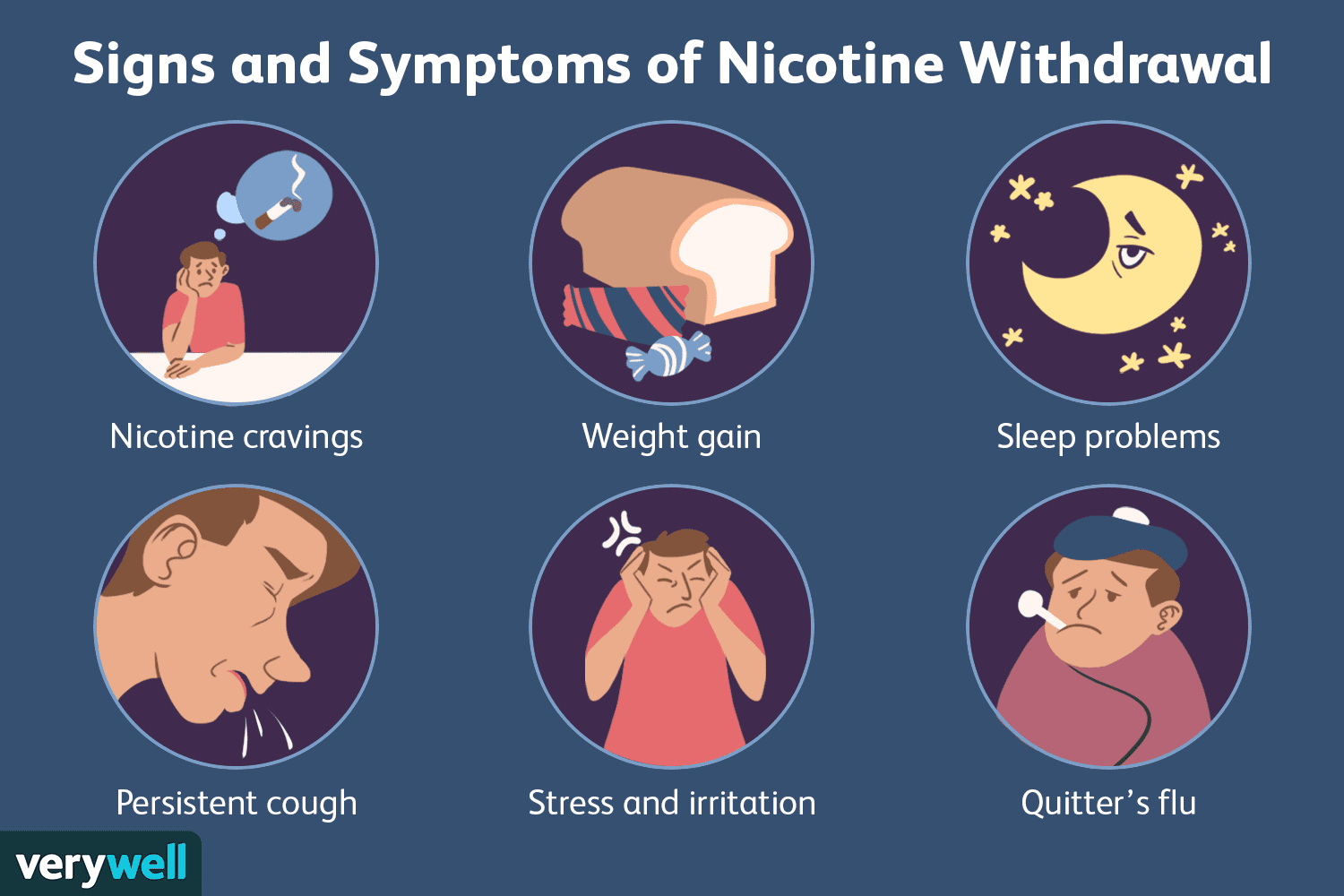
For many smokers, the fear of nicotine withdrawal symptoms is often one of the main reasons why quitting smoking (or other forms of tobacco) is so difficult. The symptoms can range from cravings and mood changes to muscle and joint pain, though not everyone will experience them.
While nicotine withdrawal symptoms can be challenging, it’s important to remember that these effects are only temporary. With a little preparation and persistence, you will get through them.
Verywell / Laura Porter
It’s important to note that your experiences may differ. You might experience some or all of these symptoms, or you might also find yourself having other symptoms as well. In addition to cravings, sleep problems, and appetite changes, it isn’t uncommon to experience feelings of anxiety, sadness, or depression. If these symptoms interfere with your daily life and don’t improve after a couple of weeks, talk to your doctor or a mental health professional.
What Causes Nicotine Withdrawal Symptoms?
Nicotine withdrawal occurs because the body has become dependent on this drug. Specifically, nicotine stimulates the release of dopamine in your brain. So, when you stop using it, there is less dopamine released, resulting in withdrawal symptoms. (Nicotine affects other neurotransmitters as well.)
People who quit “cold turkey” tend to have more severe nicotine withdrawal symptoms than those using an approach that involves counseling, support systems, and quit-smoking aids such as nicotine replacement therapy (NRT).
While nicotine withdrawal can be uncomfortable, it does make your body healthier versus hurting it.
Behavioral factors are also thought to influence nicotine withdrawal symptoms. For example, just seeing someone smoking or smelling a cigarette can increase your cravings to do the same.
How to Manage Symptoms of Nicotine Withdrawal
There are a few treatments to help with nicotine withdrawal, including:
- Nicotine replacement therapies (NRTs): Examples of NRTs include nicotine gum, patches, and lozenges, all of which are available over the counter. Nicotine nasal sprays and inhalers are available with a prescription.
- Prescription medications: The antidepressant Zyban (bupropion) (also sold under the brand name Wellbutrin) and the smoking cessation aid Chantix (varenicline) can help with nicotine withdrawal symptoms.
Speak to a healthcare provider about what treatment might be best for you. In addition to medications and NRTs, you can also seek psychological support from a support group, quit-tobacco program, or mental health professional.
Nicotine withdrawal symptoms can be intense and uncomfortable. But this phase of smoking cessation won’t last forever. And, if prepared, you can manage and cope with the symptoms as they come.
In the end, the benefits of quitting far outweigh any short-term discomfort you may experience through withdrawal. If you take it one step at a time, you’ll get there. Try not to get ahead of yourself and worry about never smoking again. Just focus on today and do whatever you can to remain smoke-free.
Frequently Asked Questions
How long do nicotine withdrawal symptoms last?
Nicotine withdrawal symptoms can begin within two to three hours after you last used this drug. However, they are often strongest a few days after stopping nicotine completely.
Does quitting smoking make your muscles ache?
Yes, quitting smoking can lead to muscle aches and joint pain. This is often referred to as the “quitter’s flu” and can also include symptoms such as fever, stuffy nose, coughing, and lack of energy.
Can quitting smoking cause inflammation?
Smoking is associated with increased inflammation, so quitting smoking can lead to significant improvements. This can take time, but it contributes to a decreased risk of cardiovascular disease.
How long does it take for inflammation to go away after quitting smoking?
One study reports that inflammation begins to subside just two weeks after quitting. Other research suggests that the inflammatory response associated with smoking returns to normal within five years of quitting. More recently, research suggests that smoking can continue to affect the body’s immune response for years or decades after quitting. This has implications for the long-term effects of smoking and how it can contribute to the development of infection, autoimmune conditions, and cancer.
How long after quitting smoking does your body go back to normal?
The health benefits of quitting are progressive and can take time, but start almost immediately after quitting. Within 20 minutes, your heart rate and blood pressure drop. A year after quitting, the cilia in your lungs regain their normal function. By two years, your risk of heart attacks drops significantly. Between five and 10 years, your risk of different cancers drops dramatically. By 15 years after quitting, your risk of coronary heart disease has dropped to almost that of a non-smoker.
