

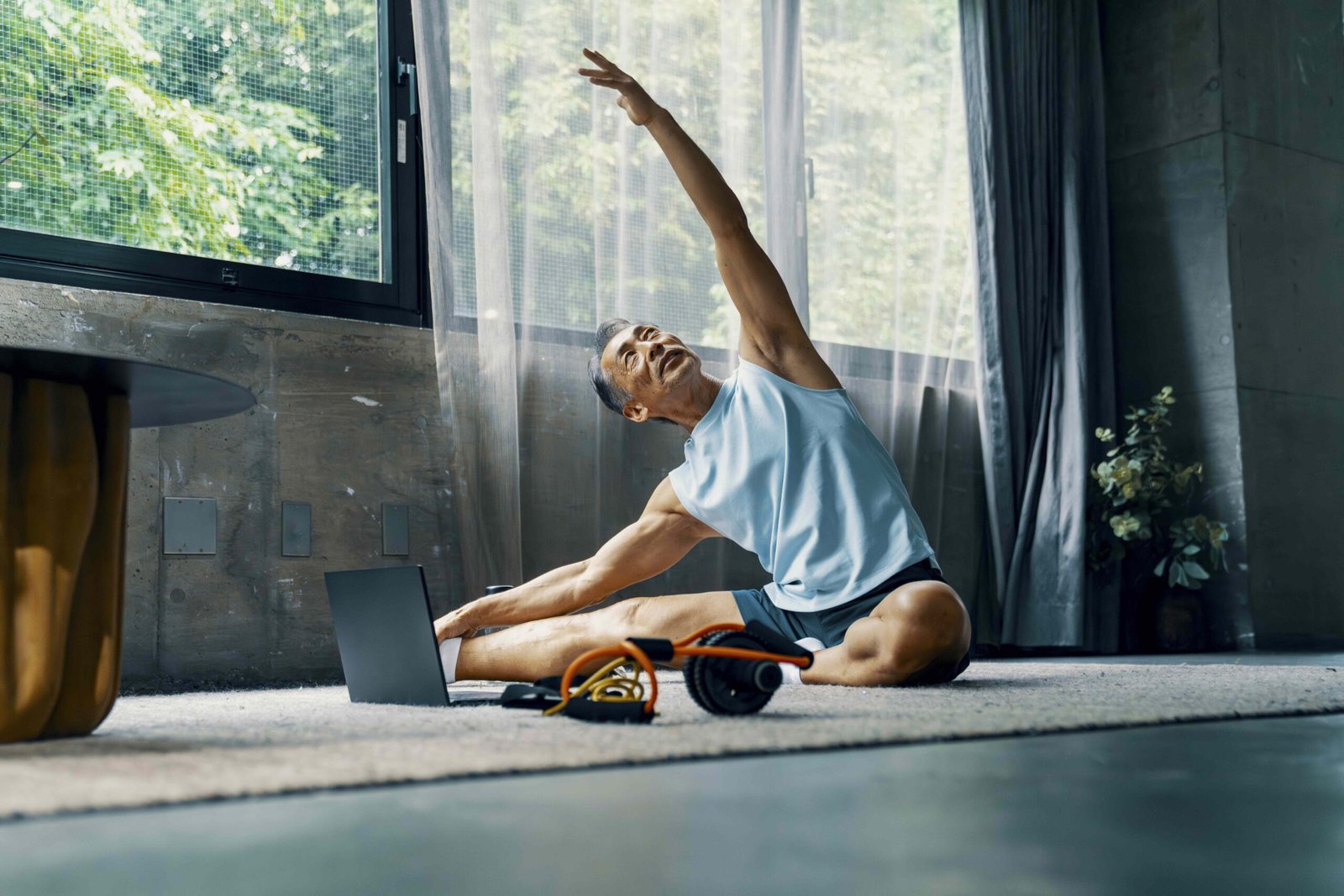
If you’re looking to build and maintain strength, you don’t necessarily need a health club membership to do it. With a little creativity—and, in some cases, a few simple pieces of equipment—you can get an effective workout that delivers all the same benefits you would get from training in a gym.
It’s possible to gain muscle with exercises that use your body’s own weight as resistance, including squats, lunges, push-ups, and planks, research shows.
Because bodyweight movements require no equipment and minimal space, you can do them anywhere—at home, in a park, in a hotel room, and more.
A possible downside of bodyweight exercise is that you can’t increase the weight you’re lifting over time, like you would with a weight machine. Still, it’s important to regularly challenge yourself as your body gets stronger (a concept known as progressive overload). To do that with bodyweight exercises, you can:
- Add reps
- Shorten your rest time
- Increase your tempo
- Find more advanced movements
While some people find a row of shiny, weight-lifting machines motivating, others may find it intimidating. If that’s the case, you can still build strength with just a few sets of dumbbells.
In fact, a 2023 research review found no significant differences in strength or muscle mass gains between people who trained with machines and those who used free weights.
If you’re interested in working out with dumbbells at home, it’s best to invest in a light, medium, and heavy set of weights. You’ll know you’re using the right load for a lift if the last couple reps feel very challenging to finish.
There are thousands of dumbbell training programs available online, but you can always start with a circuit of basic movements, including weighted squats, deadlifts, lunges, rows, and overhead presses. These hit all the major muscle groups, which you should aim to work at least twice per week.
Dumbbells are effective, but they do take up a substantial amount of storage space, aren’t easy to travel with, and may feel slightly intense for seniors or those new to strength training. Resistance bands are a great alternative.
Also called exercise loops, resistance bands are portable, inexpensive, and are available with varying amounts of tension, or resistance. Some offer handles or Velcro closures for easy removal, while many are simply large versions of a basic rubber band.
When you’re using a resistance band, your muscles have to work against the band’s tension as you complete a movement. The further out you extend the band from its original shape, the greater its strain on your muscles. This produces strength gains similar to lifting with conventional devices, such as dumbbells or machines.
There are lots of ways to use resistance bands. For leg strength, try placing the band above your knees and walking side-to-side in a squat position. For upper body and core, get into a side plank position and pin the resistance band under your arm, using your other hand to pull the band into the air.
If you don’t like gyms but also don’t want to exercise at home, check out your local park. Many include outdoor exercise equipment that’s both free and effective.
In fact, one study found that older adults who used outdoor exercise equipment twice a week for two months showed improvements in strength and physical fitness.
Outdoor exercise spaces usually include machines that work with a person’s own body weight, such as an air walker (similar to an elliptical), bars for pull-ups or dips, or waist twisters. But even if you don’t have one of these parks near you, with a little creativity, even regular playground equipment can serve as an outdoor gym. Hang from the monkey bars to build grip, shoulder, and core strength, or do push-ups with your feet in a swing, for example.
Mat Pilates is an exercise system that focuses on building core strength, increasing spinal stability, and controlling breathing. It requires only an exercise mat (or a comfortable rug) and a few optional props, making it an excellent at-home activity.
Pilates can increase muscle strength, and in one meta-analysis, older adults who did Pilates saw better lower limb strength, balance, flexibility, and fitness.
Classic Pilates moves include the roll-up and the one-leg circle, both of which build core strength. But if you don’t know where to start, there are many programs available online to help guide you through a Pilates workout, regardless of skill level.
With the right perspective, your home can become a gym. Look for other opportunities to add weighted items to your bodyweight movements—ten pounds is ten pounds, whether it’s a dumbbell or a jug of laundry detergent.
Try holding a bag of kitty litter at your chest while you do squats. Or, use magazines on carpet to mimic plastic sliders (which are used under your feet or hands to build core strength). And there’s no need for a stair climber machine if you have stairs at home.
Essentially, if you’re willing to be creative, you can accomplish a lot with the items that are already at your fingertips.
Exercising at home is convenient and economical, but it can sometimes be challenging to establish consistency. Here are a few tips for getting into a routine and sticking with it:
- Schedule workouts: Often, if something can happen at “any time,” it never actually happens. At the beginning of your week, review your calendar and schedule your home workouts in advance, like you’re booking a time slot at the gym. Making “appointments” with yourself can add accountability.
- Carve out a designated workout space: If possible, create an area for strength training where you can store equipment and anything else you might need, such as a fan, TV, or speaker. Having a designated space can make it easier to quickly jump into a workout and focus on exercise.
- Embrace the imperfect workout: Working out at home likely means more interruptions—a curious pet or ringing doorbell may force you to pause, or you may have to end your workout early when a family member needs you. Remember that doing something is always better than doing nothing.
