

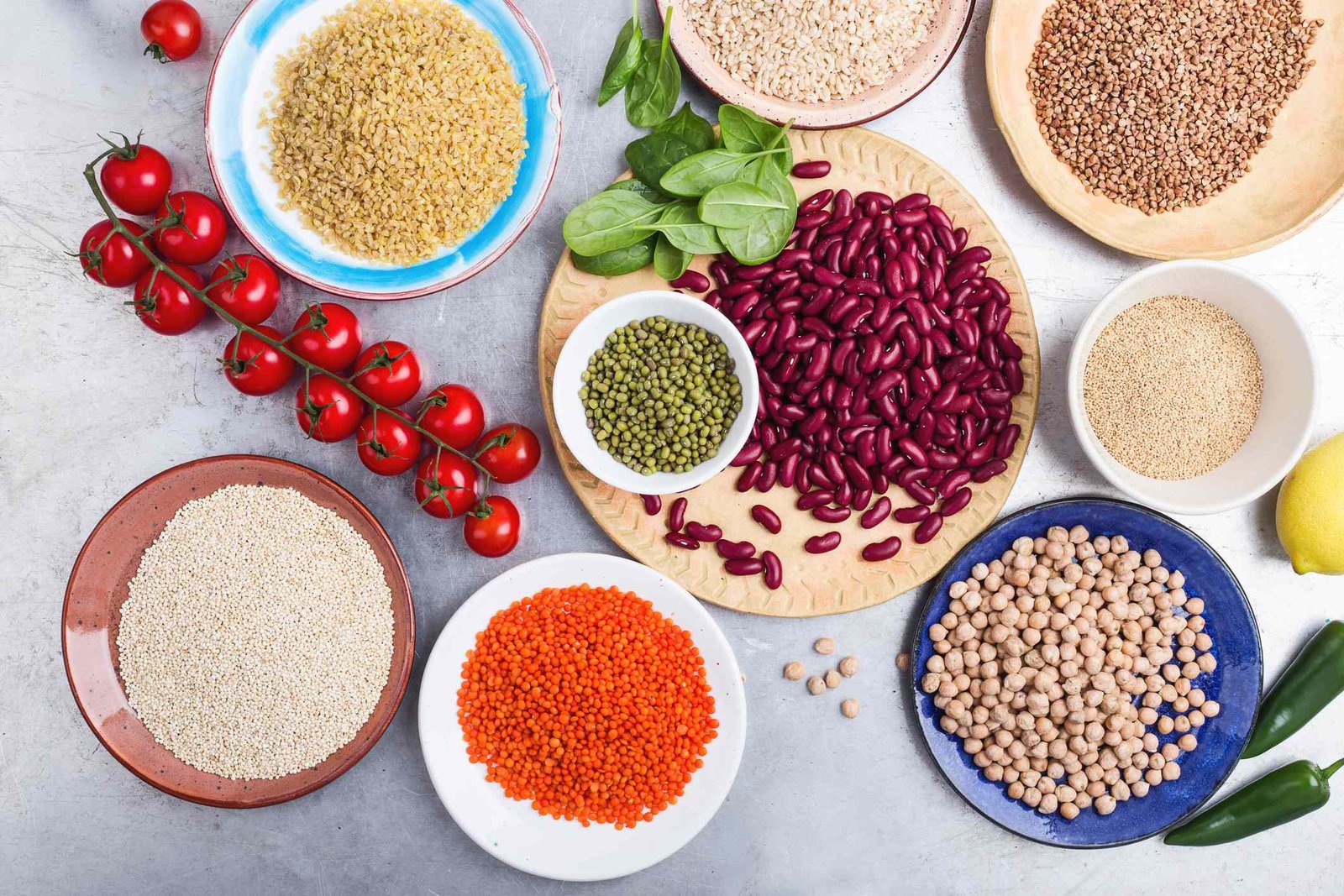
Your body needs protein to repair tissues, build muscle and bones, make hormones, and support the immune system. Meanwhile, eating fiber helps regulate blood sugar, cholesterol, and digestion, and supports feelings of fullness.
Many foods offer both protein and fiber, along with other nutrients and health benefits.
Carmen Vlasceanu / Getty Images
- Serving size: ½ cup cooked
- Protein: 8.9 grams (g)
- Fiber: 7.8 g
Lentils are packed with protein and fiber. They also provide folate, potassium, magnesium, zinc, and iron.
Lentils are a great source of slow-digesting carbohydrates. They have a lower glycemic index, meaning they gradually increase blood sugar compared to high-sugar, low-fiber foods.
A study has also shown that a lentil-rich diet can support lower blood cholesterol levels.
krisanapong detraphiphat / Getty Images
- Serving size: ½ cup cooked
- Protein: 15.6 g
- Fiber: 5.1 g
Soybeans are one of the highest-protein beans, containing almost double the protein of most other beans. They also provide iron, magnesium, selenium, B vitamins, and vitamin K.
Other beans—such as black beans, chickpeas, and lima beans—have about 6–8 grams of protein and 5–8 grams of fiber per ½ cup cooked.
fcafotodigital / Getty Images
Whole grains contain both fiber and protein, and the amounts vary depending on the type. Some grains have more protein, while others are higher in fiber. For example, grains like quinoa and amaranth are higher in protein, while barley and bulgur contain more fiber.
Amaranth and quinoa are among the highest-protein grains and also differ in their amino acid profiles. They contain all the essential amino acids needed for protein synthesis. Other grains are low in one or more amino acids, most commonly lysine.
Protein and fiber content of ½ cup cooked whole grains:
Whole Grain
Protein
Fiber
Quinoa
4 grams (g)
2.5 g
Amaranth
4.6 g
2.5 g
Barley (pearled)
1.7 g
3 g
Bulgur
2.8 g
4 g
Brown Rice
2.7 g
1.6 g
Tip: Opt for whole grains for higher protein, fiber, and nutrients. Refining grains reduces some of these nutrients.
towfiqu ahamed / Getty Images
Nuts have a lot of fiber and protein in a small serving size. One ounce (about 28 grams) of nuts contains 4-7 grams of protein and 2-3 grams of fiber.
Here is the protein and fiber content of different nuts per 1-ounce (28-gram) serving:
Nut
Protein
Fiber
Other Vitamins and Minerals
Almonds
6 grams (g)
3.5 g
Vitamin E and magnesium
Cashews
5 g
1 g
Magnesium
Walnuts
4 g
2 g
Omega-3 fatty acids
Hazelnuts
4 g
3 g
Potassium
Brazil nuts
4 g
2 g
Selenium and magnesium
Although peanuts are not true nuts, they are legumes. They are also rich in protein and fiber. A 30-gram serving of peanuts contains about 7 grams of protein and 2.4 grams of fiber.
Seeds contain both protein and fiber in different amounts. Some have higher fiber, while others have higher protein.
Here is the protein and fiber content of different seeds per 2 tablespoons (about 30-gram serving):
Seed
Protein
Fiber
Other Vitamins and Minerals
Chia seeds
5 grams (g)
10 g
Omega-3 fatty acids, magnesium, selenium
Flaxseeds
5 g
8 g
Omega-3 fatty acids
Sunflower seeds
6 g
3 g
Vitamin E and magnesium
Sesame seeds
5 g
4 g
Calcium
Seeds are nutritional powerhouses. They offer more than just protein and fiber. Depending on the type, they can also be rich in omega-3 fatty acids, calcium, magnesium, zinc, and iron, and vitamins A and E.
porosolka / Getty Images
Vegetables are often rich in fiber. Some, like spinach, kale, and broccoli, are also higher in protein. These green leafy and cruciferous vegetables also contain calcium, potassium, folate, and vitamin K.
Here is the protein and fiber content of some vegetables per serving:
Vegetable
Protein
Fiber
Spinach
5 grams (g)
4 g
Kale
4 g
3 g
Broccoli
4 g
5 g
Protein plays a role in almost every function of the body. Your protein needs change based on many factors, including age, gender, muscle mass, and activity level. Guidelines recommend eating at least 0.8 grams of protein per kilogram of body weight each day.
In addition to protein, fiber is essential for overall health. Most adults need 22-34 grams of fiber per day, depending on their age and sex.
Health.com uses only high-quality sources, including peer-reviewed studies, to support the facts within our articles. Read our editorial process to learn more about how we fact-check and keep our content accurate, reliable, and trustworthy.
U.S. Department of Agriculture: FoodData Central. Lentils, mature seeds, cooked, boiled, with salt.
Moravek D, Duncan AM, VanderSluis LB, et al. Carbohydrate replacement of rice or potato with lentils reduces the postprandial glycemic response in healthy adults in an acute, randomized, crossover trial. J Nutr. 2018;148(4):535-541. doi:10.1093/jn/nxy018
Vlachos D, Malisova S, Lindberg FA, Karaniki G. Glycemic index (Gi) or glycemic load (Gl) and dietary interventions for optimizing postprandial hyperglycemia in patients with t2 diabetes: a review. Nutrients. 2020;12(6):1561. doi:10.3390/nu12061561
Chamberlin ML, Wilson SMG, Gaston ME, Kuo WY, Miles MP. Twelve weeks of daily lentil consumption improves fasting cholesterol and postprandial glucose and inflammatory responses—a randomized clinical trial. Nutrients. 2024;16(3):419. doi:10.3390/nu16030419
U.S. Department of Agriculture: FoodData Central. Soybeans, mature cooked, boiled, without salt.
U.S. Department of Agriculture: FoodData Central. Lima beans, immature seeds, cooked, boiled, drained, without salt.
U.S. Department of Agriculture: FoodData Central. Chickpeas (garbanzo beans, bengal gram), mature seeds, cooked, boiled, without salt.
U.S. Department of Agriculture: FoodData Central. Beans, black, mature seeds, cooked,
Rojas Conzuelo Z, Robyr R, Kopf-Bolanz KA. Optimization of protein quality of plant-based foods through digitalized product development. Front Nutr. 2022;9:902565. doi:10.3389/fnut.2022.902565
U.S. Department of Agriculture: FoodData Central. Barley, pearled, cooked.
U.S. Department of Agriculture: FoodData Central. Amaranth grain, cooked.
U.S. Department of Agriculture: FoodData Central. Rice, brown, long-grain, cooked (Includes foods for USDA’s Food Distribution Program).
U.S. Department of Agriculture: FoodData Central. Bulgur, cooked.
U.S. Department of Agriculture: FoodData Central. Nuts, almonds.
U.S. Department of Agriculture: FoodData Central. Nuts, brazilnuts, dried, unblanched.
U.S. Department of Agriculture: FoodData Central. Nuts, walnuts, English, halves, raw.
U.S. Department of Agriculture: FoodData Central. Nuts, cashew nuts, raw.
U.S. Department of Agriculture: FoodData Central. Nuts, hazelnuts or filberts, raw.
U.S. Department of Agriculture: FoodData Central. Nuts, almonds.
U.S. Department of Agriculture: FoodData Central. Seeds, sunflower seed, kernel, raw.
U.S. Department of Agriculture: FoodData Central. Seeds, chia seeds, dried.
U.S. Department of Agriculture: FoodData Central. Seeds, sesame seeds, whole, dried.
U.S. Department of Agriculture: FoodData Central. Seeds, sesame seeds, whole, dried.
U.S. Department of Agriculture: FoodData Central. Spinach, cooked, boiled, drained, with salt.
U.S. Department of Agriculture: FoodData Central. Broccoli, cooked, boiled, drained, without salt.
Espinosa-Salas S, Gonzalez-Arias M. Nutrition: macronutrient intake, imbalances, and interventions. In: StatPearls. StatPearls Publishing; 2024.
Centers for Disease Control and Prevention. Fiber: The Carb That Helps You Manage Diabetes.
