

If you are trying to keep your blood sugar steady, bread does not have to be off the table. Choosing breads higher in whole grains, fiber, and protein can help maintain steadier blood sugar levels.
Tetra Images / Getty Images
A good place to start is 100% whole-grain bread. These breads contain unrefined grains, which means all parts of the grain are still there.
Because the fiber and protein remain, your body digests whole-grain bread more slowly. This helps sugar enter your bloodstream more gradually, which leads to a smaller rise in blood sugar.
Blanchi Costela / Getty Images
Sprouted grain bread is made from whole grains that have begun to sprout before they are ground into flour. Sprouting breaks down some of the starch, making the bread easier to digest.
Sprouted breads also tend to have slightly more fiber and protein, which can help sugar enter your bloodstream more gradually.
For the most benefit, choose breads that list sprouted whole grains like barley, spelt, or wheat first rather than refined flour.
Mike Kemp / Getty Images
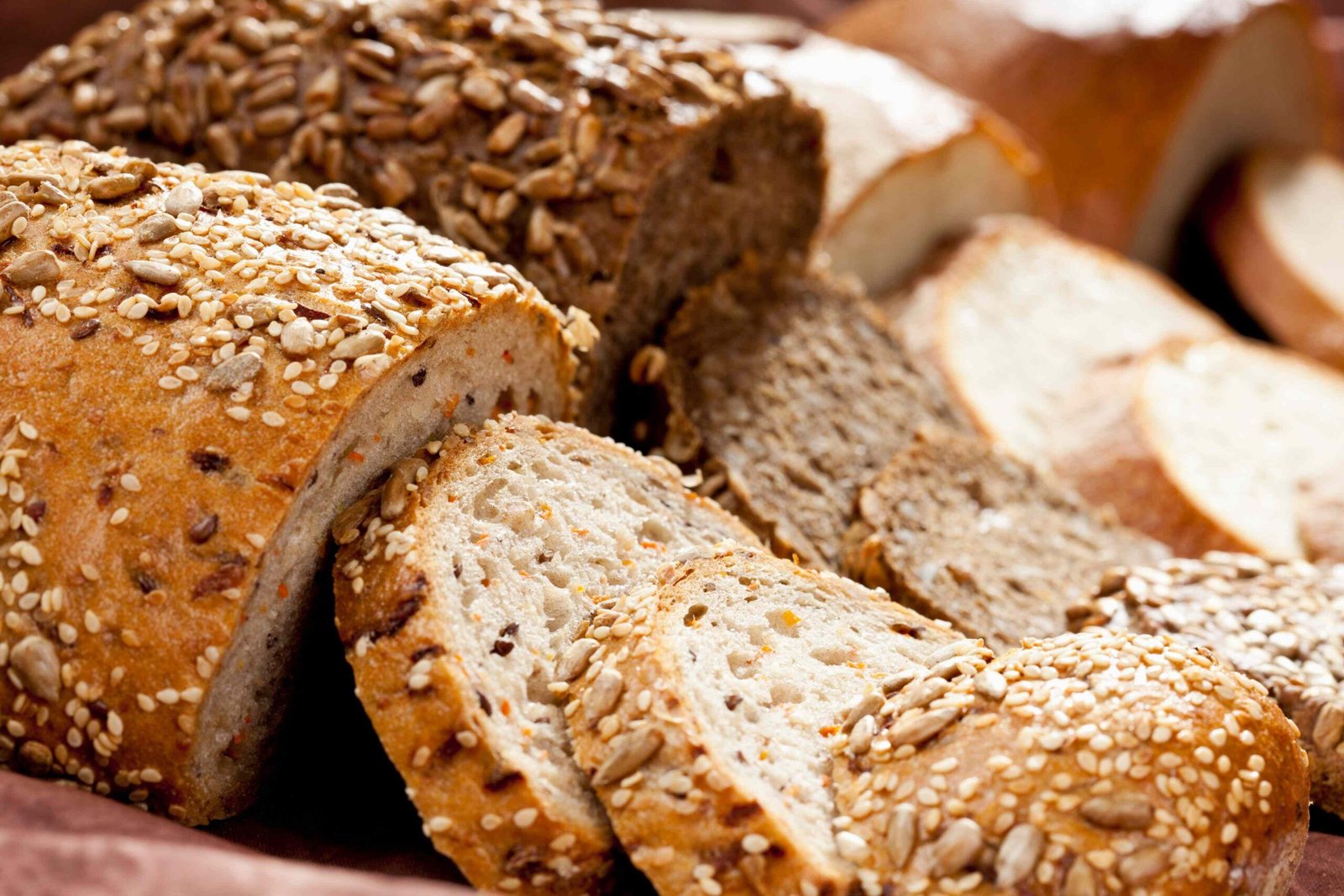
Seeded breads include ingredients like sunflower or flax seeds. These add extra fiber, protein, and healthy fats that help control your blood sugar.
These benefits only apply when the bread is truly whole grain. Some breads use mostly refined flour and then add seeds on top, which does not provide the same effect.
Avoid breads where refined flour is the first ingredient, with seeds added only for texture or appearance.
Magone / Getty Images
Rye bread is dense and often higher in soluble fiber, which helps you digest it more slowly. These factors help you feel full longer, lower your body’s insulin response, and lead to a gentler rise in blood sugar after meals.
This effect likely comes from the bread’s dense structure and fiber content rather than rye itself. However, there is no strong evidence that it improves long-term markers of blood sugar control, such as fasting glucose or hemoglobin A1c (HbA1c).
For the most benefit, choose dark, 100% whole-grain rye or pumpernickel.
Yulia Naumenko / Getty Images
Sourdough bread goes through a natural fermentation process using wild yeast and bacteria. This changes how your body breaks down the starch in bread, and may slow digestion, leading to a gentler rise in blood sugar compared with standard white bread.
However, research shows these effects vary, and not all sourdough breads offer the same benefits. You will likely get the most blood sugar support from true sourdough made with a natural starter and whole-grain flour. Commercial sourdough made with added acids for flavor may not have these same effects.
