

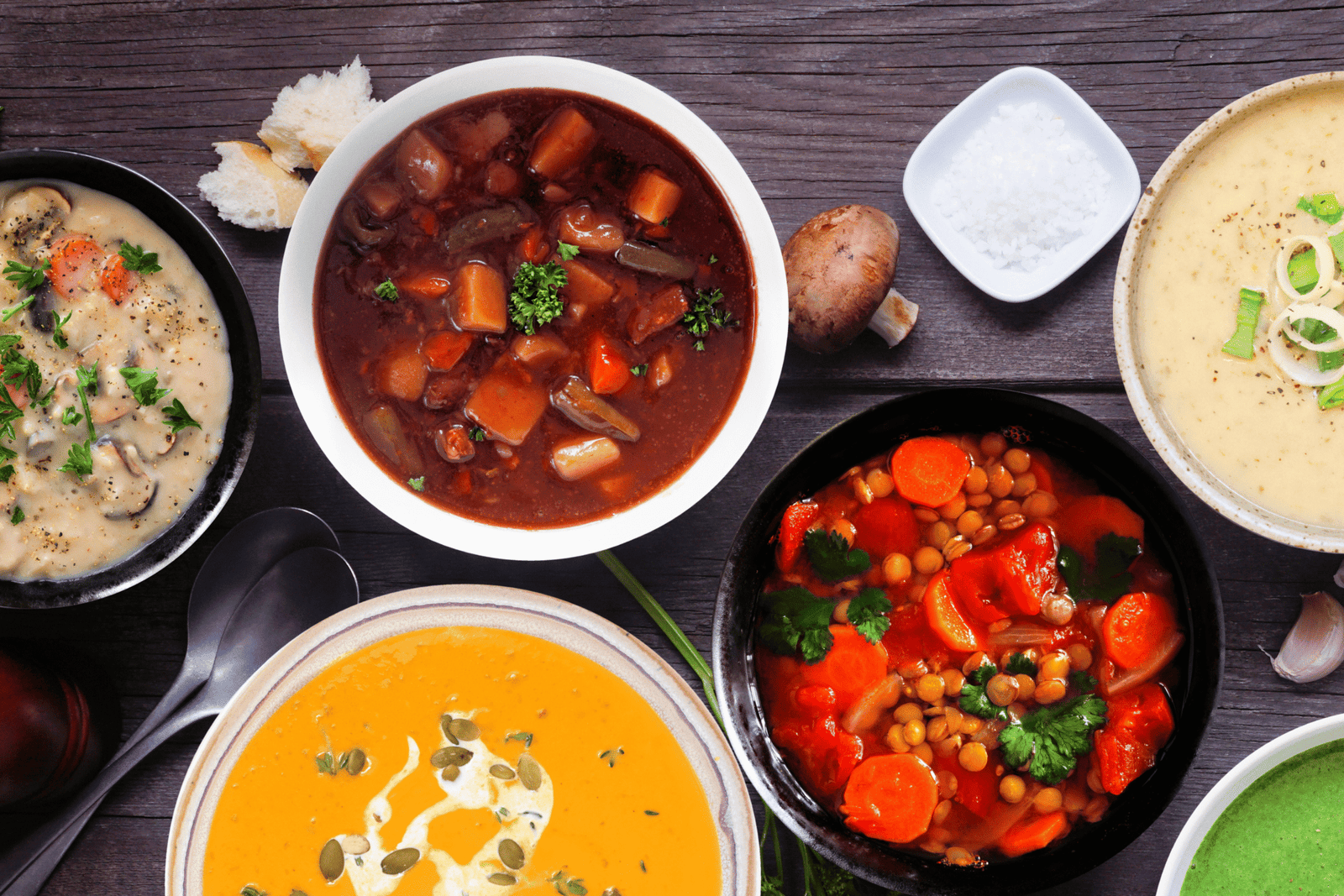
The protein content of soups can vary, but recipes that contain lean protein, beans, lentils, or peas can help you reach your daily protein goals. Plus, protein-rich (and fiber-rich) foods can help keep you full, supporting weight management.
from_my_point_of_view / Getty Images
- Protein: 14.2 grams per cup (8 ounces) of split pea soup with pork
Few soups are as nourishing and high in protein as split pea and ham—both of these featured ingredients are protein powerhouses. Along with the animal proteins in the ham, cooked split peas contain over 8 grams of plant-based protein per one-half cup.
Split pea soup can be made in various ways, however it usually contains a thick broth along with vegetables like carrots, onion, and celery.
A 1-cup serving of split pea and ham soup contains 204 calories as well as 8.4 grams of fiber—researchers have found that diets high in both protein and fiber can help manage weight and reduce appetite, among other benefits.
However, pre-packaged or canned soups can be very high in sodium, or salt, which can be bad for your heart health. One cup of standard split pea and ham soup contains about 27% of the recommended daily limit of sodium for adults.
Photography By Tonelson / Getty Images
- Protein: 9.6 grams in 1 cup (8 ounces) of black bean soup
Black bean soup packs a nutritious punch. It’s made with black beans, celery, carrots, onions, and spices, though recipes often call for other vegetables including garlic, tomatoes, potatoes, cilantro, and lime.
In addition to its protein content, black bean soup is also an excellent source of fiber—a 1-cup serving contains 10.2 grams, which may help boost satiety, or fullness.
Black bean soup also contains essential minerals and vitamins, including 12-28% of the recommended daily intake of iron depending on gender, as well as around 10% of your daily potassium and zinc intake.
Salt content can be a concern, though; per-cup sodium content of black bean soup can range from 9-27% of your recommended daily intake, depending on specific recipe.
YelenaYemchuk / Getty Images
- Protein: around 8 grams per cup (8 ounces) of pasta e fagioli soup, though amounts vary
Italian for “pasta and beans,” pasta e fagioli soup usually includes some kind of bean (kidney, white, great northern, and others) and a small pasta. The rest of the soup is made up of spices, onion, celery, carrots, and tomato sauce.
The exact protein content in a typical bowl of pasta e fagioli is hard to pin down; protein varies based on the type of beans used in a recipe, plus some soups pack more protein by including pork, ground beef, or another meat. If you use a healthy protein-rich pasta, such as lentil, chickpea, or whole wheat, you could increase the protein content even further.
Hearty and rich, pasta e fagioli also provides a solid energy boost, with 179 calories in a serving and about 28 grams of carbohydrates. That said, store-bought varieties may have added sugars and can be very high in salt.
Crispin la valiente / Getty Images
- Protein: 9.7 grams in 1 cup (8 ounces) of lentil soup
Lentil soup is a high-protein food source made with celery, carrots, onions, broth, and spices. Though it’s a popular vegetarian recipe, some people add meat to their lentil soup for a boost of protein.
Like black beans, peas, and other legumes, lentils are very rich in a number of other important nutrients. A cup of lentil soup contains 9.4 grams of fiber, which provides 28-43% of the daily fiber you need, depending on age and gender. Plus, the same cup of lentil soup has 153 calories and a significant amount of iron, potassium, and magnesium.
However, be mindful of the sodium content in this soup, particularly if it’s store-bought. A cup can contain about 27% of the recommended daily sodium limit for adults.
Olga Mazyarkina / Getty Images
- Protein: 8.2 grams per cup (8 ounces) of beef barley soup
The combination of beef and barley, an ancient grain, contribute to the high protein content of this soup.
All beef barley soups contain celery, carrots, and onion, but it’s very common to find vegetable beef barley soups as well—some brands or recipes will add peas, corn, tomatoes, or potatoes to the dish, which can contribute more protein and fiber.
Beef barley soup is a good energy source, with one cup containing 142 calories and 16.3 grams of carbohydrates. As with most other soups, the sodium content in beef barley soup can be a concern. Typical servings contain about a quarter of the recommended daily sodium intake.
Soups can be incredibly nutritious, and choosing varieties with high amounts of protein can keep you full for longer periods of time. However, if you’re making soup a regular part of your diet, be sure to:
- Limit sodium: Store-bought, canned, or restaurant-made soups can be high in sodium. Check the nutrition label of soups you’re buying and pick low- or no-sodium products. Or, you can make your soups at home so you have more control over salt levels.
- Boost fiber: Like protein, eating more fiber can make you feel full, which could help you manage your weight. Plus, it promotes better digestion. Soups that are high in fiber may contain beans, peas, or vegetables.
- Choose lean protein sources: Proteins that have with less fat are better for your health. Consider adding lean beef, skinless chicken, turkey, fish, beans, or lentils to your soups.
- Watch the dairy: Adding cream in soup adds a lot of flavor, but it can also raise fat content significantly. Choose broth-based soups or low-fat or nonfat dairy options instead.
- Go for a healthier grain: If you’re making a soup with pasta or rice, for example, consider swapping out the refined grains for healthier whole grains, such as whole-wheat pasta or wild rice. These are higher in fiber.
