

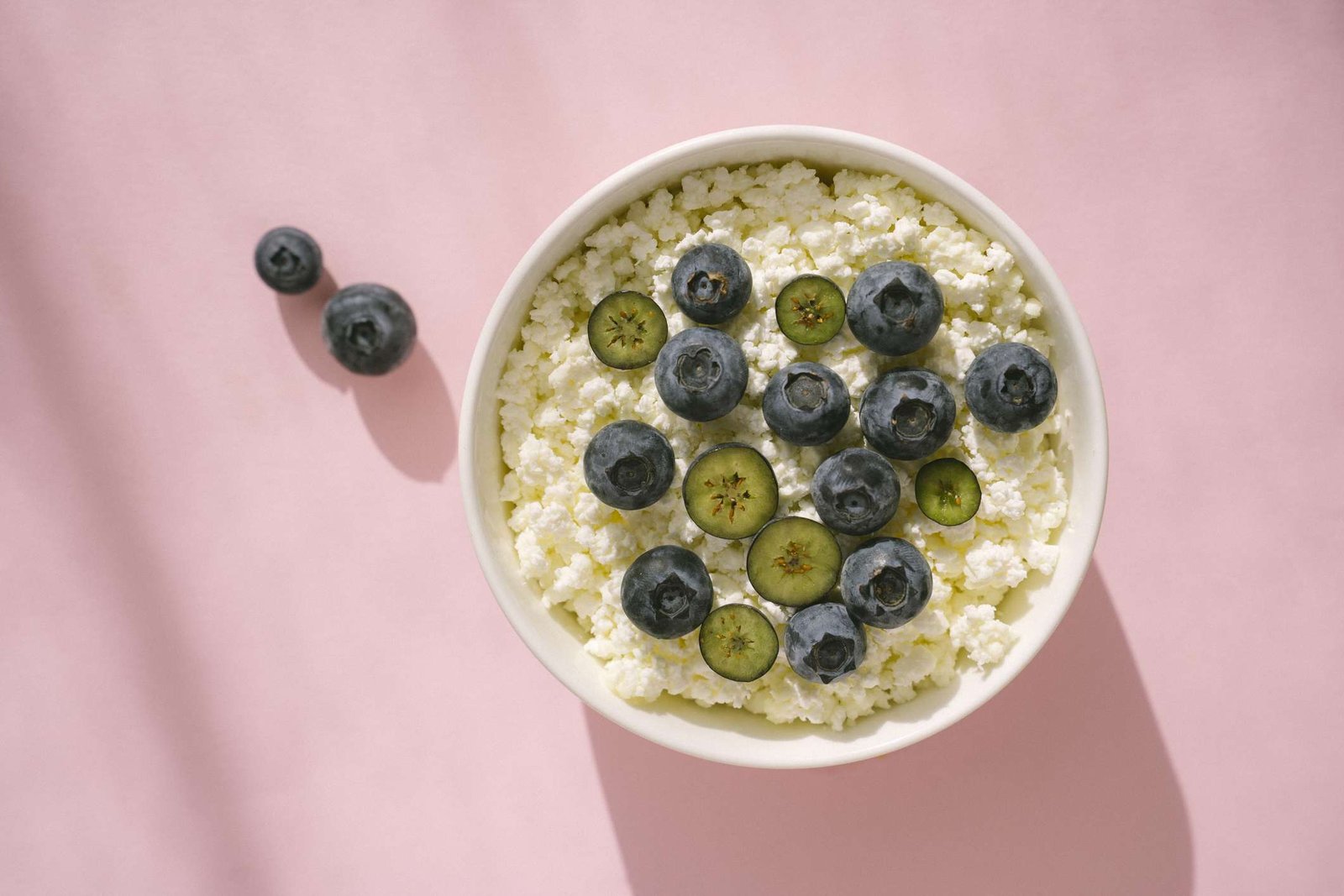
The healthiest way to eat cottage cheese is with other whole foods for a protein-rich and nutritious meal. A 1/2-cup serving of cottage cheese contains about 11 grams of protein, while also offering minerals like calcium and phosphorus for healthy bones.
- Protein content: 11 grams (g)
- Serving size: 1/2 cup cottage cheese, 1/2 cup fruit
If you enjoy a parfait, increase the protein by swapping 1/2 cup of yogurt for cottage cheese. Low-fat cottage cheese has about one more gram of protein than nonfat Greek yogurt.
Top with fresh fruit like strawberries, which add 2 grams of dietary fiber and 54% of the Daily Value (DV) for vitamin C per 1/2 cup, supporting your immune system and gut health. Opting for peaches, blackberries, raspberries, or blueberries will increase the fiber content but offer less vitamin C.
You can also add nuts or seeds, such as walnuts or chia seeds, for an extra boost of fiber and protein.
- Protein content: 19.5 g
- Choline content: 294 milligrams (mg), 54% of the DV
- Serving size: 1 cup
Adding cottage cheese to eggs is one of the healthiest and easiest ways to increase your protein intake at breakfast. Two large eggs already contain nearly 14 grams of protein and offer 54% of the DV for choline. This nutrient is essential for brain health and muscle control.
Prep scrambled eggs by mixing two eggs, 1/4 cup cottage cheese, salt, and pepper. Increase the fiber count by adding vegetables like spinach, bell pepper, or broccoli.
- Protein content: 23.5 g
- Choline content: 147 mg, 27% of the DV
- Serving size: 1 flatbread
If you’re following a high-protein, low-carb diet, this flatbread is great for pizzas or wraps. It’s also gluten-free and only contains cottage cheese and eggs as protein sources. Adding egg also gives you a good amount of brain-healthy choline.
Blend 3/4 cup of cottage cheese with one egg and preferred spices. Then, spread it thin on a baking sheet and bake for 30 minutes at 375°F. You can use the flatbread like you would bread for a sandwich, or cover it with pizza sauce, cheese, and other toppings.
- Protein content: 5.5 g
- Serving size: 1/4 cup
Instead of mayo or sour cream, add cottage cheese to the veggie dip to reduce fat and increase protein. Blend 1 cup of cottage cheese with a dash of salt, a squeeze of lemon, garlic powder, onion powder, and your favorite dried or fresh herbs, such as parsley and dill.
Pair this dip with 1 cup of raw vegetables, like broccoli, red bell pepper, and carrot. These vegetables—along with fresh parsley and dill—can add more dietary fiber, vitamin C, vitamin A, and vitamin K to your diet. Vitamin A is needed for healthy cell function and eye health. Vitamin K can help your body better absorb calcium in cottage cheese, supporting stronger bones.
- Protein content: 18.4 g
- Serving size: 2 ounces (oz)
Add more protein to pasta night by subbing heavy cream for cottage cheese in your favorite pasta dishes. For a creamy tomato sauce, blend 1 cup of cottage cheese, 1 cup of marinara sauce, and 1/2 cup of parmesan cheese. For a white cream sauce, use milk instead of marinara sauce and add more garlic.
For more fiber, choose whole-grain pasta or add vegetables like spinach or broccoli. You can also increase the protein content of your pasta by choosing high-protein pastas made from chickpeas, lentils, and peas.
Eating cottage cheese is a great way to reach your protein goals. Cottage cheese can also add more calcium, phosphorus, and probiotics to your diet. Here’s how to spot the best cottage cheese for your dietary needs:
- Less sodium: Opt for cottage cheese labeled “reduced sodium” or “no salt added” if you’re trying to limit sodium.
- Lower fat content: Low fat, 1%, and 2% cottage cheese contains less saturated fat than full-fat (4% fat) cottage cheese.
- Flavor and texture: Large-curd cottage cheese can taste creamier, while small-curd cottage cheese has more tang.
- Probiotics: Some cottage cheese varieties have probiotics, which can support gut health. Look for cottage cheese with a label saying it contains “live and active cultures”.
- Additives: Some cottage cheeses contain thickening additives, such as carrageenan and guar gum, that can irritate some people’s digestive systems.
