

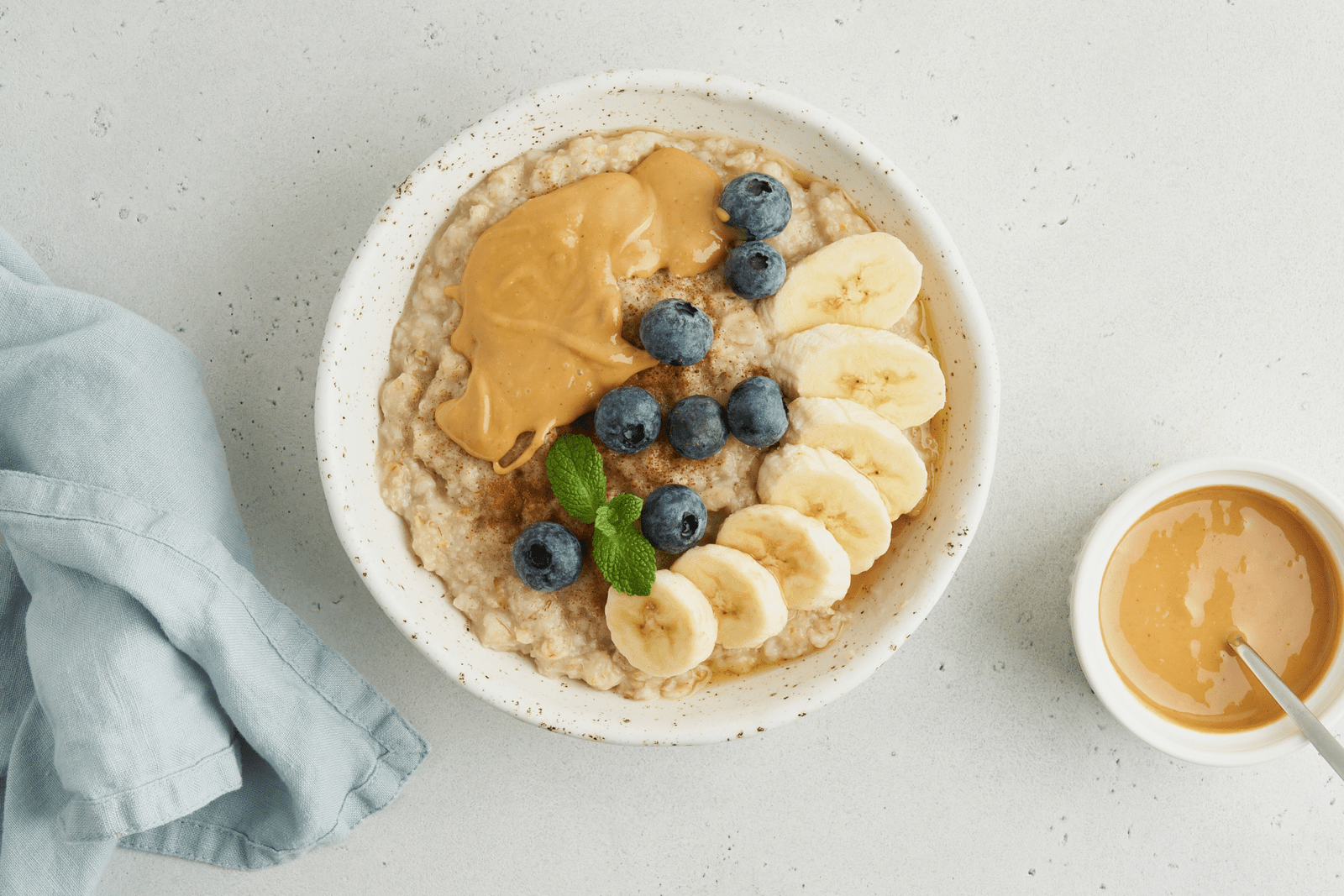
A typical morning bowl of rolled oatmeal typically provides about 5.4 grams of protein in a serving (one-half cup of dry oats). But it’s easy to increase that number and get closer to your daily protein goals when you add other high-protein foods to your oatmeal.
Farion_O / Getty Images
- Protein content: 25 grams in one scoop of soy-based protein powder or one-third cup of whey protein powder
Adding a scoop of protein powder to oatmeal is a simple way to increase your protein intake. Powders can be made from whey, casein, and egg whites. There are also plant-based options, including pea and soy.
Protein powders come in sweet flavors such as vanilla and chocolate. These may mix well with fruit, but if you don’t want to change the taste of your oatmeal, an unflavored product may be a better option.
When adding the powder to your oatmeal, take care to avoid clumps. Don’t dump a scoop directly into hot water, as it can become grainy. Instead, mix the protein powder with a small amount of warm water or milk first to make a paste. Then, fold this paste into your oatmeal after you take it off the heat.
svehlik / Getty Images
- Protein content: 3.6 grams from the whites of one large egg
Liquid egg whites offer a high-protein, fat-free addition to your breakfast.
The whites won’t make your oatmeal taste like eggs. They disappear into the grains, creating a fluffy, more voluminous consistency. This volume occurs because the proteins unfold and trap moisture during cooking.
To prevent the whites from scrambling, stir the simmering oatmeal continuously and pour the eggs in slowly. The heat thickens the mixture without adding a distinct eggy flavor.
pamela_d_mcadams / Getty Images
- Protein content: 14.9 grams in a 6-ounce container of whole milk Greek yogurt
Mixing Greek yogurt into hot oats adds creaminess and tanginess. Plus, Greek yogurt contains more protein than regular yogurt, making it a great choice to add to oatmeal.
Top your bowl of oatmeal with a dollop of yogurt or stir it in after cooking. Wait until the oatmeal cools slightly, as high heat can cause yogurt to separate or curdle.
bigacis / Getty Images
- Protein content: 12.5 grams per half cup of small-curd cottage cheese
No matter what kind of oatmeal you’re making, cottage cheese can be a great addition. The curds will melt slightly when stirred into hot oatmeal, adding a creamy texture and saltiness.
If you’re not a fan of the texture of cottage cheese, put it in a blender before adding it to recipes (including oatmeal).
AtlasStudio / Getty Images
- Protein content: 3.5 grams in one tablespoon of peanut butter
This pantry staple adds a rich, nutty flavor to a bowl of oatmeal. Peanut butter is also energy-dense and has 0.8 grams of fiber per tablespoon. With its fiber and protein content, peanut butter may boost satiety, or feelings of fullness, and support weight management. It may even support healthy blood sugar control, though more research is needed.
Stirring peanut butter into warm oatmeal should cause it to melt, allowing it to distribute evenly. You can also try adding powdered peanut butter to oatmeal, which provides similar amounts of protein but with less fat than standard peanut butter.
Getting enough protein in your diet is essential for cell growth and development over the course of your life. Adults should consume around 0.8 grams of protein per kilogram of bodyweight daily—that’s about 56 grams for someone who weighs 155 pounds. However, the amount of protein you need varies based on factors such as age and how much you exercise.
Research has suggested that spreading out your protein intake throughout the day leads to better results for muscle building—eating all your daily protein at dinner, for example, isn’t recommended. That means adding protein to your morning oatmeal can help you meet these protein goals in a healthy way.
Eating more protein at breakfast has been linked to greater feelings of satiety, or fullness. The body digests protein more slowly than carbohydrates alone. This slows the release of sugar into the bloodstream, helping you avoid sharp blood sugar spikes that may otherwise trigger hunger.
Plus, oats are also a great source of fiber—another nutrient that keeps you full—so eating oatmeal with extra protein can fuel you until lunch.
