

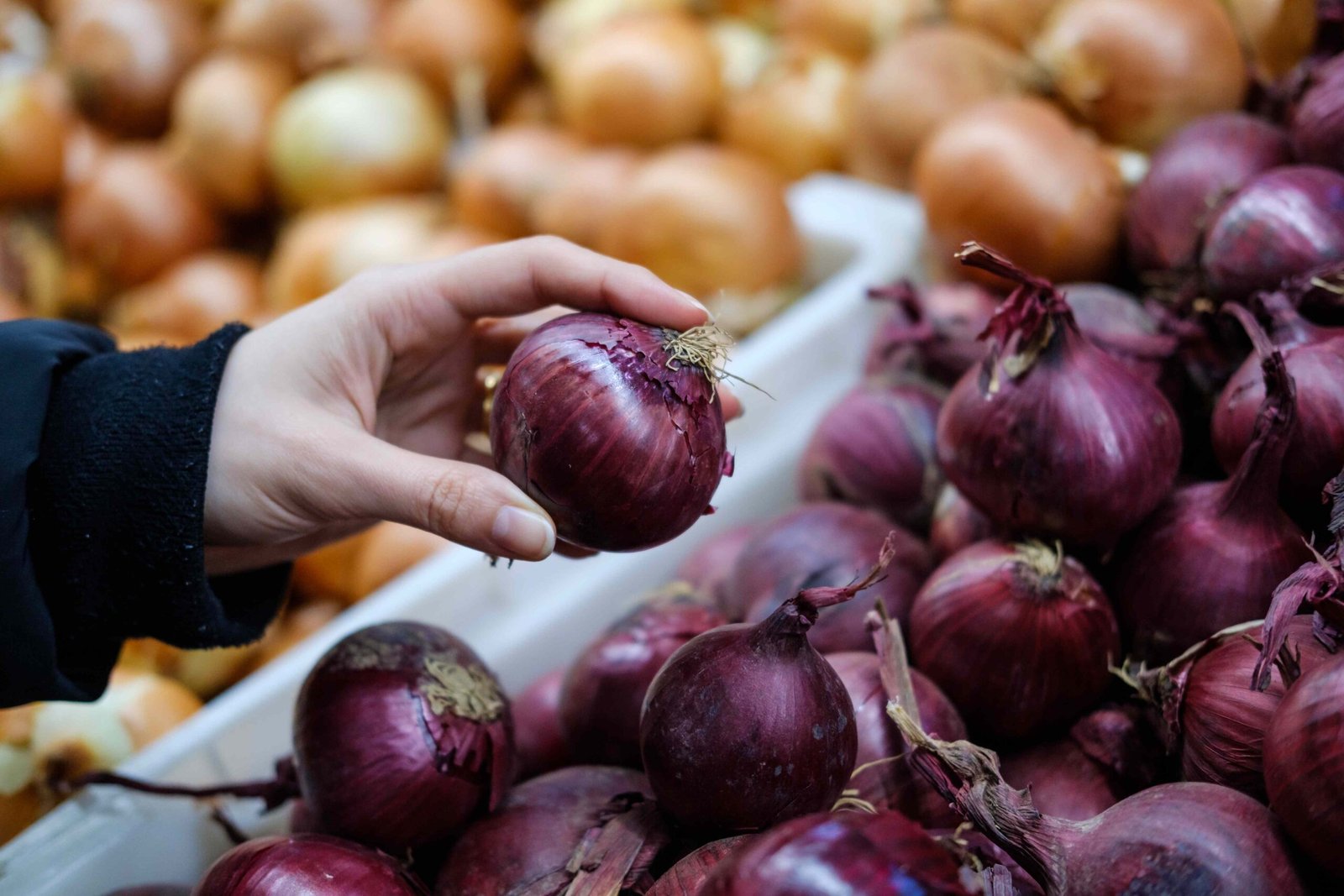
Onions are a great way to add antioxidants and flavor to your meals. But to reap the greatest health benefits from onions (and avoid potentially-harmful microorganisms), it’s important that you choose a fresh one. Here are some tips for finding the best onions at the store or farmers’ market.
A good onion feels firm and solid when you pick it up. Hold it in your hand and give it a light squeeze; it should not give under pressure.
Skip any onions that feel soft or squishy. Softness is often a sign of internal decay or “neck rot,” a fungal infection that can set in after an onion is harvested. This “neck rot” fungus generally isn’t considered a major threat to human health. However, there have been reports of people experiencing allergy-like symptoms or even a lung infection due to this mold.
The “skin” of an onion contains plant compounds that ward off bacteria and other harmful pathogens. This skin should be dry and papery, and should crackle when touched.
Once you’ve checked the onion skin’s texture, it’s also important to take a closer look at the outer layers:
- Check the neck: After onions are harvested, their leaves are cut off and they’re left to dry for a few weeks. This process should create a dry, tightly closed “neck” (the top of the onion where the stem used to be), which prevents mold growth and extends an onion’s shelf life. If the onion neck feels moist or soft, it may spoil faster.
- Avoid dark spots or streaks: Black spots or streaks that give an onion a dusty or “sooty” appearance may be caused by Aspergillus niger, or black mold. Sometimes, this fungus only affects the outer layers of an onion, and the inner, unaffected part can still be eaten. However, it may be best to simply avoid these onions, particularly if you have an allergy to black mold.
Fresh onions should not have new sprouts or stems growing from the top. A sprouted onion is a sign that the vegetable is nearing the end of its shelf life.
Research shows that sprouted onions actually contain more antioxidants, fiber, and proteins as the bulb prepares for growth. They’re safe to eat, but this comes at a culinary cost—a sprouted onion is more likely to be bitter-tasting and may work better in cooked dishes than in raw dishes.
Onions are known for their strong, pungent odor; however, onion bulbs shouldn’t carry a significant smell until they’re opened.
A sour or vinegar-like smell before the onion is cut is a red flag that the onion may be rotting or contaminated with Burkholderia cepacia, a bacteria that can be dangerous for people with compromised immune systems.
As long as you’re choosing a fresh onion, all varieties can be healthy additions to your diet. Onions are low in calories, high in fiber, and contain a variety of plant compounds called phytochemicals that may help protect against chronic disease.
When choosing between onion varieties, think about how you plan to use it—picking the right type helps you get the flavor and texture you want in your dish. There are also some nutritional differences between them that may inform your decision:
- Yellow onions: These are a good choice for everyday cooking, adding flavor and nutrition to soups, sauces, stews, and roasts. They also have more fiber than other types of onions.
- Red onions: Purple or red onions have a sharp flavor and pungent aroma. They are a good choice for raw dishes like salads or sandwiches. Red onions are also the best choice when it comes to antioxidants—they have more vitamin C than other onion varieties, plus they contain special antioxidants called anthocyanins that may help protect cell health.
- White onions: With a sharp but mild flavor, white onions pair well with salsas, sauces, and other savory dishes.
- Sweet onions: These onions add a touch of sweetness to your dishes and taste great when roasted with other vegetables.
Once you’ve picked the perfect onions, storing them properly will ensure that they stay fresh until you use them.
For best results, store your whole, unpeeled onions in a cool, dry, dark, and well-ventilated place.
Plus, it’s smart to keep onions away from other fruits and vegetables. That’s because most types of fresh produce emit a gas called ethylene, which leads to ripening and deterioration of other fruits and vegetables. However, onions don’t need to be ripened after you purchase them, so it’s best to separate them.
