

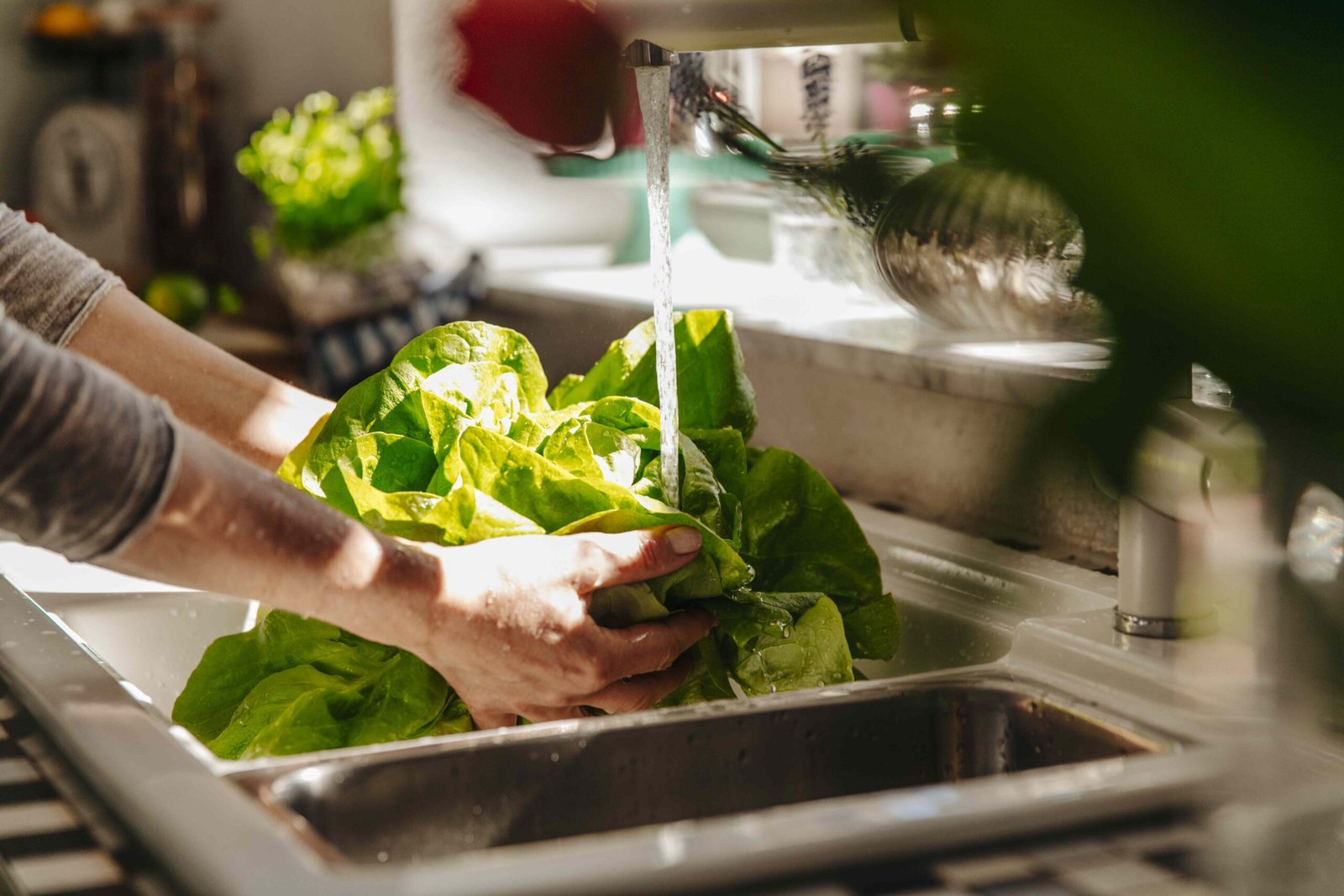
The nutrients in lettuce vary depending on the type. Romaine lettuce, for example, is richer in nutrients than iceberg lettuce because its leaves let in more sunlight. Other conditions, such as proper storage once picked, can change a lettuce’s nutrient content.
wing-wing / Getty Images
Romaine lettuce, also known as cos, is a sweet-tasting, open-head lettuce. Open-head lettuce means it has enough space between its leaves to let in enough sunlight to its core. The sunlight helps it produce chlorophyll, the substance that gives lettuce its green color. This process, known as photosynthesis, helps lettuce make its own food, which allows it to create nutrients such as vitamins A, E, and C, and magnesium and potassium—minerals that support a healthy fluid balance.
Some research suggests Romaine lettuce may have more folate than other leafy greens, which is beneficial for brain health.
Two cups (100 grams) of Romaine lettuce provide:
- Water: 97.1 grams (g)
- Calories: 20
- Protein: 1.24 g
- Total fat: 0.26 g
- Carbohydrates: 3.24 g
- Fiber: 1.8 g
- Folate: 50 micrograms (mcg), or 12.5% of the Daily Value (DV)
LazingBee / Getty Images
Red leaf lettuce is a type of loose-leaf lettuce and is rich in several antioxidants, which are substances that help you stay healthy by protecting your cells from damage and supporting eye health. These antioxidants also give red leaf lettuce its color.
Two cups (100 grams) of Red leaf lettuce provide:
- Water: 95 g
- Calories: 18
- Protein: 0.88 g
- Total fat: 0.11 g
- Carbohydrates: 3.26 g
- Fiber: — g
- Vitamin K: 73.2 mcg, or 61% of the DV
bhofack2 / Getty Images
Green leaf is another loose-leaf lettuce. It grows faster than iceberg lettuce and can better tolerate harsh weather, making it a better option year-round. Its mild, earthy flavor works well for salads and hamburgers.
Two cups (100 grams) of green leaf lettuce provide:
- Water: 94 g
- Calories: 22
- Protein: 1.09 g
- Total fat: 0.16 g
- Carbohydrates: 4 g
- Fiber: — g
- Vitamin C: 15 mcg, or 17% of the DV
PongsakornJun / Getty Images
Butterhead lettuce has a small head with round leaves. However, butterhead leaves aren’t as tightly folded as some other types, such as iceberg lettuce. Its outer leaves are delicate, shiny, and have a brownish-red tint, which adds to its appeal. Like Romaine, butterhead lettuce is a good source of folate.
Consuming butterhead lettuce may help keep your eyes healthy, protect your cells, reduce inflammation, and lower your risk for certain health conditions, like diabetes.
Two cups (100 grams) of butterhead lettuce provide:
- Water: 95.6 g
- Calories: 13
- Protein: 1.3 g
- Total fat: 0.22 g
- Carbohydrates: 2.23 g
- Fiber: 1.1 g
- Folate: 73 mcg, or 18% of the DV
- Vitamin K: 102 mcg, or 85% of the DV
- Vitamin A (RAE): 166 mcg, or 18% of the DV
Combining lettuce with other types of leafy greens can be a great way to vary up your salad and boost the amount of nutrients. Some great salad-worthy options include:
- Spinach: This is a great source of vitamin K, which supports heart health, lutein, a nutrient that protects your eyes, and vitamin A.
- Kale: This is packed with nutrients, including magnesium and potassium, that protect the heart. It’s also a good source of dietary fiber, which helps keep you regular.
- Collard greens: These contain calcium, potassium, and vitamin K, which help keep your bones healthy and strong.
- Chard: This is rich in fiber and contains a large amount of nitrates, substances that may help with better circulation (blood flow).
- Arugula: This contains a significant amount of brain-protective folate and other nutrients like vitamins A and C.
Ideally, your lettuce should be crisp or have a nice bite to it and should never be soggy or wilted. Here are some other tips for picking out the best quality lettuce:
- Look for vibrant color: Whether it’s green or red lettuce, the leaves should have rich, consistent color without signs of aging, like brown spots or yellowing. Some brown spots, like russet spots, aren’t a sign of spoilage, and you should be able to wash them off. However, if there are a lot of brown spots, along with other signs of spoilage, you should throw it out.
- Avoid lettuce with slimy leaves: This is a sign of poor storage and spoilage.
- Check the core: If your Romaine lettuce has a brown or mushy core, this is a sign that it’s gone bad. Although you may not be able to tell while in a grocery store since you can’t open it there, you may be able to know that it’s gone bad if the leaves are slimy or it has a foul odor.
- Avoid moisture droplets: Excess moisture inside a bagged lettuce make it spoil faster.
Lettuce is a great source of nutrients and can support weight management because it’s high in water and low in calories. This can vary depending on the variety, growing conditions, and storage. From large crisp green romaine leaves to delicate and shiny butterhead, you’ve got some good, healthy options.
Always look for bright, vibrant heads of lettuce and avoid brown spots or dingy yellow leaves. Also, try to avoid purchasing packaged lettuce with condensation, or visible water droplets, as this condensation can make it spoil faster.
