

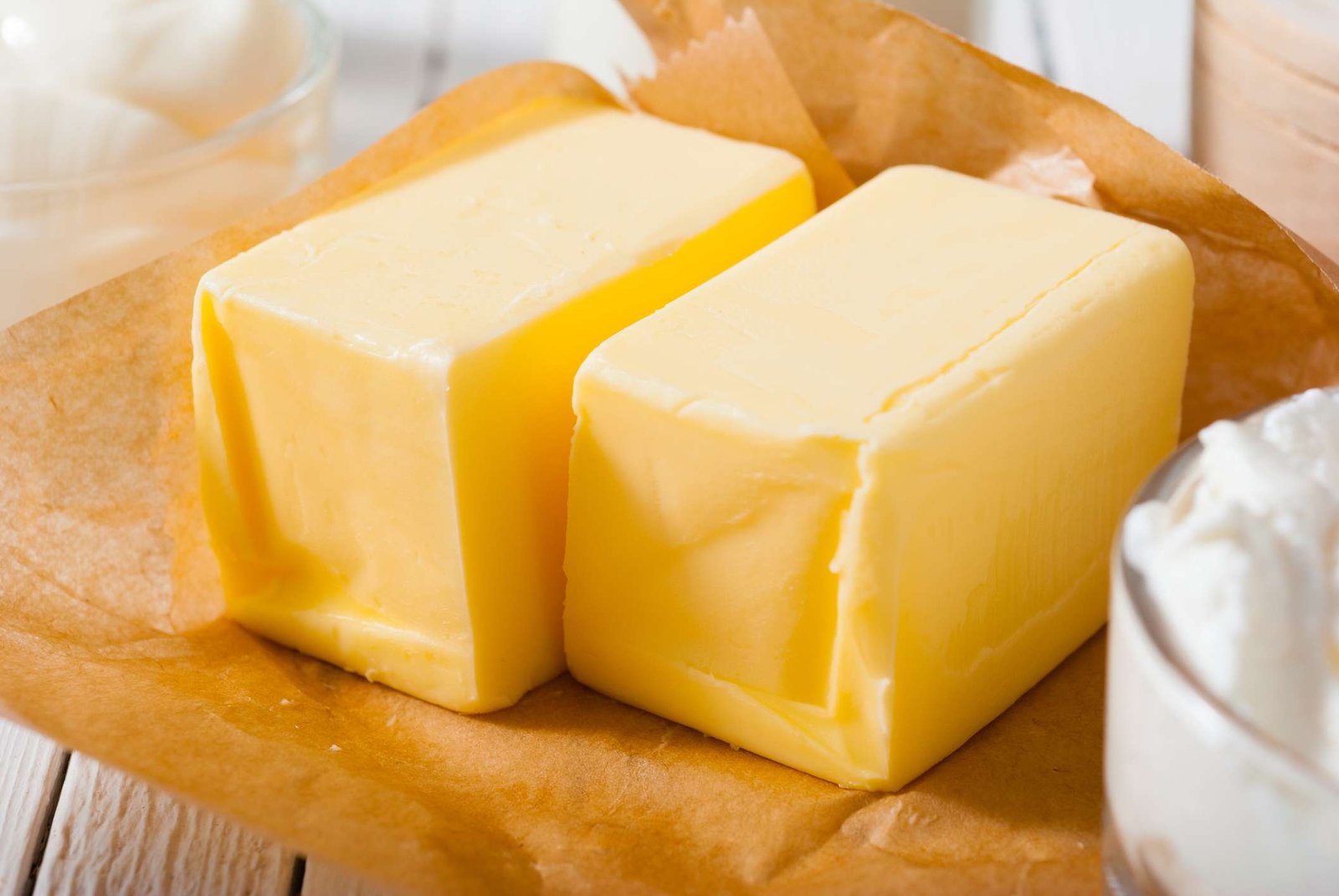
Butter can be part of a balanced diet, but some types offer more nutrients and fewer additives than others. Grass-fed, organic, and whipped butter are among the healthiest options to consider.
Grass-fed butter comes from the milk of grass-fed animals, often cows. Because the animals eat grass and forage in pastures, their milk often contains more nutrients than milk from grain-fed cows.
Studies show that grass-fed butter contains more heart-healthy omega-3 fatty acids than regular butter. It also contains more conjugated linoleic acid (CLA), a fatty acid that may help decrease the risk of heart disease, though more research is needed.
Grass-fed butter may also be higher in vitamin K2, a nutrient that keeps your bones and heart healthy.
Organic butter must meet strict standards set by the U.S. Department of Agriculture (USDA). This means the cows must be fed 100% organic feed, have access to pasture, and cannot be given synthetic hormones or routine antibiotics. It is often considered more animal and environmentally friendly.
Organic butter also has a different fat profile than regular butter. Some studies show it may contain slightly more healthy fats, but the differences are small.
Still, if you’re looking for butter made with cleaner ingredients and stricter farming practices, organic butter can be a good option.
Whipped butter is made by adding air to regular butter, which gives it a lighter, fluffier texture. Because it has more air and a lower density, a tablespoon of whipped butter has fewer calories and less saturated fat than the same amount of regular butter.
Here’s how they compare per tablespoon:
Whipped butter:
- Calories: 68.7
- Total fat: 7.3 grams (g)
- Saturated fat: 4.27 g
Regular butter:
- Calories: 102
- Total fat: 11.5 g
- Saturated fat: 7.3 g
These differences can make whipped butter a helpful option for portion control. It spreads easily over toast, vegetables, or baked potatoes, so you may end up using less while still getting the same buttery flavor. Most whipped butters are made with the same basic ingredients as regular butter. However, some may include additional ingredients, so it’s a good idea to check the label.
Plant-based butter alternatives, including many margarines, are made from oils like olive, avocado, and canola. These spreads are usually lower in saturated fat than dairy butter and contain more heart-healthy unsaturated fats.
Some are also fortified with nutrients like vitamin D, and may include plant sterols or stanols, which may help support healthy cholesterol levels.
Most margarines are dairy-free, but some contain small amounts of milk. Check the nutrition label if you follow a vegan diet.
Choosing the healthiest butter is easier when you know what to look for. Reading the ingredient list, checking the food label, and thinking about how you’ll use it in your cooking can help you choose the butter that best fits your needs. Here are a few tips to follow:
- Choose simple ingredients: Some types of butter have added sugars and preservatives. When possible, choose one that’s made with only cream or cream and salt.
- Consider the cooking method: Choose your butter based on how you cook. Salted butter works well for everyday use, while unsalted butter is best for baking or when you want more control over flavor. Whipped butter can be helpful because it spreads easily on toast or muffins.
- Try plant-based alternatives: Many dairy-free spreads are made with healthier oils and may be lower in saturated fat. Some also contain plant sterols and stanols that support healthy cholesterol levels.
- Check the label: Try to choose butter with less saturated fat and sodium. Look for butter or plant-based spreads made with simple ingredients and without a long list of emulsifiers or additives.
Butter and spreads can fit into a balanced diet, but it’s still best to use them sparingly.
