

A push-pull workout is a popular training technique that allows you to reduce injury risk, prioritize recovery, and create a more balanced upper body. Instead of trying to fashion a workout regimen based on specific muscles or body parts, these workouts allow you to focus a broad group of muscles at one time.
During a push workout, you will be primarily pushing weight away from the floor or from your body. These workouts target your chest, shoulders, and triceps. Then, when you incorporate a rest day in between the push day and the pull day, the muscles targeted have the necessary 48 hours or more to recover. Here are five push exercises to consider.
1. Push-up
Here is how to do a push-up:
- Kneel on an exercise mat or the floor.
- Stretch your legs behind you and place your palms flat on the mat.
- Keep your hands shoulder-width apart with your fingers facing forward or turned slightly in.
- Shift your weight forward until your shoulders are directly over your hands.
- Contract your core muscles and align your head with your spine.
- Keep your feet together.
- Bend your elbows to lower your body toward the floor, keeping your back from sagging or your hips from raising.
- Push upward once you are as low as you can go, through your arms like you are pushing the floor away.
- Repeat 10 to 12 times. (If doing a push-up from the floor is too hard, you can perform it from a kneeling position or do a standing wall push up to start.)
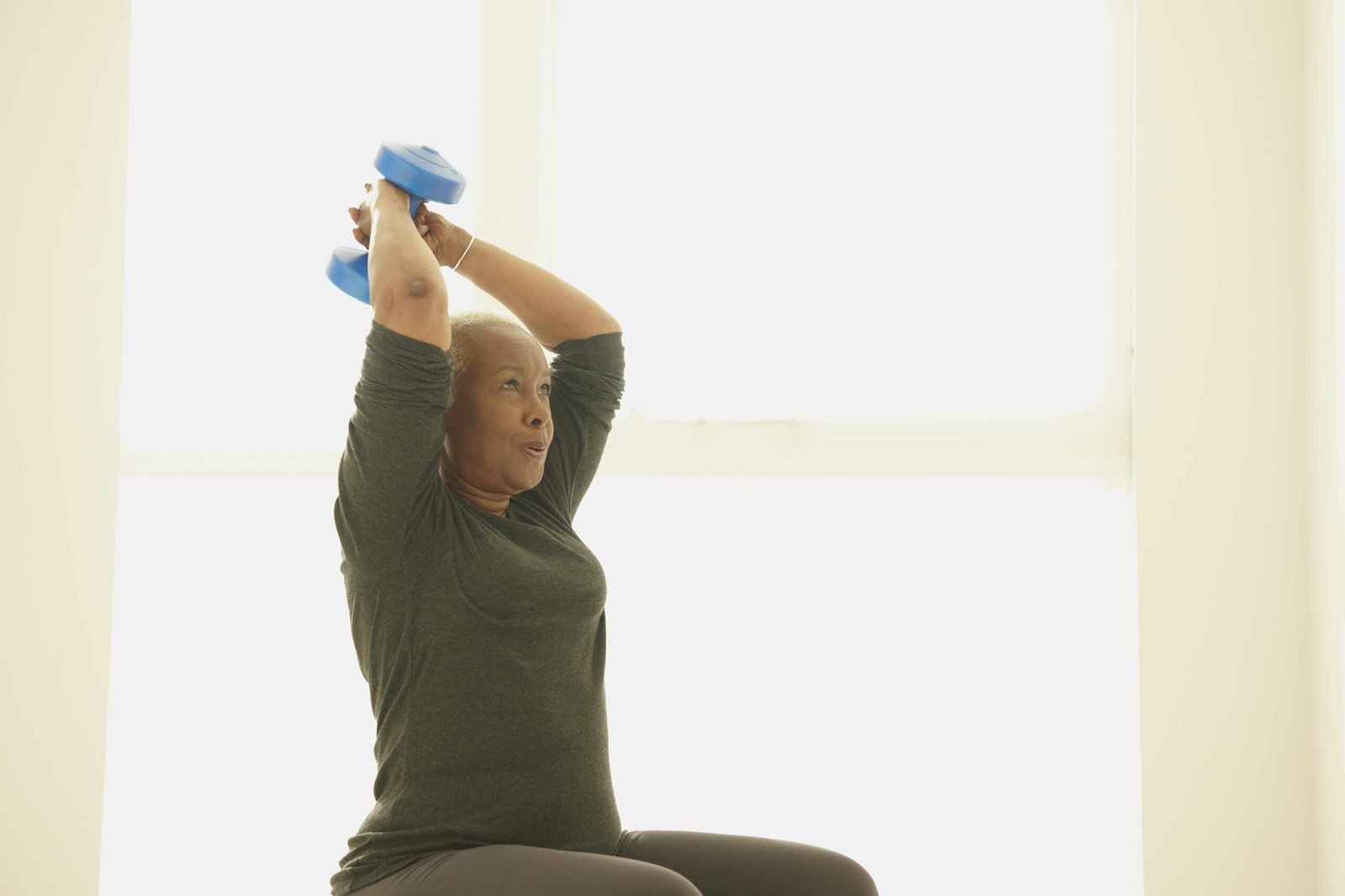
2. Overhead Tricep Press
Here is how to do a tricep press:
- Stand in a relaxed position with one foot slightly in front of the other.
- Hold one dumbbell with both hands overhead and avoid locking your elbows.
- Tighten your core and keep your head and neck aligned with your spine.
- Bend your elbows and lower the dumbbell behind your head without moving your upper arms.
- Allow your elbows reach a 90-degree bend.
- Push the dumbbell back to the starting position.
- Repeat 10 to 12 times.
3. Shoulder Press
Here’s how to do a shoulder press:
- Hold a dumbbell in each hand or use a barbell.
- Stand with your feet hip-width apart and arms raised to shoulder height out at your sides.
- Bend your elbows at 90-degree angles with your palms facing forward.
- Push the dumbbells directly overhead so your wrists are directly over your shoulders.
- Keep your biceps next to your ears.
- Pause briefly.
- Bend your elbows slowly and lower the dumbbells back to the starting position.
- Do 10 to 12 reps.
4. Chest Press
Here’s how to do a chest press:
- Lie on the floor with a dumbbell in each hand.
- Bend both knees up and place your feet flat on the floor.
- Keep your elbows open to the sides so that your biceps are at a 45-degree angle to your torso.
- Make sure your palms facing inward.
- Push the dumbbells up and away from your chest
- Straighten your arms so the weights are directly over your shoulders.
- Lower the dumbbells and bend your elbows to return to the starting position.
- Do 10 to 12 reps.
5. Skull Crusher
Here is how to do a skull crusher:
- Lie down facing up on a flat bench.
- Keep your knees bent and your feet flat on the floor.
- Grab a dumbbell and hold it with both hands above your head, keeping your elbows straight.
- Lower the weight toward the top of your head.
- Push the weight back up to the starting position.
- Repeat 10 to 12 times.
During a pull workout, you will be pulling weight toward your body. These workouts allow you to target your back, biceps, and forearms. When you incorporate a rest in between your pull day and your push day, you avoid over-stressing your muscles. Here are five pull exercises to consider.
1. Bicep Curl
Here is how to do a bicep curl:
- Stand with your feet about hip-width apart.
- Hold one dumbbell in each hand.
- Let your arms hang down at your sides with your palms facing forward.
- Keep your core engaged and your elbows tucked close to your body.
- Bend your arms at the elbow and pull (or lift) the weights up so that they approach your shoulders.
- Pause and then lower the weights back to the starting position.
- Repeat this 10 to 12 times.
2. Reverse Fly
Here is how to do a reverse fly:
- Start with your feet hip-width apart and your arms at your sides.
- Hold a dumbbell in each hand.
- Keep your back straight, knees slightly bent, and your torso at a 45-degree angle.
- Hang your arms directly below your shoulders with your palms facing each other.
- Pull the dumbbells up and out to the sides until they reach shoulder height.
- Pause at the top, then slowly lower the dumbbells to the starting position.
- Repeat 10 to 12 times.
3. Dumbbell Row
Here is how to do a dumbbell row:
- Hold a dumbbell in your right hand.
- Put your left knee and left hand on a bench to support your body weight.
- Engage your core, keeping your back flat and your head aligned with your spine.
- Extend your right arm toward the floor.
- Pull the dumbbell upward, bending your elbow and pulling your upper arm backward keeping your elbow close to your side.
- Pause and then lower the dumbbell to the starting position.
- Do 10 to 12 reps and then switch sides and repeat.
4. Hammer Curl
Here is how to do a hammer curl:
- Hold a dumbbell in each hand with your palms facing your body.
- Position the dumbbells along your thighs with your elbows extended.
- Pull the dumbbells up toward the shoulder by bending the elbows.
- Pause and then return the starting position.
- Repeat 10 to 12 times.
5. Kettlebell Deadlift
Here is how to do a kettlebell deadlift:
- Stand with your feet hip-width apart with a slight bend in your knees.
- Grip the kettlebell handle with both hands in a palms-down grip.
- Push your feet into the floor and press your hips forward.
- Pull the kettlebell up using your legs and your hips (not your shoulders).
- Pause and then return to the starting position.
- Do 10 to 12 reps.
Push-pull training allows you to exercise the majority of your major muscle groups in your upper body. It can also reduce injury risk and help you build muscle more uniformly. Plus, researchers have found that this approach, rather than focusing on single muscle groups, can lead to increased strength for most people.
If you are just getting started, aim for about four training sessions per week. For example, start with a pull workout on day one, rest on day two, and then do a push workout on day three. Rest on day four. Then, on day five do a pull workout, rest on day six, and do a push workout on day seven.
You also could do a legs and core workout on one of the rest days if you are more advanced. For a more personalized workout plan involving push-pull exercises, talk with a certified personalized trainer.
To make the most of your push-pull workouts, use weights that are appropriate for your fitness level and maintain proper form during each movement. If you are unable to do that, you may need lighter weights or fewer repetitions. Here are some other tips for making the most of your workouts.
- Try changing exercises every six to 12 weeks to avoid boredom and stimulate your muscles.
- Prioritize sleep when starting a new workout routine to maximize results.
- Set realistic goals and aim for consistency.
- Create a weekly schedule that includes your exercise time.
- Start slow and prioritize regular exercise over intensity.
- Pay attention to your body’s cues and adjust as needed.
